Best HEPA Solder Fume Extractors for Clean, Safe Workspaces
The top choice for buyers seeking a reliable HEPA solder fume extractor is determined by filter quality, suction power, noise level, and portability. This guide highlights five models that best balance filtration efficiency with practicality for hobbyists, technicians, and small-scale workshops. Each product is ideal for different work styles—from compact workbenches to mobile setups. Below, you’ll find quick summaries and a detailed buyer’s guide to help you decide.
| Product | Best For | Key Filter Type | Portability |
|---|---|---|---|
| BlueDate HEPA Solder Fume Extractor | Small workbenches, jewelry soldering | H13 HEPA + activated carbon | Lightweight, portable |
| KOTTO Strong Suction Solder Fume Absorber | Users needing adjustable suction | HEPA + carbon options | 60 Hz, 24-inch flexible hose |
| FumeClear FC-2001S Solder Fume Extractor | Compact spaces, high filtration | 3-stage: pre-filter, H12 HEPA, carbon | Compact desktop |
| YC60 Solder Fume Extractor | Longer filter life, cost-conscious | 3-stage HEPA + carbon | Desktop, efficient |
| NEETOP Solder Fume Extractor | DIY hobbyists with limited space | H13 HEPA + carbon | Compact and portable |
Buyer intent focus: compact desks and hobby zones benefit from smaller, quieter units; more serious makers benefit from multiphase filtration and higher airflow. Use this guide to compare price-to-performance and choose a model that fits your workspace flexibility, filtration needs, and maintenance expectations.
BlueDate HEPA Solder Fume Extractor

The BlueDate unit uses a double filter setup with H13 HEPA and activated carbon. It effectively adsorbs 0.3 micron pollutants from soldering, flux, and odors. The design emphasizes portability, making it suitable for a compact workbench or mobile use around a crafting space. Best for hobbyists and jewelry makers who need clean air without a bulky machine. Limitation: filter replacement and maintenance should be planned to sustain performance in tight spaces.
KOTTO Strong Suction Solder Fume Absorber
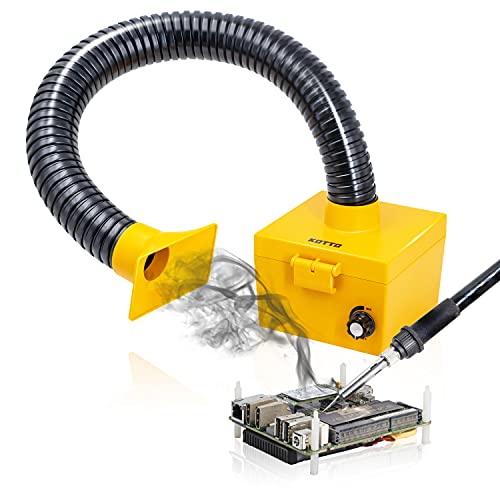
This model emphasizes strong suction with an adjustable 24-inch hose and a 6000 RPM high-suction fan. It supports use while plugged in and offers 5-6 inch fume capture distance. Best for users who need flexible direction control and higher airflow in a small shop. Caution: fan speed and noise can vary with attachment setup; plan placement accordingly.
KOTTO Solder Smoke Absorber Remover
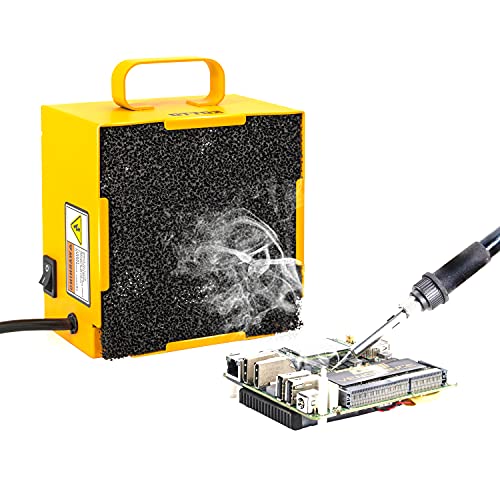
Equipped with a 0.4 inch thick activated carbon filter, this unit targets fumes, gases, and odors from soldering. It uses an optimized 3000 RPM high-suction fan, designed to remove fumes within 5-6 inches. Best for compact desks where odor control is a priority. Limitation: lower maximum airflow compared to some high-power models, so it’s best for light-to-moderate use.
FumeClear FC-2001S Solder Fume Extractor

Designed for enthusiasts with 128-168 m³/h suction, the FC-2001S features a triple filtration system—pre-filter, H12 HEPA, and high-iodine activated carbon. It targets solder smoke, dust, and odors for cleaner air in small studios or workshops. Best for users who want robust filtration in a compact form. Caution: the high iodine carbon content may require more frequent filter changes under heavy use.
NEETOP Solder Fume Extractor
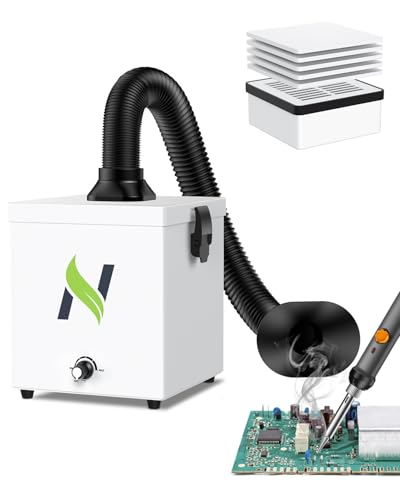
NEETOP offers a compact desktop design with 168 m³/h suction and H13 HEPA plus carbon filtration. It suits hobbyists who must keep a small footprint while maintaining high filtration efficiency. Best for amateur soldering, PCB repair, and classroom-style DIY projects. Limitation: very compact units may have limited filter life under heavy use; replace filters as recommended to maintain performance.
Buying Guide
- What filtration stage do you need? Three-stage systems (pre-filter, HEPA, carbon) provide better particle capture and odor control than single-stage designs.
- How much space do you have? Compact desktop units are ideal for limited spaces, while portable units with flexible hoses suit mobile workstations.
- What is your typical workload? For frequent soldering with flux, higher airflow and durable filters reduce maintenance and keep air cleaner.
- How important is noise? If you work in a shared space or late-night projects, look for models advertised as low-noise (< 60 dB) at operating speed.
- What maintenance is required? Check filter replacement intervals, availability of replacement parts, and whether carbon filters need periodic changes for odor control.
Frequently Asked Questions
- Do all HEPA solder fume extractors remove solder odors? Most models combine HEPA with activated carbon to reduce odors and chemical vapors in addition to dust particles.
- Is higher airflow always better? Higher airflow captures fumes more quickly but may increase noise; balance suction with your workspace and tolerance for sound.
- Can these units be used for 3D printing fumes? Many models can handle common 3D printing smoke, but verify that the filtration system targets ultrafine particles typical of 3D printing materials.
- How often should I replace filters? Replacement frequency depends on usage and filter type; follow the manufacturer’s guidance and monitor airflow for signs of clogging.
- Are compact units sufficient for jewelry making? Yes, compact units with HEPA and carbon filtration can manage metal fumes and odors in jewelry workshops when used correctly.
- What setup ensures best coverage? Place the extractor near the soldering area and angle the intake to capture fumes at their source; use the flexible hose where needed to maximize capture.