Best Heat Exchanger and Extractor Fans for Fresh Air
When optimizing indoor air quality, pairing heat exchange with effective extraction can reduce energy loss while improving comfort. This guide highlights five top options that combine heat exchange or high-efficiency exhaust capabilities with practical installation and smart features. Each choice balances performance, durability, and user-friendly controls to help American homes and workspaces stay comfortable year-round.
| Product | Brand | Key Feature | Type |
|---|---|---|---|
| Weiworld Heat Recovery Ventilator | Weiworld | Ceramic heat exchanger recovers up to 90% of heat | HRV |
| DIYhz Water Cooling Radiator | DIYhz | 12-port aluminum heat exchanger for high heat transfer | Liquid cooling heat exchanger |
| Water to Air Heat Exchanger 12×12 | AB | 60,000 Btu capacity with copper tubes and aluminum fins | Water-air heat exchanger |
| HG Power 6 Inch Exhaust Fan | HG Power | 308 CFM, low power for small space extraction | Exhaust fan |
| VEVOR 8 Inch Exhaust Fan | VEVOR | 576 CFM, durable metal construction | Exhaust fan |
Weiworld Heat Recovery Ventilator With Ceramic Heat Exchanger
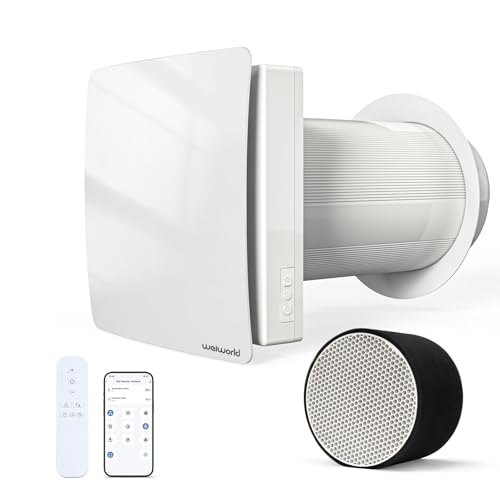
The Weiworld unit is a wall-mounted heat recovery ventilator (HRV) designed for single-room ventilation. It features a high-efficiency ceramic heat exchanger that recovers up to 90% of heat from exhaust air, reducing heating energy needs while improving indoor air quality. The system supports smart control via Tuya App or a remote, enabling convenient operation from anywhere. It provides three airflow modes: Fresh Air, Exhaust, and Recirculation to tailor indoor conditions. This combination of heat recovery and flexible control makes it suitable for living rooms, bedrooms, or compact spaces that require energy-conscious ventilation.
DIYhz Water Cooling Computer Radiator

This radiator targets liquid cooling setups but demonstrates high-efficiency heat exchange principles in a compact form. With 12 copper tubes and 12×120 mm fan compatibility, it emphasizes maximizing heat transfer in systems that require robust thermal management. The unit is designed for 12V DC operation and emphasizes solid construction for reliable performance. While primarily used in PC cooling or laser cooling loops, its heat exchanger design offers insight into how dense fin-and-tan structures improve heat dissipation in compact layouts.
Water to Air Heat Exchanger 12×12

Designed for outdoor wood furnaces and residential heating or cooling, this Water to Air Heat Exchanger combines copper tubes with aluminum fins to deliver strong heat transfer. It supports various energy sources, including boilers and solar, enabling renewable energy integration. The product uses a steel shell and base-brazed joints for durability under high pressure and temperature. With a coated fin surface for wear resistance, this exchanger emphasizes long-term reliability in demanding heating or cooling cycles while still enabling efficient heat transfer to indoor air.
HG Power 6 Inch Exhaust Fan

The HG Power 6 Inch Exhaust Fan focuses on powerful ventilation with a compact footprint. It uses a robust motor and a 7-blade design to deliver effective air movement for kitchens, attics, garages, or basements. Energy efficiency is highlighted by a 38W power draw, delivering substantial CFM without excessive electricity use. The metal construction supports durability in harsher environments, making it a practical choice for spaces needing steady exhaust performance with relatively low energy consumption.
VEVOR 8 Inch Exhaust Fan

The VEVOR 8 Inch Exhaust Fan delivers high airflow (576 CFM) in a portable, wall-mount design. It operates at 55W, achieving a balance between strong ventilation and energy efficiency. The unit is well-suited for kitchens, attics, basements, and workshops where quick air exchange and removal of smoke, odors, or humidity are needed. The on/off control keeps operation simple for regular use, and its durable build supports longer service life in demanding spaces.
Buying Guide
Choosing the right heat exchanger and extractor system involves considering space, energy efficiency, and intake/exhaust needs. Key factors include:
- Heat exchange efficiency: Look for high heat recovery percentages or strong heat transfer ratings to minimize energy loss.
- Ventilation mode and control: Preference for Fresh Air, Exhaust, or Recirculation modes, plus smart or remote control capabilities for convenience and automation.
- Space compatibility: Wall-mounted HRVs work well in rooms, while larger spaces may require high-CFM exhaust fans or inline configurations.
- Durability and materials: Metal housings, corrosion resistance, and robust fans or radiators endure busy environments like kitchens, garages, and basements.
- Noise and energy use: Consider decibel levels and wattage to balance comfort with powerful airflow.
- Maintenance: Look for features such as automatic dampers, easy filter access, and durable seals to reduce upkeep.
- Compatibility with energy sources: Water-to-air exchangers and liquid-cooling radiators are compatible with solar, boilers, or other heat sources; ensure integration feasibility for your system.
For homes prioritizing energy savings, HRVs with ceramic or copper-based heat exchangers and smart control can reduce heating loads while maintaining air quality. For larger or industrial spaces, high-CFM wall-mounted exhaust fans provide rapid air exchange with relatively low operating costs. When choosing a system, align the product’s technical specifications with your space, climate, and energy goals to maximize performance and comfort.