Best Grid Tie Inverter Chargers for Reliable Off-Grid and Hybrid Power
Choosing the right grid tie inverter charger can dramatically improve home energy reliability, especially in areas with outages or high energy costs. This guide highlights five top options that blend inverter power, MPPT charging, and battery compatibility. Each profile includes key features, input ranges, and how they perform in grid-tied or hybrid setups. Use the quick-reference table to compare core specs at a glance.
| Product | Brand | Rated Power | Battery Compat. | MPPT Range | Notes |
|---|---|---|---|---|---|
| Y&H 4.2KW 24VDC Hybrid | Y&H | 4200W | Lead Acid/Lithium | 60–450Vdc | Battery-free option; dual load outputs |
| SUMRY Solar Inverter Charger 3600W | SRGFTS | 3600W | AGM/Lithium/Life types | 60–500Vdc | All-in-one inverter charger |
| POWLAND 12000W Grid-Tied Hybrid | POWLAND | 12000W | LiFePO4/Lead Acid | 90–500Vdc | Battery-free design; grid backfeed |
| VEVOR Hybrid Solar Inverter 3000W | VEVOR | 3000W | 24V systems | 60–500Vdc | High MPPT efficiency; versatile battery support |
| Y&H 1000W Grid Tie Inverter | Y&H | 1000W | 48V systems | 26–60V | Smaller scale grid tie option |
Note: All products listed are designed for off-grid or grid-tied setups and vary in wall-plug voltage, MPPT range, and battery compatibility. This guide emphasizes objective specifications to help users match their PV arrays, battery banks, and local grid rules.
Y&H 4.2KW 24VDC Hybrid Inverter

The Y&H 4.2KW model combines an inverter, solar charger, and battery charger in a single unit. It features a pure sine wave output of 230VAC and includes a built-in 120A MPPT solar charger. With a maximum PV input of 6200W and a wide MPPT range, it supports 60–450Vdc arrays, enabling flexibility for large panel configurations. A notable option is its battery-free use, suitable for users who want to minimize energy storage needs while maintaining reliability during outages. Dual load outputs provide continued service under various conditions.
SUMRY Solar Inverter Charger 3600W

The SUMRY 3600W unit is an all-in-one inverter charger with an integrated 120A MPPT solar controller and a 100A AC battery charger. It supports a broad PV input range of 60–500VDC and can deliver up to 4200W PV input power. Pure sine wave output at 110V/120VAC ensures compatibility with most household appliances, including some sensitive electronics. It works with a wide variety of 24V batteries, including AGM, Gel, Lead-Acid, and Lithium types. It can also run without a battery if PV power suffices to meet load demands, though input voltage must exceed the battery’s 120V threshold for operation in that mode.
POWLAND 12000W Grid-Tied Hybrid

This 12 kW grid-tied hybrid inverter features a battery-free design, built-in MPPT up to 200A, and supports 48V LiFePO4 or Lead Acid batteries. It is designed to feed excess solar energy back to the grid with optional CT sensor support, optimizing self-consumption and grid interaction. The unit handles a wide PV input band (90–500VDC) and can power heavy loads like central air conditioning and major appliances, making it a strong option for large homes or multi-room installations. Grid backfeed and anti-backflow features help maintain stable operation when solar generation exceeds on-site use.
VEVOR Hybrid Solar Inverter 3000W

The VEVOR 3000W inverter combines an inverter and MPPT controller in one compact package. It supports 60–500V DC input and up to 100A battery charging via MPPT, enabling robust solar harvesting. The unit is compatible with 24V battery systems and supports multiple chemistries, including lithium and lead-acid. Its all-in-one design simplifies installation for off-grid and hybrid setups, while protection features guard against over-voltage, over-current, and excessive loading to improve reliability in variable solar conditions.
Y&H 1000W Grid Tie Inverter
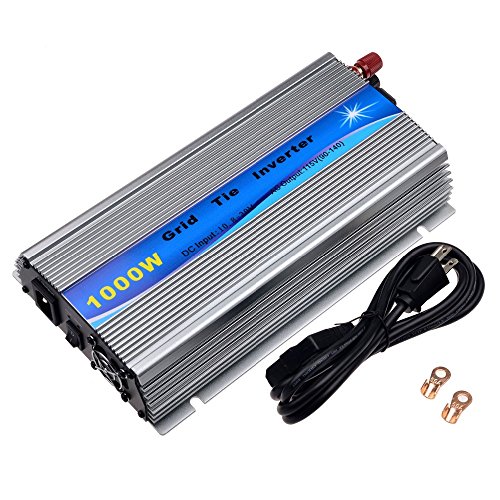
The Y&H 1000W grid-tie model is designed for smaller PV installations, with an input range of 26–60V and a recommended panel voltage in the 38–60V range. It is compatible with 36V/48V battery configurations when used with a suitable circuit breaker. The unit emphasizes MPPT efficiency and a limiter sensor to ensure the system only supplies the power the load requires. It serves as a compact, affordable option for users testing grid-tied configurations or supplementing existing utility energy with solar power.
Buying Guide: Key Considerations For Grid-Tie Inverter Chargers
When selecting a grid tie inverter charger, consider system size, load profiles, and local grid rules. A few critical factors include:
- Power rating vs. actual demand: Match continuous power output to the typical loads you expect to run, plus a margin for peak demand. For larger homes, higher-watt models with robust MPPT are preferred.
- MPPT range and PV compatibility: Ensure the MPPT voltage range aligns with your solar array’s Voc and operating voltage. A wider range improves efficiency across varying sunlight conditions.
- Battery compatibility: Check which battery chemistries are supported (lead acid, LiFePO4, lithium, AGM, etc.). Confirm whether the unit supports battery-free operation or requires a battery for operation.
- Grid interaction features: Look for anti-backfeed, backfeed protection, and islanding safeguards. In some regions, backfeed must meet utility interconnection standards.
- Hybrid capabilities: If you want seamless switching between solar, battery, and grid, prioritize models with integrated chargers, multiple outputs, and advanced protection features.
- Installation and expandability: For future growth, consider models with parallel or multi-unit configurations to scale up capacity without replacing the core inverter.
- Monitoring and connectivity: Built-in WiFi or remote monitoring helps track energy production, battery health, and performance trends over time.
- Physical size and cooling: Verify enclosure dimensions and cooling requirements, especially for large 12 kW units used in homes or businesses.
In sum, the best choice depends on your exact PV array size, battery strategy, and how crucial uninterrupted power is for your home. A grid-tie inverter charger with an appropriate MPPT range, solid protection, and clear grid interaction features will offer both energy efficiency and reliability across seasons and weather conditions.