Best Reliable Tankless Water Heaters for Instant Hot Water at Home
When you want rapid, dependable hot water without a bulky tank, a tankless electric water heater is a smart choice. This guide highlights five reliable options that balance efficiency, safety features, and compact design. Ideal buyers include apartment dwellers, small-space homeowners, RV travelers, and anyone replacing a traditional tank with an on-demand system. Below is a quick comparison of the shortlisted models to help you pick quickly.
| Product | Best For | Key Benefit |
|---|---|---|
| AIYEZIDT Tankless Water Heater Electric 110V | Small spaces, kitchens, bathrooms | Ultra-compact, instant 3–5 sec hot water |
| ORBEK 14kW Tankless Water Heater Electric | Two to three fixtures, main bath & kitchen | High flow up to 3.38 GPM, energy efficient |
| Rheem 18kW 240V Tankless Water Heater | Homes requiring higher demand | Self-modulating, up to 4.4 GPM |
| ORBEK RV Tankless Water Heater | RV use, travel campers | 60,000 BTU/min, compact RV compatibility |
| GREATBEAR 12kW On-Demand Water Heater | Mid-range power needs | Smart power control, efficiency up to 60% |
AIYEZIDT Tankless Water Heater Electric 110V
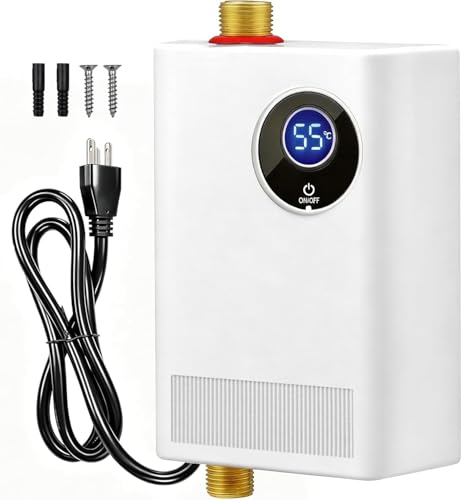
Best for: Small-space kitchens and bathrooms where counter or under-sink footprint matters. This compact unit delivers instant hot water within 3–5 seconds using 110V power. It reaches up to 131°F (55°C), making it suitable for quick handwashing, dish duties, and splash-of-hot-water needs without preheating delays. The LCD display helps monitor working status in real time.
- Instant hot water with no preheating
- Compact, wall-mounted, space-saving design
- IPX4 waterproof with leakage and dry-burning protection
Best for: Single-point use or near-sink applications. Caution: Limited hot water output compared to higher-wattage models; not ideal for showers with multiple concurrent users.
ORBEK 14kW Tankless Water Heater Electric

Best for: Homes needing reliable hot water for 2–3 fixtures with strong flow. This 14kW unit provides up to 3.38 GPM and emphasizes energy efficiency with advanced water-electric separation technology to reduce scale and corrosion. It’s designed for indoor installation and supports typical US-standard 240V wiring.
- Instant hot water in seconds
- Up to 3.38 GPM flow; ETL-certified
- Energy-saving design with corrosion/mineral management
Caution: Requires a robust 240V electrical circuit (about 60A two-pole breaker) and appropriate wiring; ensure electrical panel capacity before installation.
Rheem 18kW 240V Tankless Electric Water Heater
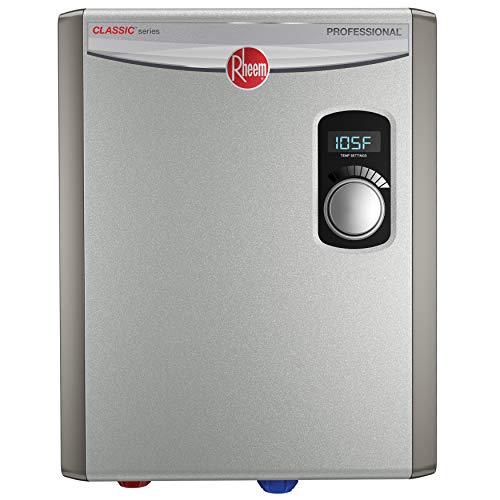
Best for: Households with higher hot-water demand needing robust performance. This Rheem model features external digital thermostatic control, self-modulation, and durable copper immersion elements. It can support higher flow while maintaining temperature, making it suitable for main baths and multiple outlets.
- LED display with ±1 degree accuracy
- Self-modulating power to match demand
- Flow up to 4.4 GPM; field serviceable
Limitation: Best performance when the electrical service supports higher wattage; ensure panel capacity is adequate before installation.
ORBEK RV Tankless Water Heater
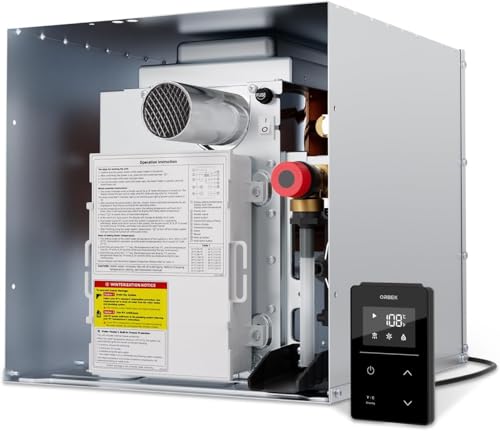
Best for: RV owners and frequent travelers needing reliable on-demand hot water in compact spaces. This model supplies up to 60,000 BTU per minute and uses staged combustion to conserve propane while delivering consistent temperatures. It’s compatible with various RV setups and can be retrofitted with other brands.
- On-demand hot water with smart energy use
- Durable heat exchangers; altitude-tolerant design
- Three door options; remote control available
Note: RV operation depends on proper venting and installation space; verify compatible dimensions before purchase.
GREATBEAR 12kW On-Demand Water Heater
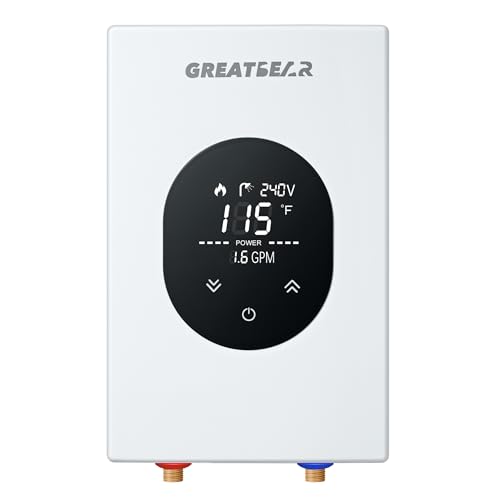
Best for: Mid-range power needs with strong efficiency. The 12kW model uses real-time power adjustment to maintain temperature while reducing standby losses. Suitable for kitchens, bathrooms, and light-duty RV use where a compact, wall-mounted unit is preferred.
- Wide temperature range (77–131°F / 25–55°C)
- Self-modulating power; up to 60% energy savings
- Compact, wall-mounted design
Limitation: Requires a dedicated 60A double-pole breaker; verify electrical capacity before installation.
Buying Guide
What should you consider when choosing a reliable tankless water heater?
- Power and flow: Higher wattage typically means higher flow. Match wattage to your hot-water needs and electrical capacity.
- Electrical requirements: Check breaker size, wiring gauge, and panel availability. Some units demand 240V and 60A or more.
- Install location: Under-sink, wall-mounted, or RV-specific units have different space and venting needs. Indoor installation generally requires sufficient clearance and ventilation.
- Protection features: Look for IP ratings (waterproofing), dry-boil protection, overheating protection, leakage safeguards, and auto shutoff for safety.
- Temperature control: Digital displays and thermostatic control offer precise settings. Self-modulating units adjust output to minimize energy use.
- Size and portability: Compact models save space; RV models prioritize weight, size, and compatibility with 12V or 24V systems.
- Reliability and maintenance: Durable materials (copper heat exchangers) and serviceability influence long-term performance.
Frequently Asked Questions
- What is a tankless water heater?
It heats water on demand without a storage tank, delivering hot water quickly where needed.
- Do tankless heaters save energy?
Yes, especially self-modulating units that adjust power to match flow, reducing standby losses.
- Can I install a tankless heater myself?
Some models are DIY-friendly, but many require electrical and plumbing work. Hire a licensed pro for complex installations.
- What wattage do I need for multiple outlets?
Higher wattage (e.g., 14kW–18kW) supports more outlets; ensure your panel can handle the load with a dedicated circuit.
- Are tankless heaters suitable for RVs?
Yes, especially compact, RV-specific models designed for travel and limited spaces.
- What maintenance is required?
Periodic descaling and inspection of connections help sustain performance, especially in hard-water areas.