Best Grid Tie Inverter 10kW: Top 5 Picks for Home and Off-Grid Power
Answering the common buyer question: which 10kW grid-tie inverter best fits a larger home or off-grid backup setup? This guide highlights five 10kW-capable options and similar high-capacity inverters, clarifying who each is best for and why. These choices suit large homes, cottages, RV parks, and grid-tied installations with high solar input. We compare battery-free and battery-backed designs, parallel-capable models, and dual-MPPT configurations to help you pick with clear reasoning.
Summary table of selected products:
| Product | Brand | Key Strengths | Best For |
|---|---|---|---|
| POWLAND 12000W Hybrid Solar Inverter | POWLAND | Battery-free design, high output, grid export option | Large homes needing seamless solar-to-grid transfer |
| ECO-WORTHY 10000W DC 48V | ECO-WORTHY | Dual MPPT, parallel up to 6 units | Off-grid or hybrid setups requiring scalable power |
| Y&H 10KW 48V Hybrid Inverter | Y&H | Battery-less option, CAN/USB/Wi‑Fi, parallel capable | Grid-tied or hybrid systems with multiple battery configurations |
| ZLOCYIVHE On Grid Hybrid 10KW | ZLOCYIVHE | Built for grid tie with dual MPPT, multiple voltage options | High-output, grid-tavorable installations |
| Y&H 1000W Grid Tie Inverter | Y&H | Compact, cost-effective, good for small expansions | Supplementary solar or micro-installations |
POWLAND 12000W Hybrid Solar Inverter

Best for: Large homes and busy workshops that require heavy loads with grid export capability. This unit delivers up to 12,000W of pure sine wave power and can feed excess solar energy back to the grid with an optional CT sensor. It supports parallel operation up to six units and works with 48V LiFePO4 or lead-acid batteries, making it a flexible choice for grid-tied, battery-free, or battery-supported configurations.
Why selected: The combination of high output, grid-compatibility, and parallel scalability makes this inverter a strong choice where heavy-duty loads like central AC and big refrigerators are present. The battery-free design reduces upfront costs for users prioritizing grid export and utility offset. A caution: the claimed 99.9% efficiency is tied to MPPT performance under favorable conditions; real-world results can vary with shading and panel quality.
ECO-WORTHY 10000W DC 48V Inverter Charger

Best for: Off-grid or backup power setups requiring robust MPPT control and modular compatibility. This model combines inverter, charger, and dual MPPT controllers in one unit, designed for 48V battery systems and capable of parallel operation (up to six units). It provides 120V/240V split-phase output and supports significant PV input power (dual MPPT up to 5500W per side).
Why selected: The dual MPPT design and high charging capacity enable flexible solar array design and efficient energy harvesting. Ideal for cabins, RVs, and independent solar installations. Limitation: It is marketed primarily for off-grid use and is not intended for feeding power back to the grid in some configurations; verify your local grid-tie requirements before installation.
ZLOCYIVHE On Grid Hybrid Inverter 10KW

Best for: Grid-tied installations needing a robust 10kW hybrid solution with dual MPPT and Wi‑Fi connectivity. This model supports both parallel and single-phase operation with a wide input voltage range and high PV input compatibility. It’s suitable for larger homes or small commercial setups seeking strong grid interaction and flexible battery options.
Why selected: The unit emphasizes grid-tie readiness, parallel capability, and voltage flexibility, which helps optimize solar harvest in varying sun conditions. Caution: IP20 rating indicates indoor use only, so ensure proper enclosure and cooling in your installation.
Y&H 10KW 48V Hybrid Inverter

Best for: High-capacity parallel and split-phase solar systems, especially where both grid charging and battery storage are desired. This inverter supports a 48V battery setup, programmable MPPT, and CAN/RS485 communication for system monitoring. It is compatible with a variety of battery chemistries, including Li-ion and lead-acid, and can operate with or without batteries.
Why selected: Its dual MPPT design and flexible battery support make it adaptable to diverse home energy plans. A potential limitation: internal protection and enclosure considerations should match the installation environment to prevent IP-related exposure in outdoor settings.
ZLOCYIVHE On Grid Hybrid 6.2kW/10kW Options
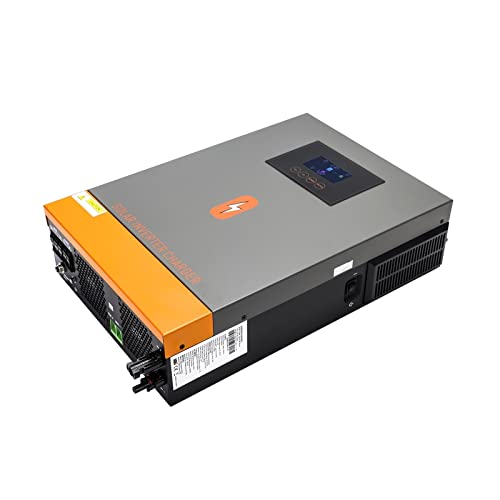
Best for: Installers needing a scalable hybrid/grid-tie solution with a 6.2kW to 10kW range and WIFI connectivity for monitoring. This option supports multiple configurations and has a pure sine wave output suitable for sensitive electronics.
Why selected: The product line offers flexible power levels and multiple voltage configurations, aiding tailored system design. Limitation: Some models emphasize indoor use and may require additional weatherproofing or enclosure choices for outdoor installations.
YINZINR 1000W Grid Tie Inverter

Best for: Small system expansions or adding grid-tie capability to a modest solar array. This 1000W unit is a compact solution when upgrading a modest installation without committing to a high-capacity inverter.
Why selected: It provides a practical entry point for users increasing solar capacity while keeping system complexity manageable. Caution: Being a smaller unit, it won’t handle large loads or high PV input without additional inverters.
Buying Guide: Key Considerations for 10kW Grid Tie Inverters
What output do you need? Consider continuous vs peak power. A 10kW system should handle typical high-load periods, but verify peak capabilities for startup surges in appliances.
Grid-tie vs hybrid: Decide whether you want a pure grid-tie inverter, a hybrid with battery storage, or a battery-free design. Hybrid units add resilience but may be more complex to install.
MPPT and solar input range: Look for dual MPPT and wide input voltage ranges to maximize harvest in various sun conditions and panel configurations.
Battery compatibility: If you plan to use batteries, confirm compatible chemistries (LiFePO4, lead-acid, etc.), voltage, and parallel capabilities for scalability.
Parallel operation: For large homes, parallel-capable models help scale output. Check the maximum number of units supported and the communication interface used for monitoring.
Warranty, enclosure, and cooling: Indoor vs outdoor use matters. Ensure proper IP rating, enclosure or cabinet, and adequate cooling to maintain performance.
Monitoring and connectivity: Look for Wi-Fi, CAN, USB, or RS485 options to monitor performance and receive alerts. This helps with proactive maintenance and energy optimization.
FAQ
- What is a grid-tie inverter and how does it differ from a standalone inverter?
Answer: A grid-tie inverter converts solar power to grid-compatible AC and feeds excess energy back to the utility grid. Standalone inverters operate independently without feeding energy to the grid. - Can I run a 10kW inverter without batteries?
Answer: Yes, many 10kW grid-tie or hybrid inverters operate battery-free, exporting excess solar to the grid or supplying essential loads directly; check model specifics. - Is parallel operation important for a 10kW system?
Answer: Parallel capability allows stacking multiple units to reach higher total power and improve reliability, especially for large homes or commercial applications. - What should I consider when choosing MPPT features?
Answer: Dual MPPT helps optimize different solar strings, improves energy harvest in partial shading, and supports flexible PV designs. - Are there safety considerations for grid-tie systems?
Answer: Yes. Ensure anti-backfeed protection, proper grounding, permits, and adherence to local grid-interconnection rules. Use professional installation when needed. - How do I know if a model is suitable for outdoor use?
Answer: Check the enclosure rating (IP rating), cooling requirements, and whether the unit is designed for indoor or outdoor installation.