Best Wind Turbine Generator Options for Home Power
People exploring off-grid living or renewable energy often search for reliable wind turbine generators. This guide highlights five well-regarded options, spanning compact kits for small setups to higher-capacity systems. Each pick includes a quick overview, key strengths, and practical use cases to help you compare performance, durability, and compatibility with common wind profiles.
| Product | Brand | Approx. Output | Best For |
|---|---|---|---|
| 1000W Wind Turbine Generator Kit | RELAXORIX | 1000W | Off-grid homes, low wind areas |
| Wind Power V4.0 STEM Kit | Thames & Kosmos | Small turbine, electricity for a model car | Education and experiments |
| 10000W/12000W Vertical Turbine Kit | Lbxlhr | 12,000W (up to 48V) | Hybrid wind-solar systems |
| Wind Turbine 400W Hybrid Kit | SmarketBuy | 400W | Small household or backup power |
| Mdxtog 3000W Wind Turbine Kit | Mdxtog | 3000W | Mid-size home/off-grid needs |
The selected products span a range of power outputs, architectures (vertical axis, fixed blade, and multi-blade designs), and controller technologies. When selecting a wind turbine generator, consider wind site average speed, tower height, load requirements, and compatibility with a battery bank or hybrid energy system. The following sections detail five relevant options, emphasizing features that influence efficiency, reliability, and long-term performance.
RELAXORIX 1000W Wind Turbine Kit

The RELAXORIX kit uses a vertical-axis design with nylon fiber blades and a three-phase permanent magnet alternator. Its intelligent controller optimizes voltage and current tracking, which can improve energy capture in varying wind conditions. The low-start 2 m/s wind speed helps generate power earlier in marginal conditions, making it suitable for off-grid homes with modest wind resources. The 1000W rating supports small to medium energy loads and can be integrated with a hybrid system for greater resilience.
Key considerations: vertical axis designs can reduce yaw alignment requirements, but may require sturdy mounting and vibration management. The permanent magnet generator minimizes torque resistance and supports smoother operation. When pairing with storage or a hybrid generator, ensure boosters and regulators are sized to handle 1000W continuous output and peak surges.
Thames & Kosmos Wind Power V4.0 STEM Kit
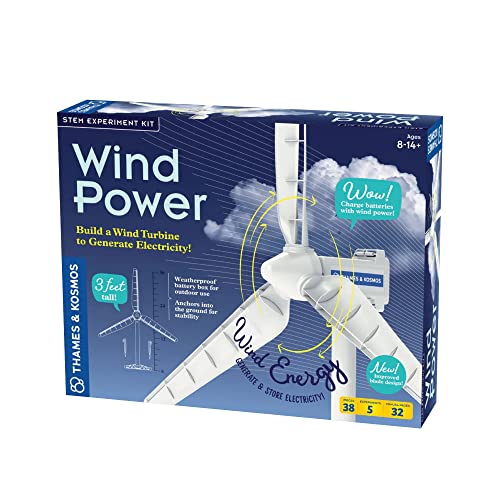
This STEM kit provides a real, working 3-foot wind turbine intended for educational exploration. It demonstrates how wind converts to electricity while delivering a tangible project that can charge a battery and power a small model car. Its single-piece blade construction improves durability and aerodynamics, making it a compelling choice for classrooms, hobbyists, or introductory backyard experiments. It’s not a large-scale energy solution, but it clearly illustrates wind power fundamentals.
Key considerations: best for learning and demonstrations, not a high-demand energy system. The integrated blade design supports straightforward assembly and predictable performance characteristics in moderate wind. For a practical home-energy setup, pair with larger-capacity systems and proper safety enclosures.
Lbxlhr 12000W Vertical Turbine Kit

The Lbxlhr turbine is a high-capacity vertical-axis model designed for hybrid wind-solar setups. It features a maglev generator that reduces start torque and improves longevity, with a target service life of 10 to 15 years. The three-phase AC PMG and intelligent microprocessor regulate current and voltage to maximize wind energy utilization. A notable feature is 360° wind acceptance with no yaw system required, supporting consistent output in varied wind directions. Suitable for larger residential or microgrid installations.
Key considerations: high output requires robust mounting, weatherproofing, and a sizable battery or storage system. The long service life and low-torque start benefit frequent wind-rich regions, but installation should account for dynamic loads and safe clearances around the tower and blades.
SmarketBuy Wind Turbine 400W Hybrid Kit

This 400W hybrid kit targets small homes or backup power scenarios, pairing a wind turbine with a charge controller. It supports DC12V battery configurations and features a low start-up wind speed of about 2.5 m/s, making it usable in modest wind zones. The design uses durable blade materials (PBT) with injection-molded precision for low vibration and reliable energy capture. It’s a practical starter for learning, camping, or light-duty backyards where space and wind are limited.
Key considerations: suitable for smaller energy loads and grid-independent operation. Ensure your storage and electrical system can handle 400W average output and that the wind site regularly reaches or surpasses the rated wind speed for meaningful energy generation.
Mdxtog 3000W Wind Turbine Kit

The Mdxtog kit targets a mid-to-large home or off-grid setup with a 3000W capacity. It uses a three-phase AC PMG with a low-torque, high-power tracking intelligent microprocessor to optimize current and voltage, improving annual energy generation. The turbine features an arc blade design and high-quality aluminum alloy blades to enhance aerodynamics and corrosion resistance. It is designed for robust performance in varying wind conditions and can support higher energy loads than smaller kits.
Key considerations: ensure the installation site provides adequate wind speed and stable mounting for a 3 kW turbine. Pair with a suitably sized battery bank and charge controller to manage energy, prevent overcharging, and maintain system efficiency across seasons.
Buying Guide: Key Purchase Considerations
When evaluating wind turbine generators, consider power output needs, wind site conditions, and system integration. For off-grid homes, start with a realistic daily energy goal and match turbine capacity accordingly. For educational or hobby use, a smaller, modular kit can provide clearer demonstrations without the complexity of high-capacity systems.
Important factors include turbine type (vertical vs. horizontal axis), blade material and aerodynamics, generator type (permanent magnet vs. induction), and the presence of a smart controller or MPPT that can adapt to wind variability. A reliable mounting solution and proper tower height ensure better wind exposure and reduce vibration. Battery compatibility and charge control are essential for storing energy and protecting battery health.
Performance considerations also include low-start wind speed, cut-in wind speed, and maximum wind ratings. In higher wind environments, ensure the turbine includes protective features such as RPM limits, vibration damping, and robust weatherproofing. Finally, factor in maintenance requirements, spare parts availability, and safety considerations for installation and ongoing operation.