Best Gas Regulator for Generator: Top Propane and Natural Gas Regulators for Reliable Power
The right gas regulator is essential for safe, consistent generator operation, whether you’re running on propane or natural gas. This guide highlights five credible regulators that balance stability, compatibility, and ease of use. Each option is designed to deliver steady output for generators and a range of appliances. Read on to compare features, setups, and application notes to help you choose the best regulator for your generator system.
| Product | Brand | Output Range | Connection Type | Key Feature |
|---|---|---|---|---|
| Marshall 1642-DFF Generator Propane Regulator | MEGR-1642-DFF | 11″ WC Output | 3/4″ Side Outlet | Adjustable 9″–13″ WC, requires first stage high pressure regulator |
| TEENGSE 102-B Natural Gas Regulator | TEENGSE | 4″–10″ WC (config depending) | 1/2″ NPT (in/out) | Dual compatibility with NG and LPG, includes adapters |
| GasSaf 5FT Two Stage Propane Regulator | GasSaf | 11″ WC outlet | 3/8″ Flare Nut | Two-stage stability, easy QCC1/Type1 hookup |
| Maxitrol RV48L Natural Gas Regulator | MAXITROL | 3″–6″ WC | 3/4″ FPT | Low inlet to keep steady gas flow for NG |
| Emerson-Fisher LP-Gas R622-DFF | Emerson-Fisher LP-Gas Equipment | 9″–13″ WC | 3/4″ x 3/4″ NPT | Two-stage design with defined 9–13″ WC range |
The following sections detail five compelling options. Each product section includes a brief overview, installation notes, and the features most relevant to generator use. All sections keep a practical, objective lens for selection clarity.
Marshall 1642-DFF Generator Propane Regulator

The Marshall 1642-DFF is a propane regulator designed for generator setups with an 11″ water column output. It features a 3/4″ female NPT input and a 3/4″ female NPT side outlet. The regulator requires a first-stage high-pressure regulator at the tank to achieve the specified operating range. Its adjustable output spans approximately 9″ to 13″ water column, enabling fine-tuning for stable generator performance. This regulator is suitable for systems that need consistent pressure regulation in propane-fueled generators and related appliances.
TEENGSE 102-B Natural Gas Interchange Regulator

The TEENGSE 102-B is a natural gas/regulator designed for NG and LPG applications, with 1/2″ inlet/outlet piping. It includes brass 1/2″ NPT adapters and conversion options for flexible NG/LPG use. Typical outlet values around the 10″ water column range when configured for LPG, with a second pathway for NG that supports around 4″ WC for stable supply. The device is adjustable, allowing a switch between LP and NG modes by a simple shaft core adjustment, which can simplify mixed-fuel systems.
GasSaf 5FT Two Stage Propane Regulator With Hose

The GasSaf two-stage propane regulator provides enhanced stability and a steady outlet pressure of approximately 11″ water column. The hose reaches 5 feet and uses a 3/8″ flare nut connection, compatible with multiple QCC1/Type1 setups. This configuration is well-suited for dual-fuel generators and other propane-operated appliances, delivering better regulation across fluctuating demand scenarios compared to single-stage regulators.
Maxitrol RV48L Natural Gas Regulator

The Maxitrol RV48L regulator is designed for natural gas systems, with a 1″ inlet/outlet opening and a 3/4″ FPT thread. It delivers a precise 3″–6″ water column outlet pressure and operates at a nominal 1/2 psi inlet. The unit’s bigger inlet/outlet size simplifies compatibility with larger NG piping and provides reliable regulation for generators and other NG-powered equipment, especially in installations where steady flow is critical.
Emerson-Fisher LP-Gas Regulator R622-DFF
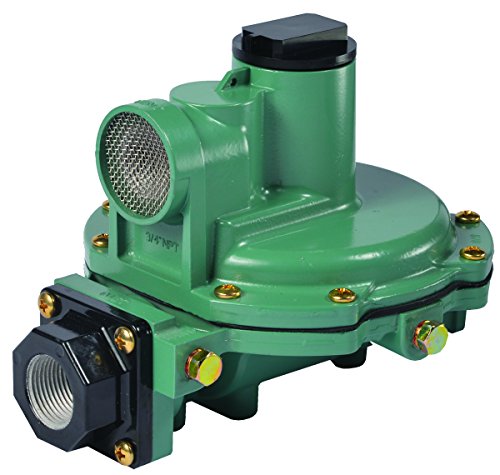
The Emerson-Fisher R622-DFF is a second-stage regulator intended for LP-gas setups, with a 9–13″ water column spring and 3/4″ x 3/4″ NPT end connections. This model is well-suited for generators that primarily run on propane, delivering a stable pressure window to maintain consistent generator output. It is often used in tandem with a first-stage regulator for robust LP gas systems and is favored where higher precision in the 9–13″ WC range is required.
Buying Guide: Gas Regulator Considerations For Generators
Choosing the right regulator involves evaluating your fuel type, desired output stability, and overall system compatibility. Below are key considerations and how they map to the products above.
- Fuel type and compatibility: If you use propane, consider regulators rated for 9″–13″ WC output stability (as with Emerson-Fisher and GasSaf two-stage options). For natural gas, look for NG-specific models like Maxitrol RV48L or TEENGSE 102-B with appropriate inlet/outlet threads and adapters.
- Output pressure range: Generators typically benefit from regulators in a defined range (for LP gas, around 9″–13″ WC; for NG, commonly 3″–6″ WC). Selecting a regulator with a suitable window reduces fluctuations during load changes.
- Two-stage vs. single-stage: Two-stage regulators (GasSaf, Emerson-Fisher, Maxitrol variants) offer steadier output under varying demand, which improves generator performance and fuel efficiency.
- Connections and adapters: Check inlet/outlet sizing (NPT vs. flare) and whether adapters are included. TEENGSE and Azdele examples show conversion options to expand applicability across NG and LPG systems.
- Installation clarity: Regulators designed for easy alignment with standard tanks and hoses reduce installation time. Regulator kits with hoses (GasSaf 5FT) provide ready-to-use setups for quick deployment.
- Safety and compliance: CSA-certified or CSA-listed units (as some Azdele models indicate) provide assurance for residential and commercial installations. Always follow local codes and manufacturer guidelines.
- System integration: If you already have a first-stage regulator at the tank, ensure the chosen regulator’s input/output specifications align with the remaining stage to avoid pressure mismatches.
In summary, select a regulator that matches your fuel type, offers a stable outlet within the generator’s operating window, and provides practical installation features (hose length, adapters, and two-stage regulation) for dependable power during outages or remote operations.