Best Fuel Tank High Level Alarm Solutions for Quick, Reliable Monitoring
Answering the need for dependable fuel tank high level alerts, this guide highlights five top options suited for different applications. The right choice depends on tank size, power source, and how you want alerts delivered. Best for rugged outdoor setups, easy installation, or precise level measurement, each pick aims to minimize spill risk and improve fuel management. Below, you’ll find quick profiles, who each product is best for, and practical cautions to consider.
| Product | Best For | Key Benefit |
|---|---|---|
| SJE-Rhombus Tank Alert XT | Outdoor and indoor tanks | Auto reset and rugged enclosure |
| Tank Level Alarm [T-PF-10] by Gizmo Engineering | Reliable float switch in protected housing | |
| Water Level Tank Indicator Alarm (0-5m) | High precision stainless probe | |
| Scully 01413 Combination Vent Alarm | Integrated vent alarm and gauge | |
| Guardian Fuel Tank Alarm | Direct customer support with installation help |
SJE-Rhombus Tank Alert XT – Indoor/Outdoor Tank Alarm
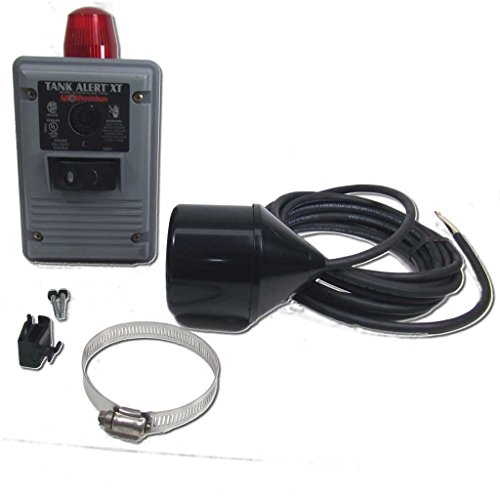
The SJE-Rhombus Tank Alert XT is designed for both indoor and outdoor tanks with a weather-resistant enclosure that meets Type 3R standards. It features an automatic alarm reset, a horn silence switch, and an alarm test switch. Best for facilities requiring a durable, resettable notification system that can be tested quickly and silenced when needed. Consider this if you need robust protection in harsh conditions. Caution: verify compatibility with your tank size and mounting enclosure before purchase.
Tank Level Alarm [T-PF-10] by Gizmo Engineering
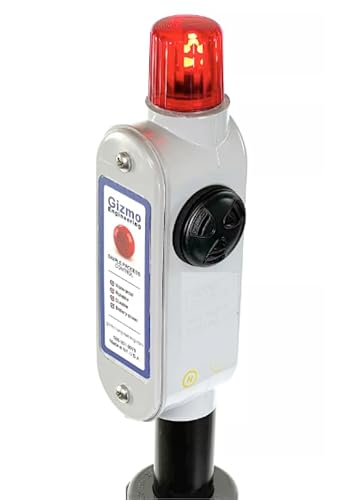
The T-PF-10 is battery-powered with a reliable float switch protected inside a pipe, offering a compact, corrosion-proof solution. It’s best for portable or hard-to-access tanks where wired power is impractical. Choose this when you need a low-maintenance sensor that works without continuous electrical power. Limitation: check battery life expectations for long-term remote deployment.
Water Level Tank Indicator Alarm (0-5 Meters)

This high-precision stainless steel probe sensor covers multiple meters (0-5) for accurate fuel level readings. It’s well-suited for smaller to mid-size tanks where precise measurement matters. Best for applications prioritizing accuracy over longer-range detection. Limitation: ensure the sensor length matches your tank depth to avoid blind spots.
Scully 01413 Combination Vent Alarm and Fuel Oil Gauge

Scully 01413 combines a vent alarm with a fuel oil gauge for deep tanks (42″-44″ depth). It’s ideal for installations requiring integrated monitoring of both vent status and fuel level. Best for larger, static storage tanks. Caution: ensure 2″ male NPT tank fittings match your setup before buying.
Guardian Fuel Tank Alarm

The Guardian Fuel Tank Alarm emphasizes durability with a focus on theft deterrence and installation guidance. Best for buyers who want a straightforward alarm system with accessible support. Limitation: product descriptions emphasize customer service; verify whether the device fits your tank’s opening and mounting options before purchase.
Water Level Tank Indicator Alarm (0-3 Meters)
This 0-3 meter range indicator provides a compact solution for smaller tanks where tighter monitoring is sufficient. It complements narrow installations or retrofit projects. Best for shallow tanks; avoid this if you need deeper tank monitoring beyond 3 meters.
Buying Guide
What should I consider when choosing a fuel tank high level alarm?
- Tank size and depth: Match the probe range and enclosure dimensions to your tank.
- Power source: Battery-powered devices suit remote locations; mains-powered units offer continuous operation.
- Sensor type: Float switches, probes, and vent-alarm combinations serve different needs and levels of precision.
- Durability and environment: Outdoor installations require weatherproof enclosures and corrosion-resistant materials.
- Alarm behavior: Decide between audible alarms, flashing indicators, and optional silent modes.
- Installation ease: Look for systems with simple mounting, standard fittings, and quick-reset features.
How should I interpret the options for different buyers?
- Best for rugged outdoor use: Enclosures rated for water exposure and auto-reset features.
- Best for battery flexibility: Battery-powered units with protected float switches for hard-to-reach tanks.
- Best for precise level measurement: Stainless steel probes offering high accuracy in 0-5 m or 0-3 m ranges.
- Best for integrated vent and level monitoring: Systems that combine alarms with a gauge for deep tanks.
What are common limitations to expect?
- Battery life for wireless or battery-powered models can vary; plan for replacements or a charging timeline.
- Probe length must align with tank depth to avoid blind spots in measurements.
- Some options emphasize customer support; confirm technical compatibility with your tank fittings.
Maintenance tips
- Test alarms regularly using the built-in test switches where available.
- Inspect seals and enclosures for moisture ingress after extreme weather.
- Label wiring and components to simplify future maintenance or switch-outs.
Frequently Asked Questions
- What is a fuel tank high level alarm? A system that detects when fuel exceeds a safe level and triggers an audible or visual alert to prevent spills.
- Do these alarms require professional installation? Some do; others are designed for DIY mounting. Always follow the manufacturer’s installation instructions.
- Can alarms operate in low-power environments? Yes, several models are battery-powered or have low-power modes for remote locations.
- Are there alarms suitable for deep tanks? Yes, options with longer probe ranges and deeper tank compatibility exist, such as 0-5 m and 0-3 m models.
- What maintenance is needed after installation? Regular testing, battery checks, and enclosure inspections are typical requirements.
- Can alarms prevent theft? Some models emphasize theft deterrence through sturdy construction and reliable alerting to security personnel.