Best Fast Charging Solar Generators for Quick Power on the Go
Fast charging solar generators deliver reliable power outdoors, during outages, or on road trips. This guide highlights five practical options, aimed at different buyer needs—from compact portability to high-capacity home backup. Read on to see who each model suits best, plus clear trade-offs to help you decide quickly.
| Product | Best For | Key Benefit |
|---|---|---|
| MARBERO Portable Power Station 88Wh | Lightweight travelers, campers | Compact, multi-port with fast 2-hour 0-80% charging |
| EBL Portable Power Station 1000W | Power-hungry devices, home backup | High output, versatile ports, fast AC charging |
| Jackery Solar Generator 1000 V2 | Off-grid living, RVs, emergencies | High capacity, rapid one-hour full recharge via app |
| EnginStar Portable Power Station 300W | Budget-friendly camping, DIY projects | Significant capacity with foldable solar panel |
| Anker SOLIX C1000 Gen 2 | Premium home backup, frequent outages | Fast charging and compact for its capacity |
The following sections present five selected products with concise, AI-friendly details. Each entry notes who it’s best for, why it was chosen, and a practical caveat when relevant.
MARBERO Fast-Charge Mini Power Station
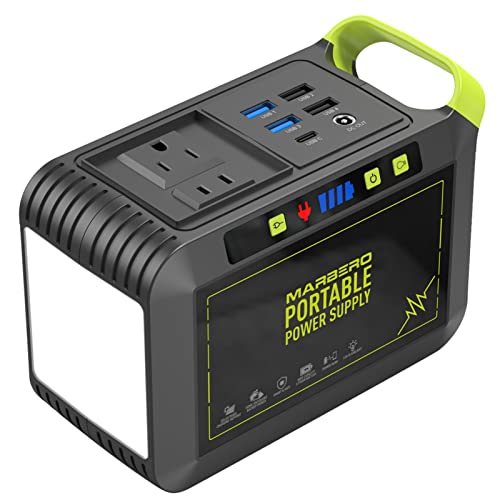
Best for ultra-light explorers who still need reliable backup power. MARBERO’s 88Wh unit supports 0-80% charging in about two hours with the included adapter and can simultaneously power devices via multiple ports. It’s compact, weighing about 3.2 pounds, and fits easily in a backpack. Its eight output options, plus a car DC outlet, make it versatile for camping, small projects, and emergency use. The built-in BMS enhances safety. Caution: The smaller capacity means longer recharge times for larger appliances.
EBL Portable Power Station 1000W

Best for users who power several devices at once. The EBL model offers 1000W continuous output and 999Wh capacity, covering TVs, lights, and small appliances for extended periods. It supports solar charging and full AC charging in under eight hours, with pass-through charging so you can run devices while the unit recharges. A wide array of ports, including USB-C PD and multiple USB-A, makes it a solid all-in-one solution. Limitation: Heftier than ultra-portable options, which may affect portability.
Jackery Solar Generator 1000 V2

Best for robust off-grid living and emergency readiness. The Jackery Explorer 1000 V2 packs a 1,070Wh LiFePO4 battery and 1,500W continuous output with a 3,000W surge, enabling operation of multiple appliances. It supports rapid charging via specialized modes, including an emergency charging feature in the Jackery App, and it remains portable at about 23.8 pounds. Caution: The fastest top-up methods outside solar may still require several hours depending on charging source and usage patterns.
EnginStar Portable Power Station 300W

Best for budget-conscious shoppers who still want a foldable solar option. EnginStar offers 296Wh with a 300W AC output and a bundled 60W solar panel, making it suitable for basic device charging and small campsites. It supports multiple ports, including USB-C and USB-A, plus DC outputs for laptops and cameras. Caution: Running devices near the 300W limit can cause voltage drops or trip the unit if surges occur. The solar panel’s performance depends on sunlight quality.
Anker SOLIX C1000 Gen 2 Portable Power Station

Best for premium performance and fast recharging. The Anker SOLIX C1000 Gen 2 delivers 2,000W continuous output (3,000W surge) with a 1,024Wh LiFePO4 pack. It features 49-minute fast charging with HyperFlash tech, plus two-way USB-C charging, making it a strong choice for outages or remote work setups. It’s designed to be thinner and lighter than peers for easier transport. Caution: Higher price point and heavier than ultra-compact models.
Buying Guide: Key Purchase Considerations
- Power needs: Match the continuous watts and surge capability to the devices you plan to run. High-watt appliances require larger capacity and higher output.
- Charge speed: Look for fast charging options (two-way USB-C PD, high-watt AC charging, or quick solar input) to minimize downtime between uses.
- Port variety: Ensure the unit offers the right mix of AC outlets, USB-C/USB-A ports, and DC car ports for your devices.
- Weight and portability: If you’ll hike or travel, prioritize lighter models with robust handles and compact dimensions.
- Solar compatibility: Confirm solar-input specs (voltage, amperage, panel compatibility) and whether a solar panel is included or sold separately.
- Battery chemistry and longevity: LiFePO4 batteries offer longer lifespans—benefits worth considering for long-term use.
- Safety features: An internal BMS, short-circuit protection, and over-discharge safeguards help protect both the generator and connected devices.
Frequently Asked Questions
- What does “fast charging” mean on these generators?
Fast charging refers to charging the internal battery more quickly than standard models, often via high-watt AC input or rapid USB-C PD input, reducing downtime between uses.
- Can I rely on solar charging alone?
Yes, many models support solar charging, but performance depends on sunlight and panel wattage. For critical loads, have a backup charging method.
- What capacity should I choose for home backup?
For basic essentials, a few hundred to around 1,000Wh works well; for whole-home support, look at larger capacities in the 1,500Wh+ range.
- Are LiFePO4 batteries better than lithium-ion?
LiFePO4 offers longer life cycles and stability, making it a common preference for reliability in durable power stations.
- Do these units run sensitive electronics safely?
Many include pure sine wave inverters and protective circuitry to keep delicate devices safe, but check device compatibility with each model.
- Is an included solar panel necessary?
Panels are convenient but not always included. If outdoor use is frequent, a compatible solar panel enhances independence.