Best Heat Powered Stove Fans for Moving Heat Around Your Room
For efficient warmth distribution from wood stoves and boilers, heat-powered stove fans move heat without electricity. These devices turn ambient stove heat into powered airflow, helping to spread warmth more evenly while potentially reducing fuel usage. Below are five top options designed to optimize heat transfer, safety, and comfort in American homes. A quick summary table follows to compare key details at a glance.
| Product | Brand | Type | Key Benefit |
|---|---|---|---|
| YOZISS Wood Stove Fan | YOZISS | Heat Powered, 60° Oscillation | Wider room coverage and real-time temp monitoring |
| Miaton Wood Stove Fan | Miaton | Heat Powered, Thermometer | Improves heat circulation with energy efficiency |
| PYBBO Heat Powered Fireplace Fans | PYBBO | 5-Blade, Thermometer | Large air volume, no batteries needed |
| BLFIRE Wood Stove Fan | BLFIRE | Dual Motor, Thermometer | More power with quieter operation and protection |
| Tomersun Wood Stove Fan | Tomersun | 8-Blade, Bracket, Thermometer | Superior air circulation with bracket mounting |
YOZISS Wood Stove Fan Heat Powered

YOZISS offers a heat-powered stove fan designed to move heat efficiently with 60-degree oscillation. The fan activates around 185°F (70°C) and includes a magnetic thermometer for real-time temperature monitoring. It is built to cover more space than standard models by gently swaying to distribute warmth, reducing cold spots. An auto-deformation mechanism lifts the unit if temperatures approach unsafe levels, protecting the motor while maintaining quiet operation. This model is well-suited for flat-top wood stoves and fireplaces seeking even heat dispersion and temperature awareness.
Miaton Wood Stove Fan
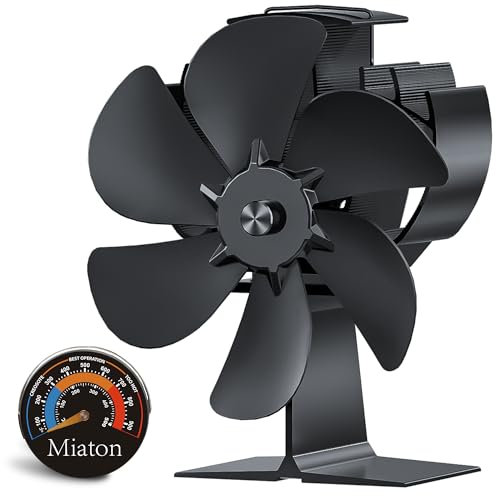
Miaton’s heat powered stove fan converts heat to electricity to operate the motor, working even in power outages. The unit is crafted from anodized aluminum for heat resistance and longevity, maintaining performance under high-temperature use. It features built-in safety with a high-temperature protection device, and its quiet operation keeps noise under 25 decibels. A compact design with a metal carrying handle makes it easy to move and use with various heaters, including buddy heaters. The included thermometer helps users monitor surface temperature for optimal operation.
PYBBO Heat Powered Fireplace Fans

PYBBO’s 5-blade design provides a larger air volume while distributing warmth horizontally within the room. The thermoelectric module acts as a tiny generator to power the motor, so no batteries or external power is required. The anodized aluminum blades and base resist rust and wear while delivering efficient heat transfer. The design emphasizes silent operation and improved warm air circulation, helping to reduce wood consumption by spreading heat more effectively across the space.
BLFIRE Wood Stove Fan
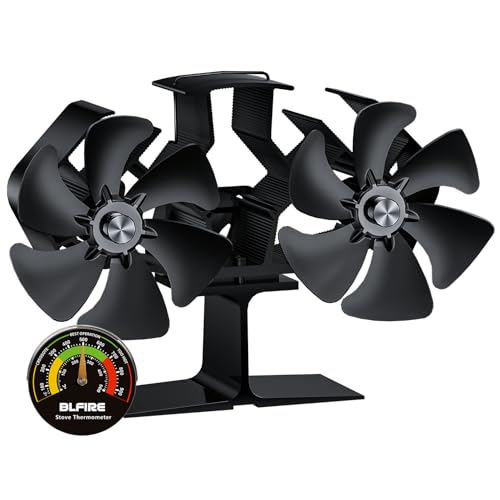
BLFIRE features a dual-motor 12-blade stove fan designed to move about 50% more warm air than single-motor models. It operates quietly at or below 25 dB, making it suitable for living areas and bedrooms. A temperature-sensing module lifts the fan away from direct contact with the hot stove when temperatures rise, protecting the unit. The included thermometer helps monitor conditions for safe operation and effective heat distribution, delivering steady warmth with reduced fuel usage.
Tomersun Wood Stove Fan 8 Blades

Tomersun’s 8-blade heat-powered fan delivers enhanced air circulation for faster room warming. The included bracket enables secure mounting to compatible stoves, maximizing heat dispersion for optimal_efficiency. A built-in thermometer helps track surface temperature, guiding users to operate within a recommended range (approximately 390°F-480°F, with a caution max around 570°F). The fan is designed for flat-top stoves and fireplaces and emphasizes powerful, uniform warmth with minimal energy use.
Buying Guide: Key Purchase Considerations
When selecting a heat-powered stove fan, consider the following aspects to ensure strong performance and safe operation:
- Heat activation range: Match the fan’s operating temperature to your stove type and typical flame levels to ensure timely startup and consistent airflow.
- Airflow and blade design: More blades or a larger blade area can increase airflow, but may add weight. Choose models with balanced performance and noise levels for your space.
- Material and durability: Look for anodized aluminum or corrosion-resistant components to withstand high temperatures and prolonged use.
- Safety features: Overheat protection systems, temperature-sensitive lift mechanisms, and thermometers help prevent damage and monitor safety during operation.
- Thermometer inclusion: A built-in or included magnetic thermometer simplifies monitoring and helps optimize operation within safe ranges.
- Noise level: Most heat-powered fans operate quietly, but check decibel ratings if you place the unit in bedrooms or study areas.
- Installation flexibility: Brackets or adapters can extend compatibility with a wider range of flat-top stoves and fireplaces.
- Warranty and support: A solid warranty and responsive customer support add value for long-term ownership and peace of mind.
Additional Perspectives: Efficiency, Safety, and Compatibility
From an efficiency standpoint, heat-powered stove fans can reduce wood consumption by spreading heat more evenly, allowing you to maintain comfortable room temperatures with lower fuel use. Safety considerations center on avoiding overheating and ensuring the fan is removed or disengaged if temperatures exceed safe limits. Compatibility varies with stove top designs; flat-top stoves and certain fireplaces work best with mounting brackets or adapters. When evaluating models, weigh airflow gains against noise, weight, and the ease of temperature monitoring to determine which option aligns with your household heating habits.
Conclusion-Free Product Overview: Quick Take
The five highlighted options emphasize heat-driven operation, real-time temperature awareness, and enhanced heat distribution for better room warmth without relying on electricity. Depending on room size and stove type, users can select from oscillating coverage (YOZISS), durable aluminum builds (Miaton), larger blade configurations (Tomersun), multi-motor power (BLFIRE), and balanced, thermoelectric options (PYBBO). Each model aims to improve warmth dispersion while maintaining low noise and robust safety features.