Best KVM Switches for Seamless Multi-Device Control
Answering the need for simple, reliable device switching, these KVM-related products cover tactile switches, temperature control interfaces, and pressure sensing devices that complement microcontroller and automation projects. This guide targets makers, hobbyists, technicians, and small-scale environments where quick, dependable switching matters. The top picks below are selected for clear function, ease of integration, and practical use cases.
| Product | Best For | Why It Stands Out |
|---|---|---|
| Cylewet 6Pcs V-153-1C25 Micro Limit Switch | Arduino and hobby projects | SPDT snap-action with a compact kit of six; robust mechanical action. |
| HB901-FK-M Digital Instrument Temperature Controller Switch | Digital temperature control setups | Integrated temperature controller switch with digital inputs; versatile for instrumentation. |
| HB901-FK-M an FP-M an V an (HB901-FK-V an K) | Digital control panels | Similar controller with flexible module naming; useful when multiple controllers are needed. |
| Arionyx Pressure Switch Pressure Transmitter KS-E-E-Z-B04C-M-V-558 | Pressure sensing and control | Stable, durable, diversified output forms for pressure monitoring. |
| Arionyx Pressure Switch KS-E-E-Z-B04C-M-V-558 | Pressure sensing with multiple outputs | Good stability and durability; flexible output options. |
Each product below includes a concise description, best-use scenarios, and a practical note to help you decide which option fits your project goals. Use the Buying Guide and FAQ to compare key purchase considerations.
Cylewet 6Pcs V-153-1C25 Micro Limit Switch Lot

This pack includes six micro limit switches with a long straight hinge lever arm and SPDT snap-action, ideal for Arduino-based projects and compact control panels. Best for hobbyists building multi-switch interfaces or prototyping mechanical inputs. The kit’s diversity in materials (plastic and metal) supports basic mechanical reliability in light-duty applications. A potential limitation is that the lever action is designed for gentle, not high-load, use; avoid heavy mechanical loads or aggressive cycling if long life is required.
HRYBTCB HB901-FK-M Digital Instrument Temperature Controller Switch
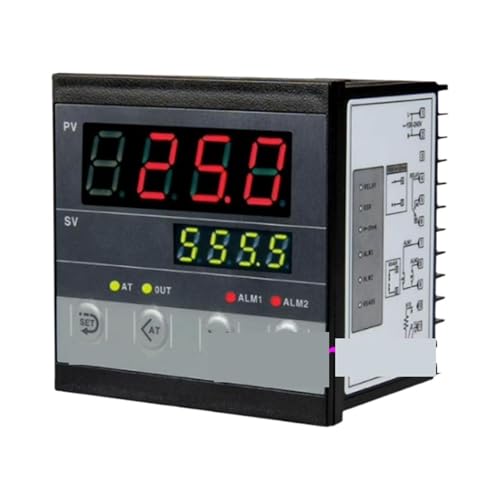
Designed for digital temperature control applications, this unit combines a control switch with instrumentation capabilities. Best for technicians and makers who need precise digital control in a compact form. Its digital input/output orientation makes it straightforward to integrate with microcontrollers. A limitation to note is that documentation in data listings may not cover advanced compatibility specifics; verify integration with your controller firmware before committing to deployment.
BBDKGLIOSA HB901-FK-M An FP-M An V An Temperature Controller Switch
This selector switch variant provides digital instrumentation control, suitable for modular panels and automation setups. Best for users who require a separate, clearly labeled selector interface in a compact footprint. Choose this if you need distinct selector functionality in a shared control environment. A caution: ensure your wiring accommodates the selector’s input/output conventions to prevent misconfiguration.
Arionyx KS-E-E-Z-B04C-M-V-558 Pressure Switch

The Arionyx pressure switch offers stability, durability, and diversified output forms. Best for projects requiring reliable pressure monitoring with multiple output options for different control paths. A limitation is that the exact electrical specifications and compatible sensor ranges are not listed; verify your system’s pressure range and output type before integrating.
Arionyx KS-E-E-Z-B04C-M-V-558 Pressure Switch (Variant)

Another Arionyx pressure switch variant designed for diversified outputs and solid reliability. Best for users who require flexibility across different control paths in a single system. A caution: check the exact output form if you plan to combine this switch with other sensors or actuators to avoid mismatched interfaces.
Buying Guide
What is your primary use?
Identify whether you need switching, temperature control, or pressure sensing. Switch types (SPDT, selector, digital controller) determine how you wire and integrate with microcontrollers or automation hardware.
What are the essential specs?
Look for action type (momentary vs latching), input/output forms, voltage ranges, and mechanical durability. For pressure switches, confirm the pressure range and output signal compatibility with your controller.
How many channels or units are needed?
Pack quantity matters for prototyping versus production. A multikit (like six switches) can simplify testing, but ensure you have space and wiring capacity for all channels.
Which environment will it operate in?
Consider enclosure, shielding, and material durability. Plastic/metal blends can affect longevity in vibration-prone or dirty environments.
Compatibility and wiring
Verify the wiring diagrams and connector types. For digital controllers, confirm input logic, supply voltage, and common ground requirements to prevent miswiring.
FAQ
-
What is a KVM switch?
A KVM switch allows you to control multiple devices with one keyboard, video, and mouse setup. In this context, the term refers more broadly to switching and control components used with microcontrollers and automation panels. -
Are these switches suitable for Arduino projects?
Yes. The listed micro limit switches and digital controller switches are commonly used in Arduino and similar hobbyist projects for input and control tasks. -
Can I reuse these components in professional systems?
They can be integrated into professional projects if the electrical specifications align with system requirements and safety standards. -
What should I check before buying a pressure switch?
Confirm the operating pressure range, output form, and compatibility with your control system to ensure proper signal interpretation. -
Do I need multiple controllers for a single project?
If your project requires independent thresholds or zones, multiple controllers can simplify logic and wiring. Otherwise, a single controller with appropriate inputs may suffice. -
Is a larger kit always better?
Not necessarily. A larger kit is convenient for prototyping but may introduce unused parts. Match kit size to your project scope and available space.