Best Kitchen Ceiling Extractor Fans for Quick Airing and Odor Control
Answering the buyer’s search, this guide highlights reliable 8–10 inch ceiling/through-wall extractor fans that efficiently remove smoke, steam, and odors from kitchens and adjacent spaces. These picks are best for cooks dealing with heavy cooking odors, homeowners upgrading venting in kitchens, or professionals installing vents in commercial-style kitchens. The top options blend strong airflow with energy efficiency and durable construction.
Summary at a glance: below is a quick comparison of five suitable kitchen ceiling or wall extractor fans, focusing on airflow, motor type, and typical use cases.
| Product | Airflow (CFM) | Type | |
|---|---|---|---|
| HG Power 8 Inch Kitchen Exhaust Fan | 576 | Wall/Mountable Metal | Smaller kitchens, garages, or offices needing steady extraction |
| Amico 8 Inch Kitchen Exhaust Fan | 686 | Ceiling/Wall with Remote | Heavy cooking and high heat areas, hands-free remote control |
| HG Power 8 Inch Exhaust Fan with Speed Controller | 576 | Wall/Ceiling with Damper | Versatile ventilation with adjustable speed |
| Broan-NuTone 505 Exhaust Fan | 200 | Ceiling, 8″ Duct | Light-to-moderate odor control in standard spaces |
| Nalle 8 Inch Exhaust Fan Through Wall | 500 | Through-wall | Moist environments and reliable daily venting |
HG Power 8 Inch Kitchen Exhaust Fan

Features: Powerful 576 CFM with a robust 8-inch metal blade and motor. Premium metal construction for durability. Energy-efficient operation at about 53.5W.
Best for: Small to medium kitchens, basements, or utility spaces needing steady odor and humidity control. This model is a good fit where space is limited but airflow matters. Caution: Metal construction can be heavier to install; ensure suitable mounting and supports.
Amico 8 Inch Kitchen Exhaust Fan

Features: Large 686 CFM through a high-speed motor, 29W EC motor for energy efficiency, 9-speed control with a wireless remote and 8-hour timer. Low noise at 50dB and compatible with modern smart control expectations.
Best for: Kitchens with dense cooking activity or spaces needing rapid, powerful venting and convenient remote operation. Choose this if you want fine-tuned control and strong performance. Caution: Higher airflow may require additional sound management in open-concept layouts.
HG Power 8 Inch Exhaust Fan with Speed Controller

Features: 576 CFM airflow with an adjustable infinity speed controller and a damper for sealing. Designed for wall, attic, and ceiling installations with energy-conscious operation.
Best for: People who want customized airflow and a simple damper-equipped setup in kitchens or basements. Caution: The specified CFM remains constant across speeds but actual airflow may vary with ducting and installation constraints.
Broan-NuTone 505 Exhaust Fan
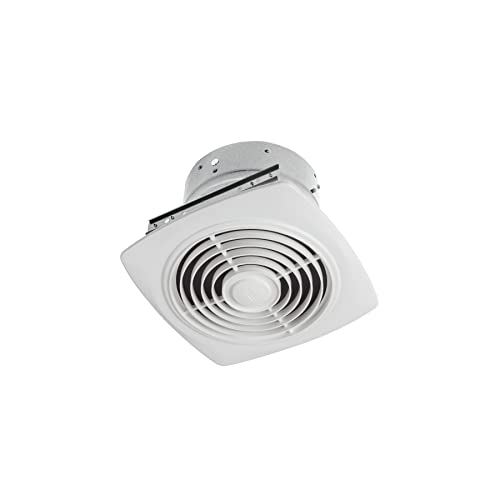
Features: 200 CFM, 8″ duct, galvanized steel housing for durability. Works to remove tobacco smoke and cooking odors and is compatible with coverage in various ceiling configurations. Includes mounting brackets for straightforward installation.
Best for: Standard kitchens or smaller professional spaces needing reliable odor control without extreme airflow. Caution: Lower CFM means slower odor removal in very dense cooking environments.
Broan-Nutone L400 High Capacity Ventilator

Features: High-capacity 434 CFM with two centrifugal blower wheels, 2.3 Sones, and a sturdy 4.5″ x 18.5″ duct connector. Designed for heavy ventilation needs in commercial or large residential settings. Ducting can be configured for horizontal, vertical, or inline layouts with adapters.
Best for: Environments requiring robust airflow and flexible ducting. Choose this if the space demands constant, heavy extraction and you can plan complex duct routing. Caution: Higher installation complexity may be involved in optimizing placement.
Nalle 8 Inch Exhaust Fan Through Wall

Features: 8-inch through-wall design with 500 CFM, durable metal construction, and a brush-less motor for quiet operation and energy efficiency. Built to resist moisture and high temperatures in kitchen and utility spaces.
Best for: Through-wall installations in kitchens and bathrooms where ducting is constrained and reliable daily venting is needed. Caution: Through-wall configurations may require careful sealing to prevent leaks.
Buying Guide
What should you consider when choosing a kitchen ceiling or wall extractor fan?
- Airflow needs (CFM): Match airflow to kitchen size, ceiling height, and cooking intensity. Higher CFM is better for heavy cooking but may create more noise if not paired with sound management.
- Installation type: Determine whether you need a ceiling, wall, or through-wall unit. Consider available ducting paths, mounting support, and space constraints.
- Motor technology: EC motors offer energy efficiency and precise speed control, while brushed motors can deliver high airflow but may consume more energy and require maintenance.
- Speed control and automation: Decide if you want manual dimming, infinity speed controls, or remote control with timing features for convenience and smarter ventilation.
- Durability and materials: Metal housings typically withstand heat, moisture, and debris better than plastic in busy kitchens and garages.
- Noise levels: Look for models with lower decibel ratings for open-plan spaces. This is especially important in homes with living areas nearby.
- Maintenance: Consider accessibility for filter-less designs or ease of cleaning to maintain performance over time.
- Energy use: Compare wattage relative to CFM to evaluate efficiency. Energy-efficient models can reduce long-term operating costs.
FAQ
- What size extractor fan should I choose for a standard kitchen?
- Is a remote control worth it for a kitchen exhaust fan?
- Do I need a damper with my exhaust fan?
- Can I replace a ceiling fan with an exhaust fan in my kitchen?
- What maintenance is required for metal extractor fans?
- Which model is best for a small apartment kitchen?
For typical residential kitchens, an 8-inch exhaust fan with 400–700 CFM is common, depending on cooking volume and space. Larger kitchens may require 800+ CFM or multiple units.
Remote control adds convenience, especially when the fan is installed overhead or in hard-to-reach locations. It helps you adjust speeds without reaching for controls.
A damper helps prevent backdrafts and heat loss when the fan is off. It is recommended in many installations to improve energy efficiency and odor control.
Yes, but you should verify duct sizing, electrical wiring, and mounting structural support. A professional installation ensures proper sealing and safe operation.
Regularly inspect for rust or corrosion, clean any accumulated grease or dust, and ensure the motor vents remain unobstructed for optimal performance.
A compact 200–400 CFM unit with efficient motor and low noise is typically best to balance performance and comfort in small spaces.