Best Electrical Conduit Bending Tools for Precise, Easy Installations
If you work with electrical conduit, you need tools that deliver accurate bends quickly. This guide highlights five reliable conduit bending tools ideal for DIYers and pros, including adjustable offset benders and dual-shoe designs. Whether you’re laying out a new run or tightening a few corners, choose the right tool to save time and reduce rework. The selections balance portability, build quality, and ease of use for 1/2-inch EMT, and other common conduit sizes. Target buyers include DIY homeowners, electricians, and contractors seeking consistent bending results with minimal effort.
Summary table of top picks
| Product | Best For | Key Benefit |
|---|---|---|
| LookFox Conduit Offset Bender | Precision offset bends for 1/2″ EMT | Adjustable offsets for consistent bends |
| Klein Tools 51607 Aluminum Conduit Bender | Frequent, repeated bends | Angle Setter for fast, accurate bends |
| Klein Tools 51606 Aluminum Conduit Bender | Multiple bend types with strong stability | Angle Setter plus wide foot pedal |
| Gteana 1/2-Inch EMT Hand Bender Head | Lightweight handheld bending | Laser-engraved angle marks for accuracy |
| TEMCo 2 in 1 Dual Shoe Conduit Bender | Two sizes in one tool | Bends both 1/2″ and 3/4″ EMT |
LookFox Conduit Offset Bender

The LookFox offset bender is designed for 1/2-inch EMT conduit with a maximum offset of 14.3 mm (9/16 in). Best for electricians performing precise, repeatable offsets across multiple runs. The adjustable screw allows smaller offsets, reducing the need for repeated marking. Built from aluminum with a protective coating, it emphasizes durability for professional jobs and DIY projects alike.
Best for: users who need quick, repeatable offsets and a compact, durable tool for 1/2″ EMT conduit. It’s well-suited for high-volume or installation work where consistent offsets matter.
Caution: Only the 1/2″ EMT conduit is specified; performance with other sizes isn’t stated. Check conduit compatibility before use on different sizes.
Rack-A-Tiers Kick Wedge
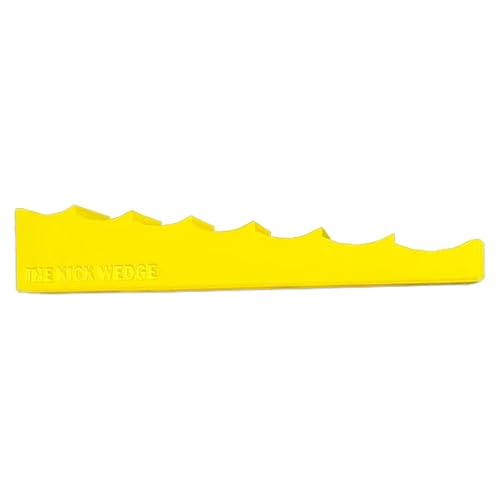
The Kick Wedge provides 90-degree kick alignment for multiple conduit sizes, offering a straightforward way to set right-angle bends. This tool’s straightforward design emphasizes stability and consistent 90-degree corners, especially useful in routing runs along walls and ceilings. It’s a good choice when you need simple, reliable kicks without complex settings.
Best for: electricians needing reliable 90-degree kicks across common conduit sizes. Better for quick, uncomplicated bends rather than highly adjustable angles.
Caution: Limited mention of adjustable angles beyond 90 degrees; not ideal for non-standard bend radii.
Klein Tools 51607 Aluminum Conduit Bender

This 3/4-inch assembled aluminum bender features Klein’s Angle Setter technology for time-saving, repeatable bends. It supports 10-, 22.5-, 30-, and 45-degree bends, with adjustments for conduit spring back. The reinforced, easy-to-handle aluminum head and bold markings help users align conduit quickly for saddle and back-to-back bends. It’s intended for frequent use in professional installations.
Best for: professionals who perform many bends of different angles with quick, repeatable accuracy. Choose this if you value clear angle settings and fast alignment.
Caution: Heavier than some smaller models; may be less ideal for tight spaces or single-hand operation in cramped areas.
Klein Tools 51612 Conduit Bender with Angle Setter

Klein’s 51612 offers the Angle Setter technology for fast, repeatable bends with a movable set of four bend angles: 10°, 22.5°, 30°, 45°. It’s designed for use with Klein’s other conduit benders (51607 and 51604) and provides hard stops for precise bending. The design emphasizes practical marks for quick alignment and efficient workflow.
Best for: users who already rely on Klein’s system and need consistent angle control across multiple projects. It integrates well with existing Klein tools for streamlined operations.
Caution: Primarily beneficial when paired with other Klein benders; standalone versatility may be limited for non-Klein systems.
Gteana 1/2-Inch EMT Hand Bender Head

This hand bender head is designed for 1/2″ EMT conduit, using high-strength aluminum for portability and stability. It includes precision laser-engraved angle markings (10°, 22°, 30°, 45°, 60°, 90°) for accurate bends without extra measuring tools. It’s suitable for wall corners, ceilings, and in-wall wiring installations to improve efficiency on the job.
Best for: electricians who prefer a lightweight, handheld option with clear angle markings for quick, precise bends. Useful for tight spaces or fieldwork where a full-size bender isn’t practical.
Caution: Laser-engraved angles provide accuracy, but operator experience still influences bend quality in complex runs.
TEMCo 2-in-1 Dual Shoe Conduit Bender

The TEMCo 2-in-1 dual shoe bender bends both 1/2″ EMT and 3/4″ EMT with one tool, using the same bend radius as a standard bender. This dual-function design saves shelf space and reduces tool diversification on job sites. It’s a practical choice for projects involving multiple conduit sizes.
Best for: users who encounter multiple conduit sizes within a single project and want a single, versatile tool. Choose this if you value tool consolidation and efficient handling.
Caution: Some users may prefer dedicated single-size benders for extremely frequent bending in a single size; the dual design may compromise maximal efficiency for specialized tasks.
Buying Guide: Key Considerations For Choosing Electrical Conduit Bending Tools
- Conduit size compatibility: Most tools here target 1/2″ EMT; if you work with larger sizes (e.g., 3/4″ or 1″), pick models designed for those diameters or with adjustable heads.
- Angle accuracy and repeatability: Tools with angle setters, laser markings, or hard stops help maintain consistent bends across runs, reducing rework.
- Portability and weight: For fieldwork and tight spaces, handheld or lightweight benders improve maneuverability; heavier models offer durability for high-volume shops.
- Adjustment options: Adjustable offsets or dual-shoe designs provide flexibility for different bends without constant re-marking.
- Durability and material: Aluminum heads are common for lightness and strength; ensure coatings and build quality resist daily use and corrosion.
- Ease of use: Look for clear markings, intuitive handles, and stable bases (foot pedals or wide shoes) to reduce operator fatigue.
- Brand ecosystem: If you already own an established brand’s benders, compatibility and shared parts can simplify maintenance and future purchases.
FAQ
- What size conduit is most common for home electrical work?
1/2-inch EMT is a common size for residential wiring and small commercial installations, making it a frequent starting point for new tool buyers.
- Should I prioritize an adjustable offset or a fixed-angle bender?
Choose adjustable offsets for varied bends and consistent accuracy across multiple runs; fixed-angle benders excel at standard, repeatable angles.
- Are aluminum benders better than steel for field use?
Aluminum benders are lighter and typically adequate for most field tasks, with sufficient strength for regular use; steel may offer additional durability in some heavy-duty contexts.
- When is a dual-shoe bender advantageous?
A dual-shoe design is beneficial when working with multiple conduit sizes in the same project, saving tool swaps and time.
- Do angle setter tools require calibration?
Angle setters provide hard stops or marks to guide bends; occasional calibration may be needed to maintain accuracy if used heavily or after heavy impact.
- Can I rely on laser markings for precise bends?
Laser or engraved angle markings improve precision, but technique and clamping stability also influence bend quality.