Best Electric Motor Winding Equipment for DIY and Professionals
The best electric motor winding equipment is essential for repairing, maintaining, and building motors and coils. This guide highlights five reliable options suited for different needs—from hobbyist repairs to industrial projects. Buyers will find devices that support precise winding, adjustable tensions, and varied coil sizes. The top picks here cover compact, manual, and CNC-controlled machines to match both budget and performance requirements. Ideal buyers include hobbyists, small shops, technicians, and engineers working on motors, transformers, and coil components.
| Product | Brand | Best For | Notes |
|---|---|---|---|
| 6 Layers Coil Wire Winding Electrical Machine | SALUTUYA | Small to mid-size motor repairs | 6 layers, adjustable diameter up to 220 mm |
| U.S. Solid Dual-Purpose Electric/Manual Winding Machine | U.S. Solid | Small coils and counting | Counts turns up to 99999; 1:1 ratio |
| Single-Phase / Three-Phase Wire Winding Mold | Meiliyizu | Motor repair and winding practice | Flexible mold for various motor sizes |
| VEVOR 2HP Air Compressor Electric Motor | VEVOR | Industrial-like windings and motors | Open drip-proof, 56 frame, 2 HP rated |
| Epidioxi Automatic Coil Winding Machine | Epidioxi | Higher-volume winding and memory presets | 10 memory groups, 0-9999 range |
1) 6 Layers Coil Wire Winding Electrical Machine

Best for small to mid-size motor repairs, this coil winding device offers six layers and adjustable diameter up to 220 mm. It enables precise winding without welding, which supports improved motor quality. Suitable for technicians performing motor maintenance or repair tasks where compact, straightforward winding is needed. A potential limitation is its 6-layer design, which may not accommodate very large coils without reconfiguration.
2) U.S. Solid Dual-Purpose Electric/Manual Winding Machine

Best for small motor coils and basic winding tasks, this unit combines electric and manual operation with a counting dial. It counts turns up to 99,999 and maintains a 1:1 ratio between spindle turns and counter increments. Ideal for technicians who need a reliable, simple counter-based winding workflow. Caution: load-bearing uses should stay within the 300 g range when tassels or flexible materials are wound.
3) Single-Phase / Three-Phase Winding Mold by Meiliyizu

Best for motor repair and winding practice, this mold supports winding with side-only coils and is suitable for various motor sizes. It is a practical option for shops that work on assorted motors and require flexible coil configurations. Limitation: the description emphasizes coil arrangement but provides limited specifics on compatible coil types or exact torque ranges.
4) VEVOR 2HP Air Compressor Electric Motor

Best for larger, more robust winding projects, this motor is a 2HP, single-phase unit with a 56 frame and 0.188″ keyway. It’s designed for clean, dry environments and features a sturdy steel build for longer service life. Choose this if your work involves higher torque or more demanding motor assemblies. Limitation: true winding-specific features are not highlighted beyond motor specs, so it functions as a motor platform rather than a dedicated winding machine.
5) Epidioxi Automatic Coil Winding Machine
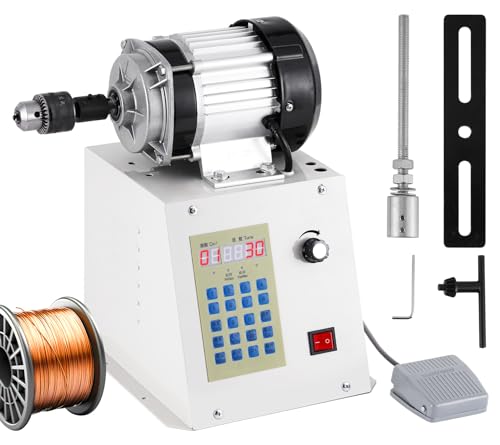
Best for medium-volume winding tasks, this 500W automatic winder offers a 0-9999 counter range and ten memory presets to memorize common coil configurations. It supports winding motor coils under 50KW and other applications like guitar pickups. Use this when you need repeatable results and quick setup between coil runs. Limitation: higher power and memory features may require more space and setup time than simpler machines.
Buying Guide
What should you consider when choosing electric motor winding equipment?
- Coil Size and Layering: Match the maximum coil diameter and layer count to your typical projects. More layers accommodate larger motors but add complexity and cost.
- Manual vs. Automatic: Manual machines are budget-friendly and straightforward; automatic or CNC models offer repeatability and higher precision for mass production.
- Memory and Counters: For batch work, memory presets and turn counters help maintain consistency across coils.
- Torque, Speed, and Control: Look for adjustable speed and torque ranges that align with the coils and materials you wind.
- Durability and Environment: Open-drip-proof designs suit clean, dry spaces; ensure the frame and components fit your workshop conditions.
- Versatility: Consider devices that support multiple coil types (motor stators, transformers, guitar pickups) to maximize utility.
Frequently Asked Questions
- What is winding in an electric motor? Winding involves wrapping conductive wire around a core to create magnetic fields that drive motor operation.
- Do I need an automatic winding machine for small projects? For small projects, a manual or semi-automatic unit can be sufficient and cost-effective.
- Can these machines wind transformer coils? Some models are adaptable to transformer coils; check the manufacturer specs for compatibility.
- What maintenance is required for winding equipment? Regularly inspect wires, bearings, and slots; keep the machine clean and follow any lubrication requirements from the manufacturer.
- Is higher speed better for winding? Faster winding increases throughput but may reduce control and increase wire damage. Choose a speed within the optimal range for your coil type.
- Are there safety considerations? Always follow standard workshop safety practices, including proper cable management and PPE when operating winding equipment.