Best Electric Hydronic Baseboard Heaters for Even Room Warmth
Electric hydronic baseboard heaters blend liquid-filled heat transfer with quiet operation to deliver steady warmth across rooms. This guide highlights five top options, detailing their strengths, safety features, and optimal usage scenarios. Read on to compare models rooted in reliability, efficiency, and simple installation for American homes.
| Product | Brand | Type | Voltage / Power |
|---|---|---|---|
| Qmark HBB2004 Liquid Filled Electric Hydronic Baseboard Heater | Marley | Hydronic | 240V, 2000W |
| Dayton Hydronic Electric Baseboard Heater (2560/1918 BTU) | Dayton | Hydronic | 208/240V |
| Cadet F Series 48″ Electric Baseboard Heater (4F1000W) | Cadet | Electric | 240/208V, 1000W |
| King 4K2410BW 1,000-750W Baseboard Heater | KING | Electric | 240/208V, 1000W |
| Dayton Hydronic Electric Baseboard Heater (1706/1280 BTU) | Dayton | Hydronic | 208/240V |
These selections emphasize models designed for steady heat, low noise, and straightforward installation. Hydronic units rely on liquid-filled elements to store and gradually release heat, while standard electric baseboards provide reliable performance with simple wiring. Each model is suitable for different room sizes and layout constraints, so consider room dimensions, flooring types, and insulation when choosing the best fit.
Qmark HBB2004 Liquid Filled Electric Hydronic Baseboard Heater

The Qmark HBB2004 provides a liquid-immersed heating element that minimizes temperature swings and helps the room stay warm after the unit shuts off. It operates without fans, relying on natural convection for even heat distribution. Safety features include a thermal cutoff to prevent overheating, making it suitable for use on flooring, tile, or carpeted areas. This model is well-suited for residential spaces seeking quiet operation and consistent warmth.
Dayton Hydronic Electric Baseboard Heater (2560/1918 BTU)

Dayton’s hydronic baseboard heater is designed for commercial and larger residential spaces requiring robust heat output. It supports 208/240V operation and provides substantial BTU output for steady comfort in cool rooms or open-plan areas. The unit emphasizes durable construction and conventional housing style, with straightforward installation and reliable performance under continuous use.
Cadet F Series 48″ Electric Baseboard Heater (4F1000W)
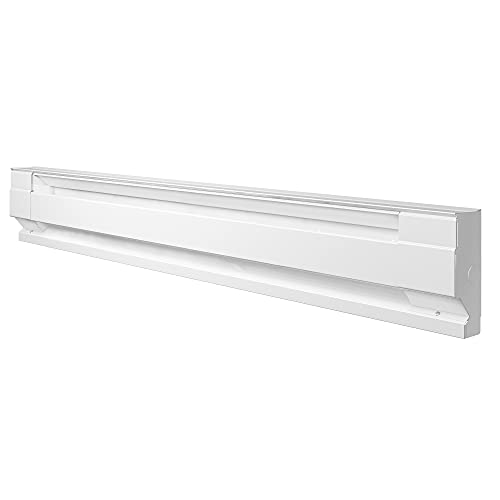
Cadet’s 4F1000W model delivers 1000W of heat at 240/208 volts and features universal wiring and pre-punched knockouts for flexible installation, whether on the wall or the floor. A high-temperature safety shutoff is included to prevent unsafe conditions, contributing to a safer heating solution for small to medium-sized rooms. Its 48-inch length makes it practical for wide wall installations or to flank larger furniture pieces.
King 4K2410BW 1,000-750W Baseboard Heater

The King 4K2410BW is a 4-foot baseboard heater designed for hard-wired installation at 1000W maximum. It uses an aluminum ribbon fin element for efficient heat transfer and includes a full-length safety cutout. With a bright white finish, it blends into most room décors while delivering dependable electric heating for mid-sized spaces. This model is suitable where wall embedding or tight installation clearance is required.
Dayton Hydronic Electric Baseboard Heater (1706/1280 BTU)
Another Dayton hydronic option offers workable BTU ranges in a conventional housing style, ideal for commercial or larger residential applications where steady, long-duration warmth is valued. It supports 208/240V operation and is designed to deliver reliable heat with the quiet operation associated with hydronic systems. Hydronic designs like this are well-suited to rooms that demand consistent temperatures without rapid fluctuations.
Buying Guide: Key Purchase Considerations
- Hydronic vs. Electric: Hydronic baseboards use liquid-filled elements to store heat, which can reduce temperature swings and provide lingering warmth after cycling off. Electric models without fluid are simpler, often less expensive upfront, and adequate for many spaces.
- Voltage and Wattage: Confirm your home’s electrical service and wiring capacity. Most models listed operate at 208/240V; ensure the circuit can handle the total wattage required for the room. Larger rooms may benefit from higher-wattage, hydronic units.
- Room Size and Layout: Measure the space to determine how many linear inches of baseboard are needed. Longer bases distribute heat more evenly and prevent hot or cold spots along walls.
- Noise and Comfort: Hydronic heaters typically run silently, as they rely on natural convection. Electric baseboards are also quiet but check for any fanless operation claims if noise sensitivity is a concern.
- Installation: Wall- or floor-mounted options require proper clearances and mounting hardware. Some units feature universal wiring or knockouts to simplify installation, which is helpful for DIY projects.
- Safety Features: Look for thermal cutoff, overheat protection, and robust enclosures suitable for the floor or carpeted areas. These features help protect occupants and extend heater life.
- Aesthetics and Finish: Finishes range from white to neutral beige. Choose a model that blends with room décor and wall color for a cohesive look.
- Maintenance: Hydronic units generally require little maintenance beyond periodic inspection for leaks or seals. Electric units have fewer moving parts but should be checked for dust buildup near air intakes if applicable.
- Energy Efficiency: Compare BTU-to-watt ratios and assess whether a hydronic or electric model better matches your long-term energy usage goals. Proper insulation and a well-sealed room amplify efficiency for either type.
- Installation Cost vs. Running Cost: Hydronic systems can have higher upfront costs but may offer steady heat and long-term comfort. Electric baseboards typically have lower initial costs and straightforward wiring, making them cost-effective for smaller spaces.
When selecting a model, balance room size, desired heat stability, existing electrical infrastructure, and installation constraints. The five options reviewed above provide a range of power, voltage, and form factors to address common American heating needs—from quiet, long-lasting hydronic units to straightforward electric baseboards suitable for quick setups and smaller rooms.