Best Electric Stair Climbing Wheelchairs for Up Stairs
When navigating stairs with mobility challenges, a powered stair climbing wheelchair can restore independence and reduce caregiver strain. This guide highlights five top options suited for varying needs, including heavy-duty capacity, ease of use, and portability. Readers will learn who each model is best for, along with practical buying considerations and a concise FAQ for quick answers.
Summary of selected products
| Product | Best For | Key Benefit | Capacity |
|---|---|---|---|
| Yawhew NXN20-205 | Heavy users & caregivers | Strong build with safe, controlled ascent | 450 lbs |
| QAUSOU Electric Stair Climbing Wheelchair | Straight stairs, versatile use | Simple control, high stability | 450 lbs |
| DOFORU Electric Stair Climbing Wheelchair | Heavy-duty daily use | Rugged aluminum frame, durable | 480 lbs |
| ENCAREFOR Electric Stair Climbing Wheelchair | Comfort-focused users | Plush padding, secure ride | 450 lbs |
| VOCIC Electric Chair Lift | Compact, portable lifts | 4-wheel mobility, easy room-to-room transfer | 350 lbs |
Yawhew Electric Stair-Climbing Wheelchair NXN20-205
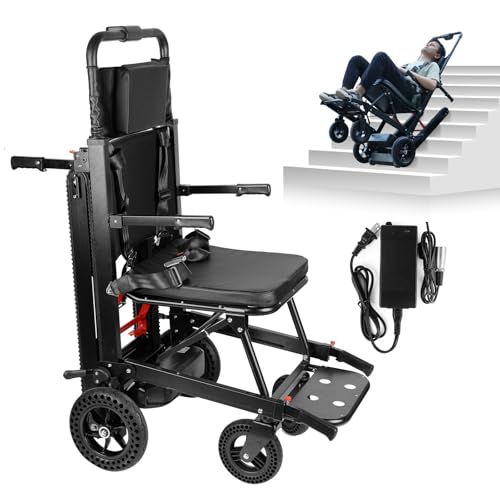
Best for caregivers seeking a robust, heavy-duty option. This model supports up to 450 lbs and provides powered, controlled climbing for stairs at home. The design emphasizes safety with a built-in safety belt and lockable rear wheels to prevent slipping on flat surfaces. It’s positioned as a practical alternative to fixed stair lifts—no renovations required. Limitations include suitability primarily for straight stairs and the need for caregiver operation. Ideal for households with frequent stair use and larger users.
QAUSOU Electric Stair Climbing Wheelchair

Best for households needing a versatile, simple, installation-free solution. The QAUSOU model also carries a 450 lb capacity and uses an intuitive control panel to guide the chair up and down straight stairs. It emphasizes stability with lockable rear wheels and a secure safety belt. A potential limitation is that it is designed primarily for straight stairs, not spirals. Choose this if you want straightforward operation and dependable performance on standard staircases.
DOFORU Electric Stair Climbing Wheelchair

Best for users needing a sturdy, heavy-duty chair with broad capacity. The DOFORU model offers a 480 lb rating and a rugged aluminum frame, delivering reliable performance on straight staircases. It uses a gentle, button-activated ascent and a secure safety belt for rider security. A limitation to note is its restriction to straight stairs. Choose this if you want high load capability and durable construction for frequent use.
ENCAREFOR Electric Stair Climbing Wheelchair

Best for comfort-focused users who value padding and ride quality. This model emphasizes a plush, cushioned seat with a thick backrest to reduce pressure during climbs. It maintains a 450 lb capacity and a safety belt, with lockable rear wheels for stability on flat surfaces. The main caution is the stair design limitation to straight stairs. Choose this if rider comfort during ascent is a priority and straight stairs are the norm.
VOCIC Electric Chair Lift

Best for compact, portable needs. VOCIC offers a 350 lb weight capacity and four-wheel mobility ideal for short transfers across rooms or floor surfaces. It includes a foldable design and a lightweight frame, making it easier to store and transport. Limitation includes a lower weight capacity compared to some heavy-duty models, and it is mainly intended for shorter, non-spiral stairs. Choose this if you need mobility and easy storage for smaller spaces.
Buying Guide: Key Purchase Considerations
- Stair type: Most models are designed for straight staircases. If you have curved or spiral stairs, verify compatibility before purchasing.
- Weight capacity: Match capacity to the user’s weight plus typical gear or mobility aids. Higher capacity often means extra stability but may increase unit size.
- Operation: Consider who will operate the chair. Look for intuitive controls and a secure belt system for safety.
- Portability and storage: Foldable or compact designs help if space is limited or you need to move the chair between locations.
- Safety features: Lockable rear wheels, seat belts, non-slip surfaces, and stable baselines improve user confidence on stairs.
- Maintenance: Aluminum frames and simple electronic controls typically offer lower maintenance than more complex systems.
Frequently Asked Questions
- Q: Are these devices suitable for long staircases?
- A: They excel on standard home stairs and are built for repeated use; check the product’s maximum stair height and ensure it aligns with your home layout.
- Q: Can a caregiver operate these chairs without professional training?
- A: Yes, most models provide user-friendly controls intended for caregiver operation with safety belts for rider security.
- Q: Do these chairs require installation?
- A: Many models are installation-free and portable, but always confirm whether any assembly is needed with the seller.
- Q: Can these chairs be used outdoors?
- A: Some models are designed for both indoor and outdoor use; verify suitability for outdoor stairs and weather exposure.
- Q: What maintenance is involved?
- A: Routine checks on battery, belts, and wheels are advised, along with keeping surfaces clean and dry to prevent slipping.
- Q: Are there weight limits I should know?
- A: Each model lists a maximum capacity (commonly 350–480 lbs); exceeding this limit can compromise safety and performance.