Best Outdoor Electrical Box Panels for Tough Environments
When choosing an outdoor electrical box panel, look for IP ratings, corrosion resistance, and ease of installation. This guide highlights five reliable options suited for DIYers, contractors, and facilities managers who need durable enclosures and dependable protection for outdoor electrical systems. Each option is evaluated for best use scenarios, installation practicality, and notable limitations to help you pick the right box for your project.
| Product | Best For | Key Benefit |
|---|---|---|
| QILIPSU Junction Box IP67 | Heavy outdoor use | Excellent waterproof protection |
| Namunanee Outdoor Box | Hobby and light commercial | Heat dissipation features |
| CXCESNS 12x10x6” D Steel Box | Harsh environments | Rugged steel with IP66 |
| Square D Homeline Outdoor Main Breaker Box | Residential/commercial panels | Plug-on neutral design |
| LuSumtly IP67 Junction Box | All-weather protection | Stainless latch durability |
Not sure which box to choose? Use the sections below to compare features, installation ease, and suitability for your application. Each product includes a direct link to its Amazon listing and a brief note on who should buy it and why.
QILIPSU IP67 Outdoor Junction Box
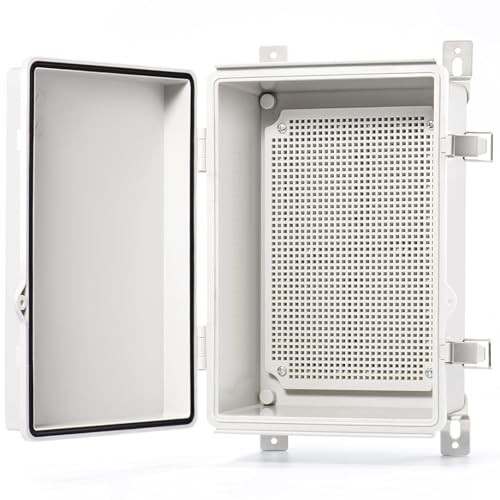
The QILIPSU enclosure is made from high-grade ABS plastic with IP67 waterproofing. It’s designed for reliable outdoor protection against water, dust, and environmental hazards. The included mounting plate simplifies equipment installation. Best for: small to medium outdoor electrical projects where weatherproofing and cost efficiency are important for businesses, government use, or DIY setups. Limitation: ABS plastic may be less resistant to prolonged heavy impacts compared with metal boxes in extremely rugged sites.
Namunanee Outdoor ABS Junction Box

Namaenanee’s box uses sturdy ABS with a removable grill mounting plate for easy equipment installation. It includes wall or fence mounting options and features convenient heat dissipation holes on both sides for safer operation in warmer environments. Best for: DIY projects and light commercial use where ventilation helps prevent overheating. Limitation: the internal mounting panel is basic and may require additional accessories for complex wiring layouts.
CXCESNS Steel Outdoor Box with Mounting Plate

This enclosure uses 1.5mm steel with a powder-coated finish and a heavy-duty hinged cover. It offers IP66 protection against water and dust, and the thick sealing strip helps prevent UV exposure and ingress. Best for: outdoor installations in harsher climates or near industrial equipment where rust resistance and durability matter. Limitation: metal boxes can be heavier and may require more robust mounting hardware.
Schneider Electric Homeline Outdoor 100 Amp Box (HOM1224M100PRB)

This 100-amp load center combines a durable enclosure with a plug-on neutral main breaker and a sturdy bus bar. It is designed for outdoor use and supports residential and light commercial electrical layouts. Best for: projects needing reliable, space-efficient main breaker access with straightforward installation. Limitation: some installations may require compatible breakers and precise wiring for optimal performance.
LuSumtly IP67 Waterproof Junction Box

The LuSumtly enclosure is designed for outdoor environments with IP67 waterproofing, a virgin ABS body, and stainless steel latches. The included mounting plate and brackets support quick installation, while cable glands and Din rail add wiring flexibility. Best for: weather-exposed installations requiring robust sealing and long-term durability. Limitation: some users may need additional accessories for complex control wiring or larger configurations.
Buying Guide
Key purchase considerations help ensure you select the right outdoor box panel for your application:
- Waterproofing and weather resistance: Look for IP ratings (IP66, IP67) and seals designed to handle rain, dust, and temperature swings.
- Material and durability: ABS plastic boxes are lightweight and affordable; steel boxes offer greater impact resistance but are heavier and may require more robust mounting.
- Size and mounting options: Confirm internal mounting panels, wall brackets, DIN rails, and compatibility with your equipment layout.
- Ease of installation: Boxes with pre-punched mounting plates or easy-drill features save time and reduce cracking risks during customization.
- Security and accessibility: Consider lockable latching systems and enclosure design that protects against tampering while allowing convenient service access.
- Electrical ratings: Ensure the enclosure supports the voltage and amperage of your system and has appropriate space for wiring runs and circuit breakers if applicable.
Practical tips for choosing
- If you need maximum water protection for outdoor use, prioritize IP67 enclosures with robust seals and stainless or reinforced latches.
- For residential outdoor panels with straightforward wiring, a plug-on neutral Homeline box offers faster installation and neat wiring layouts.
- For harsh industrial environments, a steel enclosure with a welded shell and thick gaskets provides best resistance to impact and corrosion.
FAQ
- What is the difference between IP66 and IP67 for outdoor boxes? IP66 blocks dust and powerful jets of water, while IP67 protects against immersion in water up to a certain depth for a limited time.
- Are ABS boxes suitable for outdoor electrical installations? Yes, for many applications; they are lightweight and corrosion-resistant, but steel may be preferred in rugged environments.
- Do outdoor boxes require venting? Some boxes include venting to aid heat dissipation; ensure any vents are guarded to prevent water ingress.
- Can I install a main breaker in an outdoor enclosure? Yes, if the enclosure is rated for the appropriate voltage, amperage, and has space for the breaker.
- Should I choose a hinged cover or a lift-off lid? Hinged covers offer easier access and weather sealing, while lift-off lids can simplify large equipment installations.
- What is DIN rail and why is it useful in these boxes? DIN rails provide standardized mounting for electrical components, improving organization and upgrade path.