Best Electric Boat Drive Systems for Reliable Marine Power
Answering buyers’ needs: choose electric boat drive systems that match your vessel, usage, and environment. For direct-drive boat hoists, stainless steel lift motors deliver durability and dependable operation. For RC and underwater applications, specialized propshafts and thrusters ensure precise control and propulsion. This guide highlights five compatible options, explains who they’re best for, and notes practical considerations so you can compare tools clearly and confidently.
| Product | Best For | Key Benefit |
|---|---|---|
| EMZ 1 HP Boat Lift Motor | Direct-drive boat hoists | Stainless steel, dual voltage, reliable frame fit |
| EMZ 1.5 HP Boat Lift Motor | Higher lift needs | Strong motor in same durable package |
| RC Boat Flex Shaft Assembly | Brushless RC boats | Complete drive system with durable flex shaft |
| Lewmar 12V/1,000-Watt Gypsy | Anchor winch systems | Low-profile deck unit with robust drive |
| Boat Underwater Thruster Motor (Cloudpower) | Underwater propulsion | Compact underwater thrust for various vessels |
EMZ 1 HP Boat Lift Motor: Stainless Steel, 56C, 115/230V
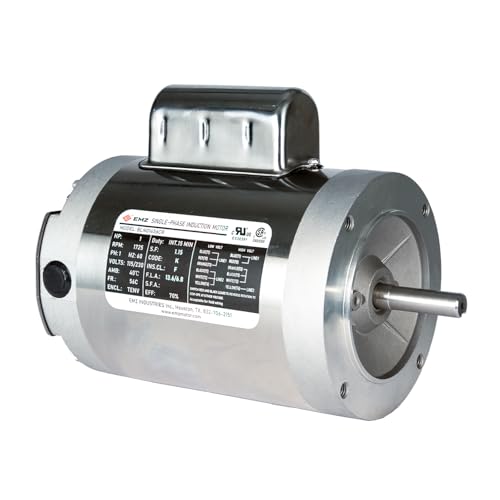
The EMZ 1 HP Boat Lift Motor uses a stainless steel construction designed for direct-drive hoist systems. It offers a 56C frame with C-Face mounting and dual voltage operation (115/230V) at 1725 RPM for steady alignment with family components. This model is well suited for waterfront lifting where outdoor durability and dependable replacement performance matter. Best for: boat hoists requiring corrosion resistance and straightforward installation. Caution: verify compatibility with your hoist frame and control circuit before installation.
EMZ 1.5 HP Boat Lift Motor: Stainless Steel, 56C C-Face

The EMZ 1.5 HP model shares the same stainless steel build and 56C frame with a C-Face mount, and it runs on 115/230V at 1725 RPM. It’s designed for direct-drive boat hoists where higher lift capacity is desired without changing form-factor. Best for: installations needing more power within the same physical footprint. Caution: ensure the hoist gear ratio supports the higher horsepower to avoid overloading components.
RC Boat Flex Shaft Assembly: 4mm, Complete Drive System

This complete flex shaft assembly is designed for brushless RC boats. It features a 350mm flexible shaft with a 75mm hardened tip, plus a stainless steel tube, liner, coupler, and bullet nut. Best for: hobbyist and commercial RC boats requiring a durable, ready-to-install propulsion drive. Better for: tight spaces where a flexible shaft minimizes shaft misalignment. Limitation: data does not specify motor compatibility with all brushless controllers—check your ESC and propeller setup for optimal performance.
Lewmar 12V/1,000-Watt Gypsy: Electric Windlass Drive

The Lewmar windlass kit includes a windlass, rocker switch, breaker, two-direction solenoid, and a handle for power and sailboats up to 40′-50′ with a 3/8″ G4 chain. It features a robust drive train, worm gearbox, and a splined shaft for maximum strength and control. Best for: deck-mounted anchoring systems requiring a compact, integrated drive solution. Caution: installation ease varies with deck configuration; ensure fast-fit alignment is achievable on your vessel.
Cloudpower Boat Underwater Thruster Motor

This underwater thruster motor delivers clockwise propulsion with a 4-blade propeller, designed for 12-24V operation and suitable for RC boats and underwater robotics. Best for: providing underwater thrust for small to medium watercraft and exploration devices. Limitation: data does not specify thrust rating or waterproof depth—check for your specific water conditions and mounting constraints before selection.
MORFUM 5-Pack Aluminum Drive Dog Connectors

The MORFUM 5-pack provides 4mm drive dog connectors for RC boats, suitable for both electric and gas-powered systems. Best for: RC builders needing secure power transmission from motor to propeller shafts. Caution: ensure axial alignment and shaft tolerances match your specific propeller hub and motor shaft to prevent slippage during high-speed runs.
Buying Guide: Key Purchase Considerations
Consider power needs, mounting compatibility, and environmental exposure. For direct-drive hoists, focus on frame size, voltage options, and corrosion resistance. For RC and underwater setups, check shaft diameter, tip hardness, and waterproofing. Compare overall system length, mounting clearances, and ease of installation to avoid retrofit hurdles.
What should I look for in boat drive motors?
Check material (stainless steel is preferred for saltwater), frame size (56C is common for hoists), voltage compatibility (115/230V and DC options), and RPM. Choose motors with obvious mounting patterns, adequate seal protection, and UL or CSA listings where applicable for safety compliance.
How do I know which drive is best for my boat?
Direct-drive motor kits suit fixed hoists and stable, heavy-lift scenarios. Flex shaft and underwater thrusters suit RC ships and underwater platforms needing flexible propulsion options or sub-surface motion.
What are common limitations to watch for?
Watch for misfits between motor frame and hoist, insufficient protection for outdoor use, and compatibility gaps with existing gearboxes or control systems. Verify voltage, RPM, and load capacity to prevent overload and premature wear.
Are there installation tips that help?
Plan for clean routing of power and control wiring, ensure lubrication points are accessible, and confirm alignment between motor shaft and drive components. Use the FastFit concept where applicable for deck installations to speed up alignment and securing.
How should I evaluate safety and reliability?
Look for listings (UL, CSA) on motors, ensure metal components resist corrosion, and verify that the product is designed for outdoor marine environments. Reliable drive systems should maintain performance under exposure to water, salt, and UV light.
Frequently Asked Questions
- What is the advantage of a 56C frame motor? It provides a common mounting pattern that fits many direct-drive hoist systems and allows easier replacement.
- Can I mix a higher horsepower motor with a smaller hoist? This can strain the hoist; confirm the gear ratios and load ratings match the motor’s power.
- Are stainless steel motors better for saltwater? Yes, stainless steel resists corrosion better in marine environments than many other metals.
- Is a dual-voltage motor compatible with all electrical systems? Dual voltage helps flexibility, but ensure electrical controls and wiring are rated for the chosen voltage.
- Should I install a windlass or a lift motor on the same boat? The choice depends on the primary task; windlasses are for anchoring, lift motors for hoists, and thrusters for propulsion or maneuverability.
- What maintenance is needed for underwater thrusters? Regular checks for seals, propeller wear, and corrosion protection extend service life.