Best Electric Baseboard Heater Relays for Precise Thermostat Control
Answering the search for reliable electric baseboard heater relays, this guide highlights five solid options designed to work with low-voltage thermostats and built-in transformers. Each choice is suited to different setups—whether you’re replacing a single relay, upgrading a 24V control loop, or wiring for 120V or 240V systems. The summary table below helps buyers compare key features at a glance, while the detailed sections explain who each product is best for, plus practical cautions to consider during installation.
| Product | Best For | Voltage | Built‑in Transformer | Notes |
|---|---|---|---|---|
| Aube RC840T-240 | Multi-room baseboard heating with 24V thermostats | 240V | Yes | Direct replacement |
| OONO F-1057 | Easy installation on 120V circuits | 120V | Yes | LED indicator |
| Aube RC840T-120 | Universal replacement for 24V thermostat systems | 120V | Yes | Instant activation |
| Honeywell R841C1227/U | Standard 24V control with robust switching | Depends on system | No | Good for cycles per hour |
| Aube RC840 On/Off RC840 (300612) | Direct 24V thermostat compatibility | Depends on system | No | Instant relay activation |
Aube Technologies RC840T-240 On/Off Relay With Built-In 24V Transformer

The RC840T-240 is designed as a direct replacement for many brands, with a built-in 24 V transformer for simple setup. It supports 24V thermostats using 2-wire (R, W) or 3-wire (R, W, C) configurations. This model is best for users upgrading legacy relays to a standard 24V control standard, especially in multi-zone setups. A potential limitation is that only 240V loads are supported, so verify your circuit voltage before installation.
OONO F-1057 24V Transformer Relay For 120V Heating

The OONO F-1057 switches a 120V heating load with a built-in 24 V transformer, compatible with 2-wire (R, W) or 3-wire (R, C, W) thermostats. It’s a convenient upgrade for older 120V systems where a thermostat-driven, immediate relay action improves room-by-room comfort. One caveat is that it’s primarily designed for 120V circuits, so 240V installations require a different model.
Aube RC840T-240 Twin Pack: 2 Relays In One Box

This 2-pack targets installations requiring two 24V thermostat-ready relays, with built-in 24V transformers for easy wiring and quick setup. Best for homeowners upgrading multiple zones without sourcing separate transformers. Limitations include a shared transformer for both relays in the package, so plan wire routing and load distribution accordingly.
Aube RC840T-120 On/Off Relay With Built-In Transformer 24V

Designed for 24V thermostat control on a 120V circuit, the RC840T-120 provides universal replacement compatibility and an immediate relay action. It’s ideal for converting older mechanical thermostats to modern 24V systems. A potential drawback is that its 120V load rating means it’s not suitable for 240V baseboard circuits.
Honeywell R841C1227/U Electric Heater Relay

The Honeywell R841C1227/U operates with a thermostat cycle pattern and can switch up to a 5,000 W load per relay. It’s best for systems where reliable cycling coincides with broader heating schedules. The primary caution is ensuring compatibility with your current thermostat and that the cycle rate matches your heating needs; some setups may require a different relay for optimal performance.
Aube Technologies RC840 On/Off Switching Electric Heating Relay
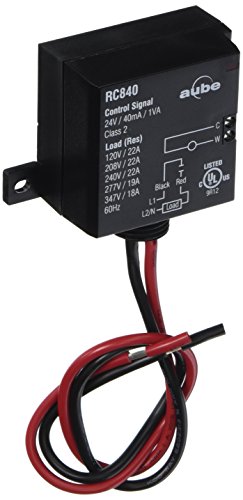
The RC840 is a direct replacement option with immediate relay activation for enhanced temperature control. It’s widely compatible with 24V thermostats, making it a practical choice when upgrading an older control system. A limitation to note is that it may not include a built-in transformer in some variants, so verify the exact model specifications before purchase.
Buying Guide: Key Considerations For Electric Baseboard Relay Upgrades
- Voltage compatibility: Confirm whether your baseboard heaters operate at 120V, 208-240V, or another supply. Choose a relay rated for the correct load voltage.
- Thermostat compatibility: If using 24V thermostats, ensure the relay provides a built-in transformer or a compatible 24V input to minimize wiring changes.
- Load capacity: Check wattage handling per relay. Select a unit with a margin above your total heating load to prevent overheating.
- Installation simplicity: Built-in transformers and straightforward mounting reduce installation time. Consider whether you need a single-relay or multi-relay solution.
- Response time: Immediate activation improves comfort on demand, while some models emphasize synchronization with thermostat cycles for consistent heating.
- Reliability and compatibility: Replacement relays should ideally be compatible with older brands to simplify upgrades without rewiring.
- Safety and certifications: While not all products list warranties or certifications, ensure the unit is suitable for indoor use and installed per electrical codes.
Frequently Asked Questions
- Do these relays require professional installation? A: Basic wiring can be performed by a confident DIYer following the instruction manual, but electrical work may require a licensed electrician in some locales.
- Can I use a 24V thermostat with any relay? A: Most relays support 24V thermostats, but confirm transformer presence and wiring (R, W, C) compatibility for your model.
- Is a built-in transformer mandatory? A: Not always, but a built-in transformer simplifies installation when converting to 24V control from older 120V or 240V thermostats.
- What is “instantaneous relay activation”? A: The relay closes immediately on a call for heat, reducing delay and improving room response time.
- Are there safety concerns with baseboard relays? A: Use models rated for your circuit voltage and load, and follow local electrical codes to avoid overheating or overloading.
- How do I choose between 120V and 240V relays? A: Match the relay’s input voltage to your heater circuit; 120V relays work on single-phase 120V circuits, while 240V relays handle higher-voltage setups.