Best Dual Battery Boat Switches for Reliable Power Management on Water
Looking for a dual battery boat switch to reliably manage power between starting the engine, charging, and running accessories? This guide highlights five top options that suit different boat sizes and electrical needs. The best picks balance ease of installation, durability, and clear battery isolation. Ideal buyers include weekend boaters needing simple on/off control, anglers relying on radio and electronics, and small to mid-sized vessels requiring compact, durable switches. Below, compare features, best-for scenarios, and practical buying considerations.
| Product | Best For | Key Benefit |
|---|---|---|
| Seachoice Battery Select Switch, Disconnect Isolator Cutoff, Dual, 12 -50V | Small to mid-size boats needing simple battery selection | Versatile selection between batteries for starting, charging, or operation in parallel |
| Blue Sea Systems 4‑Position Mini Selector Battery Switch, Red, 6007 m‑Series | Boats with tight space and emergency combining | Compact design with emergency combine and flexible mounting |
| Nilight Battery Switch 1-2-Both-Off 12V 24V 48V 600A High Current | Rugged marine use with heavy duty needs | Four-position, high current, robust ABS housing |
| Nilight 1-2-Both-Off Battery Switch, 12V-48V, Waterproof | Water-exposed installations needing waterproofing | Weather-resistant, four-position operation with strong current specs |
| Blue Sea Systems e-Series Battery Switch Selector 4 Position | Engine rooms or tight installations | Ignition protected with flexible mounting options |
Seachoice Battery Select Switch, 12-50V

The Seachoice dual battery switch lets you pick between batteries for starting, charging, or running devices, with a 12 to 50-volt rating. It is UL listed, ignition protected, and CE approved. This makes it well-suited for smaller boats or amateur installers who want straightforward wiring and reliable isolation. Best for boats that need a simple start/shore power configuration with two or more batteries in a compact setup.
Best for: Boats that prioritize a straightforward dual-battery setup without high-current demands. Why selected: The device supports selection between batteries and parallel operation while meeting essential safety certifications. Limitation: Check your vessel’s voltage range and ensure wiring complies with UL/CE guidelines.
Blue Sea Systems 4‑Position Mini Selector 6007 m-Series

This compact Blue Sea unit is designed for tight installation spaces while offering a robust emergency combine feature to draw power from both batteries during engine starting or essential radio use. It supports three mounting methods for flexibility, including surface, flush, or rear mounting. Best for boats with limited space but a need for reliable power sharing during critical operations.
Best for: Small to mid-sized boats with space constraints. Why selected: Its compact design plus emergency combine improves reliability when one battery is low. Limitation: As a mini selector, its current rating may be below high-demand shore power setups; verify your total load.
Nilight Battery Switch 1-2-Both-Off 12V-48V

Nilight’s 1-2-Both-Off four-position switch handles 12 to 48 V with a heavy-duty ABS housing. It supports switching voltage to two batteries separately or both on and off, designed to prevent battery drain when not in use. This is a practical choice for larger boats or trailers where a durable, straightforward disconnect is essential.
Best for: Boats needing strong isolation and a reliable 4-position switch. Why selected: Durable ABS housing and clear 1-2-Both-Off operation provide straightforward power control. Limitation: High continuous current is dependent on temperature; plan for your cooling and environment.
Nilight 1-2-Both-Off Waterproof Battery Switch

Another Nilight option delivers a waterproof, heavy-duty 4-position isolator with 12-48V compatibility. It supports two batteries and can switch between them or disconnect entirely. It is particularly suited to boats exposed to spray or rain, or those with exposed electrical compartments where moisture is a concern.
Best for: Boats in wet environments or with exposed electrical areas. Why selected: Waterproof housing provides better protection against moisture ingress. Limitation: Waterproof rating should be validated for the exact exposure on your vessel.
Blue Sea Systems e-Series 4-Position 32V DC, 9001e
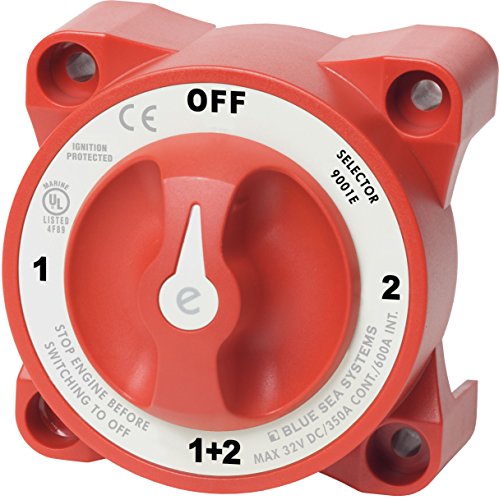
The e-Series 4-position selector from Blue Sea Systems emphasizes a compact design with multiple mounting options, including surface and rear installation. It is ignition protected, suitable for installation in engine rooms of gasoline-powered boats. This unit is best for owners who need a reliable, widely compatible switch that can handle normal engine room conditions.
Best for: Engine rooms or restricted spaces in boats with gasoline engines. Why selected: Ignition protection and flexible mounting add installation safety and versatility. Limitation: It’s a 32V DC unit; ensure your boat’s electrical system aligns with this rating.
Buying Guide: Keys To Pick The Right Dual Battery Switch
- Voltage range and current capacity: Match the switch’s voltage (commonly 12V-24V or 12V-48V) and the continuous/intermittent current rating to your boat’s battery bank and load.
- Number of batteries: Determine whether you need a true 2-battery system or a more flexible setup for multiple batteries. Look for 2-Battery, 3-Battery, or multi-battery configurations and the ability to isolate or combine as needed.
- Mounting space and installation: Compact or large, consider space constraints. Some models offer surface, flush, or rear mounting for flexible installation.
- Safety and certifications: Prioritize ignition protection, UL/CE ratings, and weatherproofing if exposure to moisture is possible.
- Emergency combining and load management: If you rely on essential electronics during engine start, a unit with an emergency combine feature can help maintain power continuity.
- Durability and housing material: ABS plastic is common; metal housings can offer higher durability. Consider the marine environment and potential corrosion.
- Maintenance and diagnostics: Look for simple wiring diagrams and clear labeling to simplify installation and future troubleshooting.
FAQ
- What is a dual battery selector switch used for? It isolates or connects two separate battery banks to support starting, charging, or powering loads, helping prevent unwanted discharge.
- What does “emergency combine” mean? It allows drawing power from both batteries during critical operations like engine starting or radio use.
- Can these switches handle high-current loads? Most are designed for typical marine electrical systems; verify continuous and intermittent current ratings for your setup.
- Is waterproofing important? For exposed locations or wet environments, waterproof or weather-resistant models reduce corrosion risk and improve longevity.
- Do I need ignition protection? If the switch will be installed near the engine or fuel system, ignition-protected units add safety against sparks.
- How do I choose between 12V and 24V systems? Match the switch’s voltage rating to your boat’s electrical architecture to ensure proper operation and compatibility.