Best Dry Well Temperature Calibrator Guide for 2026
When precision matters, a reliable dry-well temperature calibrator is essential for verifying and maintaining thermal sensors across industries. This guide highlights top dry-well calibrators designed for high-temperature ranges, portability, and durable construction. Each selection reflects compatibility with standard 115V power, robust inserts, and user safety considerations. Read on to compare features, use cases, and how to choose the right calibrator for your lab or fieldwork.
| Product | Brand | Temperature Range | Key Benefit |
|---|---|---|---|
| CEM T.ax Included Dry Block Calibration BX150 | CEM | 33°C to 300°C (91.4 to 572°F) | High-temperature capabilities with dry-block design |
| Fluke Calibration 9100S-B-156 HDRC | Fluke | 35 to 375°C | Lightweight, portable, RS-232 interface |
| Fluke Calibration 9100S-D-156 HDRC | Fluke | 35 to 375°C | Portable with Interface-it software |
| Fluke Calibration 9103-A-156 Drywell | Fluke | -25 to 140°C | Humidity measuring option and US origin |
| Fluke Calibration 9009-B-156 | Fluke | –15 to 350°C | Dual-block wells for simultaneous calibration |
CEM T.ax Included BX150 Dry-Well Calibrator
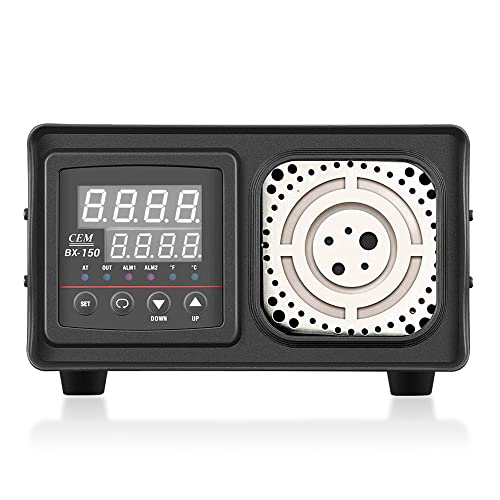
The CEM BX150 offers a dry-block design with a broad high-temperature range suitable for industrial and laboratory calibrations. This model emphasizes straightforward operation at elevated temperatures, but prompts caution to prevent burns and equipment damage. Users should place probes on heat-resistant surfaces and allow the unit to cool before storage. Probes and inserts may become very hot when the unit operates at higher settings, so handling requires care. The device is intended to operate dry, with no liquids entering dry-block holes.
Fluke Calibration 9100S-B-156 HDRC

Fluke’s 9100S-B-156 HDRC is positioned as one of the world’s smallest and lightest dry-well options with a focus on portability. It features RS-232 compatibility and supports 35 to 375°C, making it ideal for field technicians who need reliable high-temperature calibrations without sacrificing mobility. The compact form factor assists in tight spaces, while the interface options enable seamless data logging with compatible software to support traceability and audit requirements.
Fluke Calibration 9100S-D-156 HDRC
This version mirrors the HDRC line with emphasis on portability and an Interface-it v3.81 software ecosystem. It shares the same 35 to 375°C range and benefits from an international software interface suite that supports calibration workflows, data capture, and archival capabilities. The model is designed to minimize bulk while delivering consistent dry-well performance, suitable for workshops and service vans where on-site calibration is required.
Fluke Calibration 9103-A-156 Drywell

The 9103-A-156 Drywell adds a -25 to 140°C range with additional temperature and humidity measurement capabilities. This model suits laboratories needing combined environmental monitoring along with dry-well calibration. Built in the United States, it emphasizes domestic manufacturing quality and robust performance, making it a practical choice for facilities prioritizing local support and serviceability.
Fluke Calibration 9009-B-156 Dual-Block

The 9009-B-156 introduces a dual-block design that supports simultaneous calibrations and broad temperature coverage from –15 to 350°C. Its rugged, lightweight, and water-resistant enclosure makes it suitable for challenging environments and fieldwork. The dual wells facilitate quick comparisons and reduce setup time when working with multiple devices, enhancing productivity in calibration labs and service teams.
Buying Guide
Key purchase considerations help align a dry-well calibrator with your workload and environment. Start by defining the temperature range needed, including any lower-temperature requirements such as sub-0°C or -25°C. Next, assess portability versus bench capability: lightweight handheld units suit field use, while larger blocks offer stability and extended insert options for high-volume calibration.
Power and interface options influence data management. Most of the models shown operate on standard 115V power, with RS-232 or other software interfaces to enable logging, traceability, and calibration records. Consider your software ecosystem—interfaces like Interface-it or compatible software can simplify acceptance tests and audits.
Safety and handling are essential. Dry-well units operate at elevated temperatures, so protective handling practices are necessary. Look for models with heat-resistant inserts, clear cooling-off guidelines, and documented cautions about hot surfaces. If you require humidity or environmental measurements, consider a unit that integrates those sensors or offers accessory inserts.
Durability and maintenance should guide the decision. Durable enclosures, ease of cleaning, and the availability of spare parts or inserts affect long-term costs and downtime. For recurring calibrations across multiple devices, a dual-block design can improve efficiency by enabling simultaneous checks.
Support and origin may influence service expectations. US-made units often provide faster access to spare parts and service centers, while overseas options might offer cost benefits. Review warranty terms and customer support quality, as well as training resources from the manufacturer or distributor.
Ultimately, select a calibrator that aligns with your calibration frequency, the types of probes you use, and the required traceability standards. A balance of performance, portability, and total cost of ownership will help ensure accurate readings and minimal disruption to operations.