Best Closet Door Switches for Lights: Reliable Picks and Buying Guide
Choosing the right closet door switch can simplify lighting and save energy. The following curated selection highlights five effective switches that respond to door movements or cabinet openings, offering variations in normally-on versus momentary action, voltage ranges, and installation ease. This guide compares features to help American readers decide which model best fits their closet setup and electrical standards.
| Product | Brand | Key Feature | Voltage/Notes |
|---|---|---|---|
| Gardner Bender GSW-SK Electrical Door Switch | Gardner Bender | Normally-ON with momentary-OFF; SPST | 16A 125V AC |
| Lee Electric 209DN Door Light Switch | Lee | Door opens/closes to control light; energy saver | 600W; White |
| Garvin Door Jamb Switch Kit | GARVIN | Mounts in door jamb; normally closed to turn ON when open | Indoor use; includes hardware |
| Leviton 1865 Doorjamb Switch | Leviton | Commercial-grade, metal push-button; doorjamb box | 3A 125V; Normally ON |
| LifCratms Cabinet Lamp Switch | LifCratms | Automatic reset; 2-pack for closets/pantries | 1A/250V; up to 40W lights |
The following sections present detailed overviews of each selected product. Each entry includes a brief spec summary, installation notes, and how the switch aligns with common closet lighting needs in American homes.
Gardner Bender GSW-SK Electrical Door Switch

The Gardner Bender GSW-SK is a SPST door switch designed to control lighting as a door opens. It operates in a normally-on, momentary-off configuration, typically turning lights ON when a closet door opens. The device is CSA listed, which contributes to reliability in residential wiring. A straightforward installation makes it suitable for standard closets with basic wiring needs. This model balances simplicity with solid electrical ratings to fit most single-door closet lighting circuits.
Lee Electric 209DN Door Light Switch
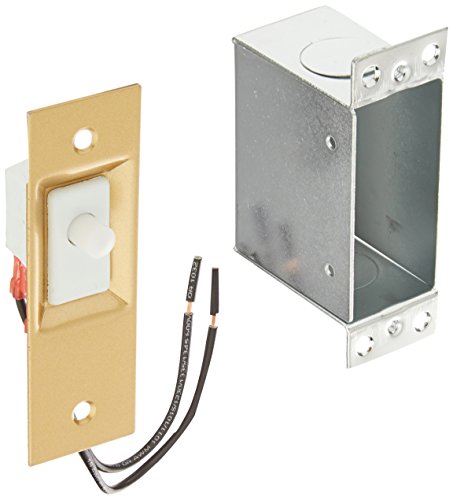
The Lee Electric 209DN model is a 600-watt door light switch intended for closet lighting needs. It activates lights when the door is opened and can contribute to energy savings by avoiding lights remaining on unnecessarily. Works with both sliding and hinged doors, offering versatility for various closet configurations. This switch provides a practical balance of reliability and compatibility for standard residential wiring in American homes.
Garvin Door Jamb Switch Kit

The Garvin door jamb switch kit mounts in a door jamb and includes a push-button switch with a metal box and cover plate, plus mounting hardware. It is a versatile all-purpose indoor switch for sliding or hinged doors in closets, darkrooms, or walk-in spaces. Notably, it contains a normally closed contact so that the circuit is ON when the door is open, aligning with certain lighting installation preferences for closets that require continuous illumination on door open.
Leviton 1865 Doorjamb Switch

The Leviton 1865 is a commercially oriented doorjamb switch featuring a metal push-button and metal jamb box. It is designed for single-circuit, momentary action with a normally ON configuration. Built for durability in professional or high-use environments, this model provides a robust option for closet lighting or related door-activated circuits within commercial or heavy-use residential spaces.
LifCratms Cabinet Lamp Switch

The LifCratms cabinet lamp switches come in a 2-pack and are designed for automatic door-activated lighting in closets or pantries. They are rated at 1A / 250V and can control up to 40W lights. The design emphasizes easy installation and an automatic reset after door closure, mimicking the efficiency of a refrigerator door switch. This option suits smaller lighting loads and seeks to maximize energy savings in compact closet spaces.
Buying Guide
Key considerations help ensure an optimal closet door switch choice. The following perspectives address common needs and installation scenarios:
- Switch type and behavior: Decide between normally ON versus momentary OFF functions, and whether you prefer a doorjamb, push-button, or cabinet-mounted switch. Normal-on configurations can keep lights energized in some designs, while momentary switches may be preferred for energy savings.
- Voltage and current ratings: Match the switch to the closet lighting load. Most residential closet lights are low-wattage, but some models support up to 600W. For LED or compact fluorescent fixtures, ensure compatibility with the rated current.
- Door type compatibility: Consider whether doors are hinged, sliding, or bi-fold. Some switches are specifically designed for jamb mounting or door frame installation, while others can be affixed to panels or shelves.
- Installation complexity: Some products include mounting hardware and enclosures, making them easier for DIY wiring upgrades. Others may require more extensive wiring adaptation or professional installation, especially in commercial-grade options.
- Durability and safety: Look for CSA or UL listings, metal jamb boxes, and durable materials for longevity in closet environments. For damp or humid spaces, materials with corrosion resistance are beneficial.
- Aesthetics and form factor: If the closet design emphasizes minimalism, compact switches or surface-mounted options may be preferable. Some models are designed to blend with white or neutral décor.
- Cost-effectiveness: Compare the initial cost with expected energy savings and installation effort. In some cases, higher-quality commercial-grade switches may offer longer lifespans in high-use closets.
These considerations help align a chosen product with typical American closet configurations—from small reach-ins to larger walk-ins—and with common electrical practices. By evaluating the switch’s operating mode, mounting method, and load compatibility, homeowners can select a reliable solution that enhances convenience while conserving energy.