Best Direct Burial Heat Tape for Pipe Freeze Protection in Cold Climates
Direct burial heat tape is a reliable solution for protecting water and utility lines from freezing. This guide highlights five top options and explains who each product suits best. Suitable buyers include professional installers, homeowners in extreme winters, RV users, and builders needing long-lasting, energy-efficient cold-weather protection.
| Product | Best For | Key Benefit | Limitations |
|---|---|---|---|
| YeloDeer 100FT Cut-to-Length Heat Tape | Professionals & DIYers | Self-regulating, -40°F protection | Bulk kit with extras; pricing varies by roll size |
| JDZKOMKE 50FT (3FT-200FT) Pipe Heating Cable | Industrial-grade setups | Full cable certification and rugged build | Advanced installation notes; avoid use on fuel lines |
| SZFY 3FT~200FT Heat Tape | Residential & small farms | High heating efficiency, -40°F protection | Long range length options; requires proper connection planning |
| Cupohus Thermostat Heat Tape | Hose and garden setups | Thermostatic control for energy savings | Thermostat included; verify power requirements |
| HEATIT 40ft Self-Regulating Cable | Budget-conscious projects | ETL-listed safety and wide pipe compatibility | Shorter length; plan for extensions if needed |
YeloDeer 100FT Cut-to-Length Heat Tape for Water Pipes

Best for: Professional plumbers, installers, and skilled homeowners needing a flexible, self-regulating solution. This bulk kit lets you size the heating cable to fit longer or irregular runs, making it ideal for RV hookups, outdoor taps, and garden lines. The self-regulating feature automatically adjusts heat, conserving energy while protecting lines down to -40°F.
Why selected: The roll format reduces waste, and the included end cap and wire splitter simplify field installations. It works on metal, PEX, PVC, and plastic pipes up to 2 inches in diameter, broadening its applicability for various projects. Caution: Ensure proper termination and protection from UV exposure if used in exposed outdoor areas.
JDZKOMKE 50FT Pipe Heating Cable

Best for: Industrial-grade installations and long-term protection in varied climates. This 50-foot option features a full cable certification, aluminum shield, and a tough TPE jacket with IP67 rating, designed for buried or exposed pipes.
Why selected: It uses a pure copper core for uniform heating and includes a grounded plug with an indicator light. The design targets -40°F protection for both metal and plastic pipes. Caution: Do not use on fuel lines or gutters where water presence is uncertain, to avoid overheating.
SZFY 3FT~200FT Heat Tape for Pipes
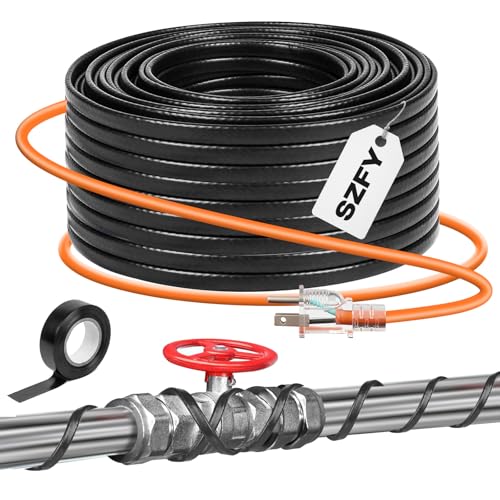
Best for: Homeowners and small farms needing flexible lengths from 3 to 207 feet. This model touts -40°F capability and a 12W/ft heating rate, supported by a thick copper core for improved efficiency and energy savings.
Why selected: Its multi-scenario applicability covers roofs, gutters, water pipes, and outdoor plumbing. The inner construction combines copper core, aluminum shield, and a robust TPE jacket for weather resistance. Caution: Verify compatibility with your specific pipe material and ensure proper IP-rated installation for outdoor use.
Cupohus Heat Tape With Thermostat

Best for: Hose lines, outdoor faucets, and RV plumbing where thermostat-based control offers energy savings. The system keeps water above 59°F (15°C) and stops heating at that threshold, reducing electricity use while maintaining flow in extremely cold weather.
Why selected: It is safety-minded, using a 120V supply with an externally mounted GFCI outlet to guard against short circuits. The entire assembly is designed to prevent water seepage and avoid overheating. Caution: Thermostat-based systems require correct sensing placement for accurate performance.
ACE Supply Buried Electrical Line Caution Tape

Best for: Utility marking projects and construction sites where underground lines must be clearly identified. This tape is designed for durability and visibility in extreme temperatures, suitable for long-term outdoor use.
Why selected: A reliable choice for preventing accidental trenching or damage near buried heat tape lines. Caution: Not a heating element itself—use alongside heat tape installations to indicate line location.
HEATIT 40ft Self-Regulating Cable

Best for: Small-to-medium projects where safety certification is a priority. This 40-foot bundle offers ETL-listed status for the entire heating cable, not just the plug, ensuring consistent safety compliance across North America.
Why selected: The design emphasizes pipe protection down to -40°F with a 2-foot power cord and various length options, supporting modular installation. Caution: Shorter lengths may require splicing or parallel runs for larger systems.
Buying Guide
What should you consider when choosing direct burial heat tape?
- Temperature range and protection: Look for cables rated to protect against -40°F and designed for your pipe material (metal, PVC, PEX).
- Self-regulating vs fixed output: Self-regulating tapes adjust heat to avoid overheating and save energy; fixed-output options may deliver consistent heat but consume more power.
- Length options and installation needs: Choose lengths that fit your pipe runs, with allowances for splices, bends, and accessibility of electrical outlets.
- Materials and durability: Aluminum shields, copper cores, and IP ratings determine resistance to moisture, UV exposure, and chemicals.
- Electrical safety and certifications: ETL or UL certifications provide assurance of compliance and safety in a home or commercial setting.
- Controls and accessibility: Thermostats or external GFCIs help manage energy use and protect against electrical faults.
- Application compatibility: Ensure the product is suitable for your pipe type (copper, PVC, PEX) and whether it will be buried, exposed, or mounted.
How to plan a heat-tape project
1) Map the entire pipe length that requires protection, including corners and bends. 2) Select a cable length that covers the distance with some extra to spare for secure connections. 3) Decide between self-regulating or thermostat-controlled options based on energy goals. 4) Confirm compatible power sources, cord lengths, and weather exposure. 5) Plan for protection around electrical components and ensure a compliant installation with outdoor-rated enclosures where needed.
Installation tips for better results
- Avoid layering tapes on top of themselves excessively to prevent overheating.
- Keep the sensor or thermostat element in a position that accurately reflects the pipe temperature.
- Secure tapes with compatible clips or tape designed for outdoor use to prevent movement in wind or snow.
- Include a properly rated disconnect or GFCI outlet for safety compliance.
FAQ
- What is direct burial heat tape?
It is a self-regulating or fixed-output heating cable designed to prevent freezing in buried or outdoor pipes, cables, or hoses. - Can heat tape be used on plastic pipes?
Yes, many models are rated for metal and plastic pipes, including PVC and PEX, but always verify the product’s listed compatibility. - Is self-regulating heat tape safer than fixed-output?
Generally, self-regulating tapes adjust heat to the pipe temperature, reducing overheating risk and saving energy; fixed-output tapes run at a set level and may require precise placement. - Do these tapes require professional installation?
Not always, but complex installations—especially burial or long runs—benefit from professional expertise to ensure safe and compliant wiring. - Are there safety certifications I should look for?
ETL or UL certification for the entire heating cable and plug is recommended to ensure overall safety and compliance. - What is the typical life expectancy of heat tape?
Most high-quality tapes are designed for extended service, with versions rated for numerous bend cycles and long-term outdoor exposure; check the manufacturer’s data for specific life estimates.