Best Deep Cycle Batteries From Top Manufacturers for RV, Solar and Marine
Finding the right deep cycle battery hinges on reliability, longevity, and suitability for your application. This guide highlights five top choices best for RVs, solar setups, off-grid cabins, and marine use. Each entry includes who it’s best for, why it stands out, and a practical limitation to consider. Use the buyer’s notes to compare runtimes, maintenance needs, and charging compatibility at a glance.
The following table summarizes the five featured products to help you decide which battery matches your setup.
| Product | Brand | Capacity | Type | Best For | Notes |
|---|---|---|---|---|---|
| Weize Deep Cycle AGM 12V 100Ah | WEIZE | 100Ah | AGM | RV, solar, trolling motor, off-grid | Low self-discharge; maintenance-free |
| Renogy Deep Cycle AGM 12V 100Ah | Renogy | 100Ah | AGM | Off-grid, RV, cabin | Strong safety profile; widely trusted |
| WEIZE 12V 100Ah Deep Cycle Battery | WEIZE | 100Ah | AGM | Solar, camping, marine | Maintenance-free; group size 31 compatibility |
| Interstate Batteries Marine Deep Cycle 12V 100Ah | Interstate Batteries | 100Ah | AGM | Marine trolling, accessories, heavy-duty use | Robust marine performance; long cycle life |
| Mighty Max MM-G24M 12V 90Ah | Mighty Max Battery | 90Ah | AGM | Marine and dual-use deep cycle | Dual-purpose, compact size |
Weize Deep Cycle AGM 12V 100Ah Battery Overview

Best for off-grid cabins and RV use where maintenance-free operation is valued. This WEIZE battery uses AGM technology with a sealed design to prevent acid leaks and reduce maintenance needs. It offers a 1–3% monthly self-discharge rate and a strong 1150A max discharge current for short, high-demand bursts. Best suited for users who store the battery and recharge periodically, so long as temperatures stay within the recommended range.
Who it’s best for: RV owners, solar enthusiasts, and small-tow trolling-motor applications seeking a maintenance-free, leak-resistant option. Why selected: strong self-discharge control and user-friendly maintenance profile. Limitation: data notes a wide operating temperature range but long-term performance hinges on staying within ideal temperatures and avoiding deep discharges beyond recommended levels.
Renogy Deep Cycle AGM 12V 100Ah Battery

Best for users prioritizing safety and reliability with strong durability. Renogy is a widely trusted name, and this AGM model supports series and parallel connections to scale capacity. It emphasizes safe chemistry and reduced troubleshooting compared with other chemistries. Best for off-grid systems and campers who need dependable, multi-battery configurations.
Who it’s best for: buyers prioritizing safety and scalable configurations for RVs or cabins. Why selected: Renogy’s reputation and safety focus make it a strong long-term choice. Limitation: macro data emphasizes safety and configuration flexibility but may lack some end-user performance specifics without testing in your exact setup.
WEIZE 12V 100Ah Deep Cycle Battery

Best for sailboats, camping rigs, and solar projects needing a compact, sealed lead-acid option with reliable performance. It mirrors Weize’s 100Ah class with a 1150A max discharge and a 3% self-discharge rate, making it suitable for extended storage between uses. Best for owners who want a good all-round performer with straightforward maintenance.
Who it’s best for: campers and boaters seeking a group 31-compatible unit with solid long-term storage. Why selected: strong combination of capacity, maintenance-free design, and practical dimensions. Limitation: some users report terminal layouts that require attention during installation; confirm fit for your battery box.
Interstate Batteries Marine Deep Cycle 12V 100Ah
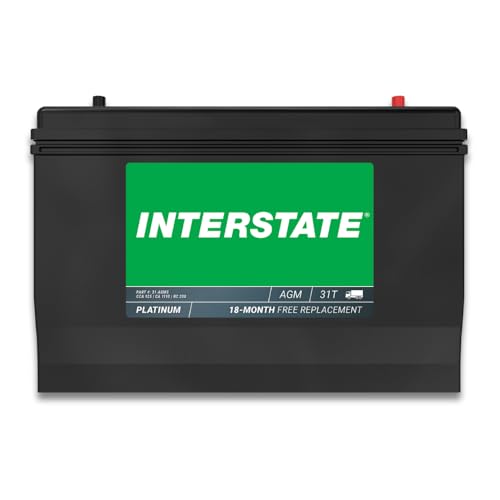
Best for premium marine use and heavy-duty trolling motor setups. This 2-in-1 pure lead AGM battery is designed to deliver high-cranking power with extended deep-cycle life. It features thick plates to sustain power output through multiple discharges and recharges. Ideal for boats with long days on the water, where reliable power to accessories is critical.
Who it’s best for: boat owners needing robust marine performance and dependable cycle life. Why selected: Interstate’s established marine lineage and emphasis on deep-cycle resilience. Limitation: not intended as a replacement for automotive or mobility batteries; ensure your application matches marine use.
Mighty Max MM-G24M 12V 90Ah
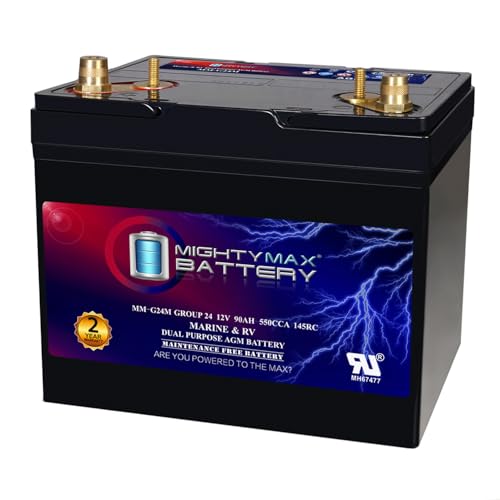
Best for compact dual-use needs where both starting power and deep cycling matter. The MM-G24M provides 90Ah capacity with dual-purpose capability, delivering 550 CCA and 700 CA for engine starts, while also supporting longer electronics runs. Suitable for smaller boats, ATVs, and compact RV setups where space is at a premium.
Who it’s best for: buyers needing a balance of starting power and deep-cycle endurance in a smaller footprint. Why selected: strong dual-purpose capability in a compact form. Limitation: slightly lower capacity (90Ah) than the 100Ah peers, which affects runtime in high-load scenarios.
Buying Guide: How to Choose a Deep Cycle Battery
Capacity and type: Prioritize 100Ah for longer runtimes in RVs or off-grid cabins. AGM technology offers maintenance-free operation and spill resistance, while gel variations provide different charging characteristics. Choose AGM for broad compatibility and reliability.
Compatibility and size: Check group size, terminal layout, and dimensions to ensure fit within your battery rack or box. Many options in this guide use group size 31 or 24M, but confirm fit for your equipment.
Discharge and charging: Look for a battery with a safe deep-discharge limit (often around 50% recommended, with 80% maximum for some AGM chemistries). Ensure your charger supports AGM chemistry and the correct voltage profile (typically 14.4V–14.7V for float/absorption).
Temperature tolerance: Battery performance and lifespan improve when operated within recommended temperatures. Cold weather affects starting power; high heat may shorten cycle life. Plan ventilation and storage accordingly in garages, cabins, or marine interiors.
Maintenance and safety: Maintenance-free AGM batteries reduce handling of liquids and venting. Ensure proper installation with secure terminals and avoid mounting angles that might affect electrolyte distribution. Spill-proof design matters more in mobile environments like boats and campers.
Warranty and service: While not listed here, verify warranty terms and manufacturer support when you purchase, especially for marine and off-grid systems where failure costs are high.
FAQ
- What is a deep cycle battery? A deep cycle battery is designed to be regularly discharged to a large fraction of its capacity and then recharged, unlike typical car batteries that are optimized for short, high-current bursts.
- What does AGM mean and why choose it? AGM stands for absorbed glass mat. It’s a sealed, maintenance-free design that resists leaks, is safer for enclosed spaces, and performs well across a range of temperatures.
- Can I use a 100Ah AGM battery in a smaller boat? Yes, but confirm the battery’s dimensions, weight, and terminal layout fit your boat’s battery compartment and wiring scheme.
- How long does a deep cycle battery last? Lifespan depends on depth of discharge, charging method, and temperature. Typically, AGM deep-cycle batteries provide multiple hundreds of cycles under proper use.
- Is it safe to mix brands in a system? It’s possible but not ideal. For best results, use matched batteries in parallel strings to ensure balanced charging and discharge.
- What’s the difference between 90Ah and 100Ah? The higher Ah rating usually means longer runtime between charges, assuming similar discharge rates and loads. For larger rigs, 100Ah offers more reserve capacity.