Best DC Power Distribution Panels for Reliable Vehicle, Boat, or RV Power
Answering your search for a DC power distribution panel, this guide highlights top options that organize and protect 12V and 24V systems. Each choice suits different needs: compact multi-output strips for small builds, robust blade-fuse blocks for higher current, and heavy-duty bus bars for clean, scalable wiring. The selections below are best for DIY electrical projects, marine apps, camping RVs, and off-grid setups where reliable power routing matters.
Summary of chosen products:
| Product | Key Benefit | Best For | Power Capacity |
|---|---|---|---|
| HCDC 1 in 8 Out 40A Power Splitter | Eight outputs with external fuse access | Compact multi-circuit distribution | 40A input; fuses up to 40A |
| GUIRUIMOON 1 in 6 Power Distribution Block | Aluminium shell with black finish; screw-mount | Sleek, portable setups | 40A input; six outputs |
| Blue Sea Systems ST Blade Fuse Block 12 Circuit | Integrated ground and clear cover | Higher-demand DC systems | Up to 100A total; up to 30A per circuit |
| WUPP 12 Circuits Fuse Block With LED Indicator | LED fuse indicators; neatly organized wiring | Vehicle, boat, or RV fuse box upgrades | 12 circuits; 32V; 100A input |
| RVBOATPAT 12V 150A Bus Bar Kit | Heavy-duty bus bars and lugs | Large wiring projects; clean routing | Max 150A; 48VDC max |
HCDC 1 in 8 Out 40Amp Connector Power Splitter Distributor Source Strip Module

Best for compact, high-control apps requiring eight outputs from a single input. It supports 0–32VDC operation and provides a 40A maximum input with fused outputs: two 30A, two 20A, two 10A, one 5A, and one 3A. An external power indicator LED helps identify power status at a glance. The aluminum enclosure offers solid protection and easy mounting. Suitable for small vehicles, off-grid setups, or hobby electronics projects where quick access to fuses is valuable. Caution: ensure fuse ratings match each output’s load to prevent overloads.
GUIRUIMOON 1 in 6 Power Distribution Block

Best for portable, space-conscious builds that still demand clean wiring. This six-output power distribution block handles up to 40A input with a 40A fuse, and includes a compact aluminum shell with black oxidation for durability. It offers screw-hole mounting and a base design for portable placement. Ideal for DIY rigs in cars, boats, or small RVs where lightweight, aesthetic wiring organization matters. Limitation: fewer outputs than larger blocks, so plan circuits accordingly.
Blue Sea Systems ST Blade Fuse Block 12 Circuit with Ground

Best for higher-demand DC systems needing robust circuit protection with integrated negative bus. This 12-circuit blade fuse block supports up to 30A per circuit and up to 100A total capacity when used with standard blade fuses. A clear insulating cover with latch and recessed label areas aids maintenance and circuit identification, making it suitable for boats, RVs, or off-grid systems with multiple loads. Caution: ensure enclosure clearance around the cover to avoid pinching wires during installation.
WUPP 12 Circuits Fuse Block with Negative Bus
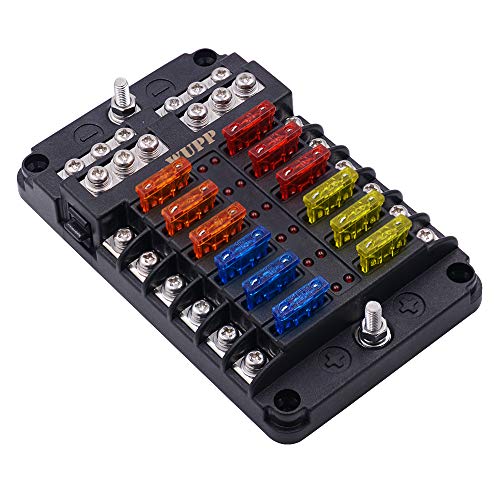
Best for organized 12V systems requiring immediate fault indication. This block uses 12 fuses and matching grounds, with a red LED indicator showing exactly where a fuse has blown. It aids quick troubleshooting on vehicles, boats, RVs, or machinery. It’s built from PBT material for strength and flame resistance, contributing to durable, long-term use. Limitation: LED indicators may draw small standby current, so plan power budgets accordingly.
RVBOATPAT Power Distribution Block 12V 150A Bus Bar

Best for heavy-duty, scalable setups requiring large current capacity and clean wire routing. This 12V bus bar kit includes positive and ground bars, covers, and terminals designed for robust automotive, marine, or solar wiring. With a maximum operating voltage of 48V and 150A continuous amperage, it supports complex power distribution while reducing clutter. Caution: ensure compatibility with conductor sizes and mounting space in your installation.
Buying Guide: Key Considerations For Choosing A DC Power Distribution Panel
What voltage and current will you run? Choose a panel that supports your system voltage (12V or 24V) and the total current your loads will draw. If you anticipate many circuits, a larger block or a bus bar with multiple terminals can prevent overloads and simplify wiring.
How many outputs do you need? For compact builds, 4–6 outputs may suffice. For marine or RV applications with many accessories, aim for 8–12 or more outputs, or a 150A class bus bar for scalability.
Is onboard fault indication important? Panels with LED indicators help identify blown fuses quickly, reducing troubleshooting time in mobile environments.
Protection and durability matter. Aluminum housings, corrosion resistance, and weatherproofing improve longevity in harsh environments such as boats or outdoor RV setups.
Ease of installation. Look for screw terminals, clear labeling, and mounting features. Some units include base designs or screw holes for straightforward installation.
Maintenance access. Panels with external fuse access or included spare fuse storage simplify fuse replacement and routine checks.
Space and form factor. Consider the footprint and height; smaller footprints fit tight compartments, while larger blocks offer easier wiring management for complex systems.
FAQ
- What is a DC power distribution panel used for? It organizes and protects 12V/24V electrical circuits by routing power from a source to multiple loads with fuses or breakers.
- Do I need a negative bus on my distribution panel? A negative bus helps consolidate ground connections, improving organization and reducing ground-referenced wiring errors.
- Can I install a DC distribution panel in a boat or RV? Yes, many panels are designed for marine or mobile use, featuring durable housings and corrosion resistance.
- What should I consider when choosing current ratings? Match per-circuit and total ratings with your expected loads to avoid overheating and fuse nuisance trips.
- Are LED indicators necessary? LEDs aid quick fault identification but may use a small amount of standby current; consider your energy budget.
- Is a bus bar better than a fuse block? Bus bars offer simple, scalable wiring for high-current apps; fuse blocks provide circuit protection with clear fault indicators. Your choice depends on load count, space, and maintenance preference.