Best 3 Phase BLDC Motor Controller Guide: Top Controllers for 3-Phase Motors
When selecting a three-phase BLDC motor controller, users look for reliable performance, compatibility with 6-60V systems, and features like forward/reverse, braking, and PWM control. This guide highlights five top picks from trusted brands that deliver solid Hall sensor and Hallless options, suitable for hobbyists and small to mid-size projects. Each product includes essential specs and practical notes to help with wiring, control methods, and heat management.
| Product | Brand | Key Feature | Voltage Range | Notes |
|---|---|---|---|---|
| LYWS High Speed Three-Phase DC 7-24V | LYWS | Hallless control board; supports no-Hall operation | 6.5-24V | 15A rated, 30A with cooling |
| DC 6-60V 400W 3 Phases Hall Brushless Motor Controller | GODIYMODULES | Full patch with forward/reverse; five wire Hall interface | 6-60V | Includes 5V power for Hall sensors |
| 2PCS DC 6-60V 400W BLDC Controller PWM Hall | YELUFT | PLC 0-5V, PWM, 120-degree Hall motor support | 6-60V | Two boards; includes Ha/Hb/Hc ports |
| Ransanx 2PCS 6-60V 400W DC Controller | Ransanx | PWM and PLC support; forward/reverse/stop/brake | 6-60V | Hall-based; dual-board package |
| GODIYMODULES 15A Three-Phase Sensorless | GODIYMODULES | Sensorless; simple potentiometer speed control | 5-36V | Bidirectional CW/CCW; no Hall needed |
LYWS High Speed BLDC Controller With Potentiometer

The LYWS high-speed controller is designed for DC three-phase brushless motors operating at 6.5-24V. It offers a Hallless control approach, meaning it can run with motors that do not use Hall sensors, which expands compatibility for hobby projects or older motor models. Key specs include a rated drive current of 15A, with a potential peak up to 30A when a cooling fan is added. The absence of a Hall sensor simplifies wiring and reduces cost, though performance with certain loads may vary compared to Hall-based options. The unit integrates a potentiometer-based speed adjustment, enabling smooth, analog speed control. Consider adding passive cooling or an active fan for sustained high-current runs to minimize thermal throttling. Applications include small robotics, DIY electric skateboards, and compact CNC machines where compact form and easy wiring are valued.
Note: When using a Hallless controller, ensure your motor’s phase and power wiring match the controller’s MA/MB/MC (or U/V/W) outputs, and provide adequate venting. The device is compatible with a wide input range, which helps in projects that may experience voltage fluctuations. This makes it a practical baseline choice for experimental setups or quick-prototyping scenarios.
GODIYMODULES 6-60V 400W Hall Controller With Forward/Reverse
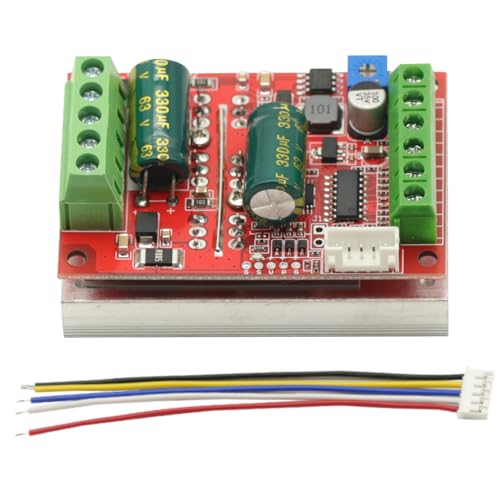
This GODIYMODULES controller focuses on Hall-based operation with MA/MB/MC phase outputs and Ha/Hb/Hc Hall signal interfaces, making it suitable for motors that include Hall sensors. It supports a 6-60V input range and integrates a forward/reverse control mechanism, along with an onboard capacity for speed regulation via a potentiometer or PWM input. The design emphasizes stable performance through standard PLC-compatible input ranges (0-5V for speed signals) and robust protection features to handle brief surges. For users upgrading from a non-Hall controller, this device offers predictable performance with brushless motors that rely on precise rotor position feedback, particularly in robotics or automated systems where consistent responsiveness is critical.
Wiring considerations: verify the three-phase outputs (MA/MB/MC) connect to motor windings in the correct sequence to avoid misrotation. The Hall signal lines must align with the sensor outputs to ensure accurate rotor positioning. Adequate heat sinking and, if possible, a small heatsink on the main controller board will help maintain stable operation under load.
YELUFT 2-Pack: 6-60V 400W Hall PWM BLDC Controller
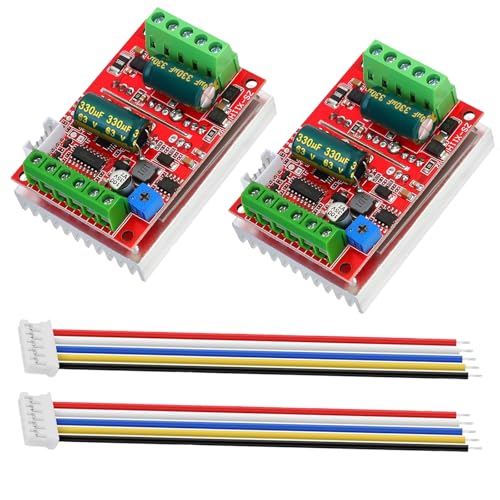
The two-unit package from YELUFT targets heavier use with 6-60V, up to 400W per device. It supports PWM control and a 0-5V analog input for speed adjustments, aligning with PLC-style control systems. The boards accommodate the common five-wire Hall motor configuration, with Ha/Hb/Hc connections and a separate 5V hall power line. This setup is well-suited for projects requiring precise speed control and straightforward wiring for motors with Hall sensors. If your motor uses Hall sensors, ensure the five-wire layout is correctly matched to the driver’s five interface points. The dual-pack arrangement is convenient for multi-motor projects or modular testbeds where identical controllers simplify fabrication and maintenance.
Practical notes: this controller typically expects a 5V logic baseline and can integrate with 0-5V signal sources or standard PWM controllers. Proper heat management remains essential, particularly under continuous high-load operations, to avoid thermal shutoff. A compact cooling solution can extend operational life in enclosed enclosures.
Ransanx Dual BLDC Controller With PWM and Brake

Ransanx offers a two-pack of 6-60V, 400W controllers featuring PWM, forward/reverse, stop, and brake functions. The device is designed for Hall-based motor setups, with MA/MB/MC phase outputs and Ha/Hb/Hc Hall inputs. It provides a comprehensive control suite that suits robotic arms, conveyor modules, and electric vehicles in compact form factors. The on-board power supply provides a 5V reference for the Hall interface, simplifying wiring for motors with integrated Hall sensors. The brake function adds an additional layer of safety and control, making it attractive for projects requiring dynamic speed reduction and controlled stopping.
Wiring guidance: confirm your motor’s Hall wire orientation and connect Ha/Hb/Hc to the corresponding hall sensor outputs. The three-phase outputs must align with the motor windings to maintain correct rotation direction. A cooling strategy is advisable when operating near the 400W rating, especially in continuous-duty applications.
GODIYMODULES 15A Sensorless BLDC Controller

This sensorless variant from GODIYMODULES targets simple setups where the motor does not rely on Hall position feedback. It supports a broad 5-36V input range with a typical 15A continuous current and potential higher peak performance for short periods. The device operates in bidirectional CW/CCW modes and uses a potentiometer for speed control, offering straightforward, analog-style adjustments. It is particularly suitable for smaller robotics projects or educational kits where simplicity and reliability matter more than rotor-position sensing. As with other sensorless controllers, performance at very low speeds can be less stable, so initial ramping and mechanical load changes should be managed carefully.
Key considerations include ensuring motor compatibility with the sensorless design, verifying heat dissipation under load, and matching the driver’s voltage inputs with the motor’s rated voltage. If your application involves frequent start-stop cycles or high-trequency switching, assess whether PWM-based control meets the required responsiveness and torque behavior. For best results, pair with motors that meet the 120-degree electrical angle specification and provide adequate cooling solutions.
Buying Guide: Key Purchase Considerations
- Motor and controller compatibility: Confirm voltage range (6-60V or 5-36V), current rating (e.g., 15A, 16A, or 20A), and whether the motor uses Hall sensors (five-wire Hall interface) or is sensorless. Match to your motor’s electrical angle (commonly 120 degrees for many BLDCs).
- Control method: Decide between PWM, 0-5V analog control, or potentiometer-based speed settings. PWM provides precise speed control at higher duty cycles, while analog inputs are simpler for quick prototypes.
- Protection and safety: Look for overcurrent protection, braking, forward/reverse, and stop functions. If your project involves heavy loads or startup surges, built-in protection reduces component wear.
- Heat management: Continuous operation near rated current requires adequate cooling. Consider adding heatsinks or a small fan, especially in enclosed enclosures.
- Wiring and sensor configuration: For Hall-based controllers, ensure correct wiring of MA/MB/MC to motor phases and Ha/Hb/Hc to Hall outputs. Sensorless controllers may require careful ramping to avoid stalling at very low speeds.
- Package and maintenance: Some suppliers offer multi-pack options (e.g., 2-piece or 2-pack) for projects with multiple motors. Verify compatibility with your enclosure layout and cable routing.
- Availability and support: Opt for controllers with clear documentation and manufacturer support, particularly when integrating with custom control systems or PLCs.