Best Conventional Fire Alarm Control Panels for Reliable Building Safety
Choosing a conventional fire alarm control panel involves balancing zone capacity, power supply, ease of installation, and compatibility with detectors and annunciators. This article highlights five practical options suitable for small to mid-sized facilities, covering features, reliability, and key considerations to help you compare models from trusted brands. We present a brief at-a-glance summary, followed by detailed product sections and a buying guide to assist in making an informed decision.
| Product | Brand | Key Feature | Typical Use |
|---|---|---|---|
| Firelite MS-10UD-7 | Firelite/Honeywell | 10 Zones, FLPS 7 Power Supply | Medium facilities needing fault-tolerant power |
| FIRELITE MS-5UD-3 | Fire-Lite | 5 Zones, 3 Amp Power | Smaller installations with solid power support |
| MS-2-L8 | Generic | 2 Zones, ADA/ANSI signaling options | Cost-conscious projects with basic needs |
| POTTER PFC-4064 | POTTER | Conventional Panel Red Cabinet | Specialty or retrofits requiring a red cabinet |
| POTTER PFC-4410G3 | POTTER | Multi-Hazard Releasing Control Panel | Hazardous environments needing releasing controls |
Firelite MS-10UD-7 Conventional 10 Zone Fire Panel

The Firelite MS-10UD-7 is designed for mid-sized facilities requiring organized zoning and robust power management. It supports up to 10 zones and uses the FLPS 7 power supply to deliver stable operation across multiple detection devices. This panel is commonly chosen for its reliable interface and compatibility with standard conventional detectors and signaling devices. The 120VAC power input supports straightforward installation in a utility room or equipment area. Consider this unit when a facility needs scalable zoning without moving to addressable technology.
FIRELITE MS-5UD-3 5 Zone Conventional Fire Control Panel
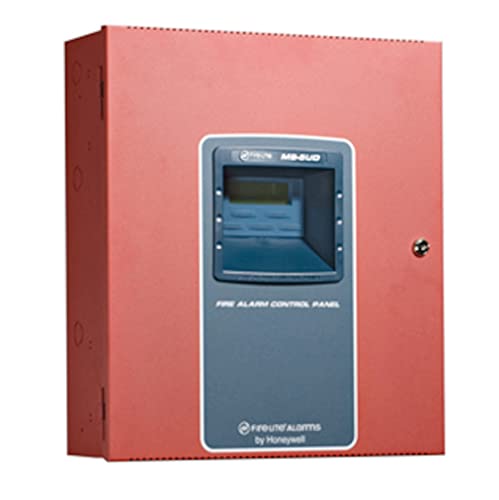
The Fire-Lite MS-5UD-3 offers a compact 5-zone conventional fire control solution with a 3-amp power supply. It is well-suited for smaller installations where straightforward wiring and clear annunciation are priorities. The panel emphasizes simplicity and reliability, making it a practical choice for offices or small commercial spaces that require dependable fire detection and alarm signaling without advanced release capabilities. Proper installation ensures consistent operation during testing and actual alarms.
MS-2-L8 2-Zone Conventional Fire Alarm Control Panel

The MS-2-L8 provides a compact two-zone conventional solution with added signaling versatility. Notable features include synchronization of standard ANSI audible signals as required by NFPA 72 and synchronization of ADA-compliant strobes per NFPA 72. The supervisory LED per zone helps operators monitor detectors for temperature changes, such as freezing conditions. This option is suitable for small commercial environments that require compliant signaling and clear status indicators without the complexity of larger systems.
POTTER PFC-4064 Conventional Panel Red Cabinet

The POTTER PFC-4064 is a conventional fire panel housed in a distinctive red cabinet. This model emphasizes accessibility and durability for environments that require visible, clearly marked equipment. Product descriptions highlight strong support and service from the supplier, along with competitive pricing. While it focuses on rugged presentation, ensure electrical compatibility and detector integration meet your project’s zoning and signaling requirements. It is often chosen for retrofits or installations where cabinet accessibility is a priority.
POTTER PFC-4410G3 – Conventional Multi-Hazard Releasing Panel

The POTTER PFC-4410G3 represents a conventional multi-hazard releasing control panel aimed at specialized environments. It emphasizes releasing control capabilities critical for facilities with specific safety protocols, such as industrial or large public spaces. The model aligns with North American fire safety equipment standards and includes supplier support that may influence procurement decisions. For projects requiring coordinated releasing operations alongside conventional signaling, this panel provides a targeted solution with engineering consideration for compatibility and safety compliance.
Buying Guide: Key Purchase Considerations
- Zone capacity: Match the number of zones to current needs with some future growth. If you anticipate expansion, choose panels that offer scalable options or easy add-ons.
- Power supply and reliability: Review the included power supply and its amperage. A robust power source minimizes nuisance alarms and ensures reliable operation during a fire event.
- Signaling compatibility: Ensure the panel supports the required signaling standards, including ANSI audible signals and ADA-compliant strobes, to meet NFPA 72 and local codes.
- Cabinet and form factor: Consider whether a red cabinet or a standard enclosure is preferred, especially for accessibility, visibility, or retrofits in constrained spaces.
- Installation and maintenance: Look for panels with straightforward wiring diagrams, documentation, and manufacturer support to streamline commissioning and ongoing maintenance.
- Compliance and standards: Verify that the panel adheres to relevant NFPA standards and has third-party approvals or certifications for your jurisdiction.
- Upgrade path: If you plan to migrate toward addressable systems later, assess whether the conventional panel supports staged upgrades or integration with broader fire alarm ecosystems.
- Support and service: Consider the supplier’s reliability and availability of technical support, parts, and warranty terms when choosing a brand.
The selection of a conventional fire alarm control panel should be guided by the facility’s size, risk factors, and compliance requirements. The devices reviewed here provide a spectrum of zone capacities, signaling options, and cabinet styles to help American buildings meet safety standards while aligning with installation timelines and budget considerations. Evaluate each option against your building’s layout, the detectors you plan to use, and the level of control you need during maintenance and testing.