Best Continuous Flow Water Heaters for Instant Hot Water
If you’re seeking reliable on-demand hot water, continuous flow water heaters deliver instant warmth without bulky storage. This guide compares top models across electric and propane/gas options, highlighting performance, efficiency, and practical use for American homes. Whether you’re outfitting a new build or upgrading an older system, these picks balance flow rates, temperature stability, and install versatility.
| Model | Type | Max Flow (GPM) | Key Benefit |
|---|---|---|---|
| Rheem 18kW Electric | Electric Tankless | Up to 4.4 | Self-modulation for stable temps |
| APUS 140k BTU Propane | Propane Tankless | Up to 6.8 | Instant hot water with smart control |
| Rheem 180,000 BTU Natural Gas | Gas Condensing | 0.4 – 9 | High efficiency and indoor use |
| APUS 95k BTU Propane | Propane Tankless | Up to 4.42 | Precise temperature control |
| VEVOR 120,000 BTU Propane | Propane Tankless | Up to 5.3 (approx) | Smart temp control |
Note: All models listed here are designed for point-of-use or whole-home setups, with varying installation requirements. When selecting a continuous flow heater, consider your peak hot water demand, fuel availability, and venting needs. The following sections present five carefully chosen options, each with its defining features.
Rheem 18kW 240V Electric Tankless Water Heater
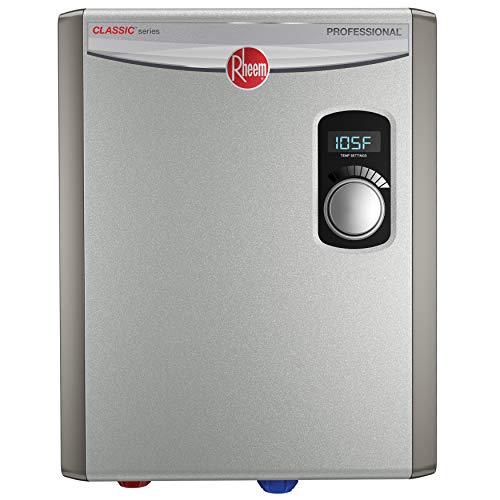
The Rheem 18kW electric model uses external digital thermostatic control with an LED display for precise temperature management, accurate to ±1 degree. It features advanced self-modulation that adjusts power to meet demand, helping conserve energy during lower hot water use. Durable copper immersion heating elements and field serviceability enhance longevity. Its flow rate reaches up to 4.4 GPM, suitable for single-family homes with modest simultaneous hot water needs. Installation can be problem-free in the right electrical panel setup and plumbing configuration.
APUS Tankless Propane Water Heater, 140,000 BTU
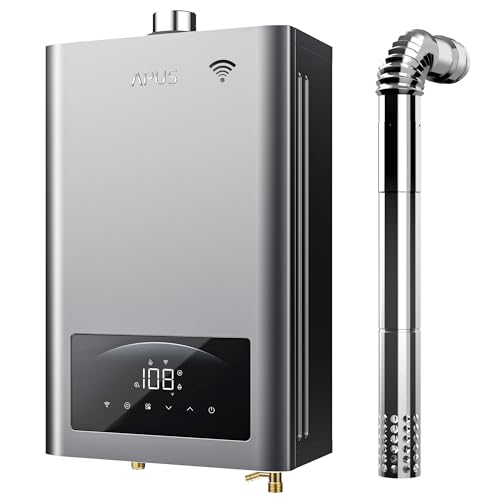
APUS’s propane tankless unit delivers consistent performance with a 140,000 BTU burner and an oxygen-free copper heat exchanger. It incorporates intelligent heating technology to provide hot water in about a second, minimizing wait time. A standout feature is Zero Cold Water Technology—instant hot water with a continuous on-demand supply, aided by a 24/7 ECO smart cycle that claims up to 40% energy savings versus conventional heaters. The built-in booster pump can raise flow by up to 130%, supporting multiple fixtures simultaneously for dependable whole-home performance.
Rheem Natural Gas Condensing Tankless, 9 GPM

This Rheem gas condensing model is designed for indoor installations and high efficiency. It delivers a broad flow rate range from 0.4 to 9 GPM, making it suitable for larger homes or those with significant simultaneous hot water demands. Temperature settings span from 100 to 140°F with a default of 120°F, and electric ignition simplifies operation. The unit emphasizes energy efficiency through condensing technology, which recovers heat from exhaust gases to maximize performance and reduce fuel use.
APUS Tankless Propane Gas Heater, 4.42 GPM Indoor
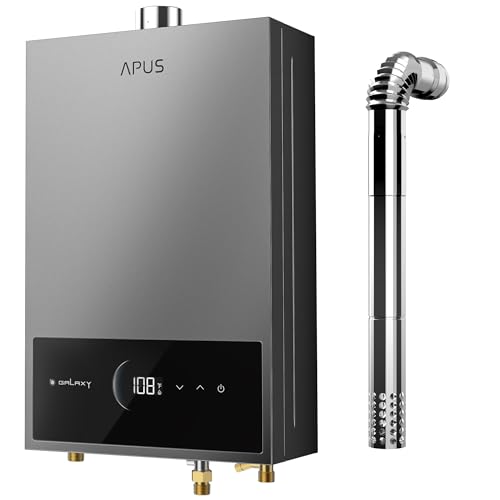
APUS’s 95,000 BTU propane unit delivers up to 4.42 GPM with precise, temperature-stable output. It employs smart digital controls to maintain water within a tight temperature band, reducing shocks when multiple fixtures run. The system emphasizes durability through oxygen-free copper heat exchangers and segmented combustion, supporting high efficiency—claimed as 30% energy savings over traditional tank heaters. An LED display allows straightforward temperature adjustments in the range of approximately 95°F to 140°F, making quick setup and operation practical for busy households.
ECOTINYMACH Tankless Electric 110V, 5500W
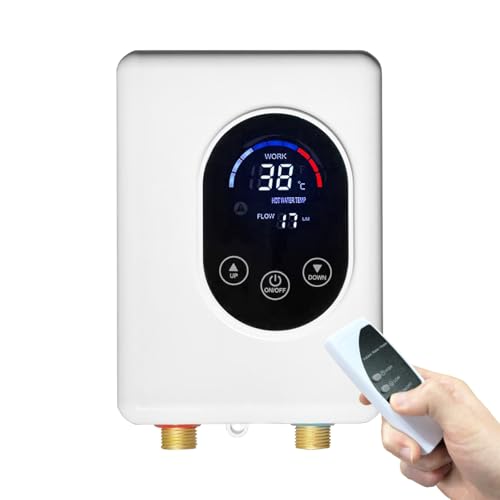
ECOTINYMACH offers a compact 110V electric tankless heater with 5,500W power and a remote control for temperature adjustments. Targeted for spaces such as under sinks or small bathrooms, its lightweight design supports easy installation. The unit emphasizes simple operation and on-demand heating without preheating delays. While suited for modest hot water needs, it provides a practical solution for limited spaces and point-of-use installations where low-profile equipment is essential.
Buying Guide: Key Considerations for Continuous Flow Water Heaters
- Flow rate and demand: Determine peak simultaneous usage (showers, sinks, appliances) to select a unit that delivers enough GPM. Electric models often have lower maximum flow than gas/propane units.
- Fuel type and availability: Electric heaters require ample electrical capacity and safe installation; propane and natural gas units demand venting, gas supply, and proper clearances.
- Ventilation and venting options: Gas/propane systems generally require venting to the outdoors; some indoor-rated models offer specific venting configurations—check local code requirements.
- Temperature stability: Look for units with smart modulation or precise digital controls to minimize temperature fluctuations during peak demand.
- Efficiency ratings: Condensing gas models typically offer higher efficiency by recovering heat from exhaust, lowering operating costs over time.
- Installation considerations: Space, mounting, and clearances influence whether a unit is best placed in a utility room, garage, or crawl space. Indoor units need safe ventilation and proper gas line routing where applicable.
- Maintenance and serviceability: Field serviceability and readily replaceable parts can extend the life of the heater and reduce downtime.
- Safety features: Look for anti-freeze protections, flame safeguards, dry-fire protection, and leak alarms, especially for propane installations.
- Warranty and support: Favor models with robust manufacturer warranties and access to service networks for parts and repairs.
Across the selections, users can weigh electric versus propane/gas options based on utility infrastructure, climate, and hot water needs. For homes with reliable electrical capacity and moderate simultaneous demand, electric models offer straightforward installation. For larger households or locations with easy gas access, propane and natural gas units often provide higher flow and efficiency at scale. Each model reviewed emphasizes control accuracy and user-friendly operation to help minimize temperature shocks and energy waste.