Best Ceramic Metal Halide Ballast Options for Reliable HID Lighting
Looking for a ceramic metal halide ballast that suits your lighting needs? This guide highlights five top options, explains who each is best for, and notes any limitations. Perfect for growers, hobbyists, and professionals seeking efficient, stable CMH operation.
| Product | Best For | Voltage Range | Wattage | Notes |
|---|---|---|---|---|
| Sunpark 120-MH75 | Single 75W CMH lamp installations | 120V | 75W | Compact, auto shutdown reset circuit |
| Phantom CMh 315W | Vegetative to flowering cycles in larger setups | 120/208/240V | 315W | Low frequency square-wave, remote operation |
| Advance 39–50W 120/277V | Small to mid-size CMH fixtures | 120/277V | 39–50W | Side leads with mounting feet |
| Hatch MC39-1-J-UNNU | Universal voltage 39W CMH applications | 108–305V | 39W | Universal voltage support |
| FLILED 4000K CMH | Horticulture with long life and safety focus | Not specified | CMH bulb integrated context | Emphasis on safety and long life |
Note: The table provides quick comparison angles. For detailed specs and sections below, refer to each product’s dedicated section.
Sunpark 120-MH75 – For One 75W Ceramic Metal Halide Lamp

The Sunpark 120-MH75 ballast is designed for a single 75W ceramic metal halide lamp. It offers an Auto Shutdown Reset Circuit to help protect the lamp and ballast from faults. This ballast suits compact, single-lamp installations where space is limited and straightforward operation is preferred. Best for hobbyists or small grow setups needing a simple, dependable CMH ballast.
Who it’s best for: small, budget-conscious projects or rooms where only one 75W CMH is required. Why selected: simplicity and a built-in safety reset circuit help reduce downtime. Caution: limited to one 75W lamp; not ideal for multi-lamp configurations unless paired with a separate ballast.
Phantom II CMh Ceramic Metal Halide Digital Ballast, 120V/240V

The Phantom CMh 315W ballast is a remotely operated, low-frequency square-wave digital ballast intended for the 315W CMH lamp. It supports 120/208/240V input and is designed for quiet, reliable operation with energy efficiency. Its distance flexibility allows wall mounting near the reflector or extending up to 30 feet with optional cord extensions.
Who it’s best for: larger grow spaces needing robust consistency across vegetative to flowering stages. Why selected: square-wave, low-noise performance with multi-volt capability. Caution: more suitable for 315W lamps; not optimized for lower wattages without compatibility checks.
39 or 50 Watt – 120/277 Volt – Electronic Metal Halide Ballast

This electronic ballast handles 39W, 39W, and 50W ceramic metal halide lamps with a 120 to 277V input range. Side exit leads and mounting feet simplify installation in compact fixtures. Best for versatile, small to mid-size CMH setups where multiple wattages are needed from a single ballast family.
Who it’s best for: installers needing flexibility across 39W and 50W loads. Why selected: broad voltage range and side-lead design ease wiring. Caution: ensure lamp wattage matches the ballast rating to avoid compatibility issues.
Hatch MC39-1-J-UNNU For One 39w (M130) CMH Lamp

The Hatch MC39-1-J-UNNU ballast is a 39W electronic metal halide option with universal voltage input (108–305V) and 50/60Hz operation. It is designed to support a single 39W CMH lamp with reliable control and straightforward mounting. Best for single-lamp installations in varied voltage environments.
Who it’s best for: installations requiring a compact 39W CMH ballast with wide voltage tolerance. Why selected: universal input helps adapt to different electrical systems. Caution: limited to 39W; not suitable for higher wattage CMH needs without a different ballast.
FLILED Horticulture Ceramic Metal Halide
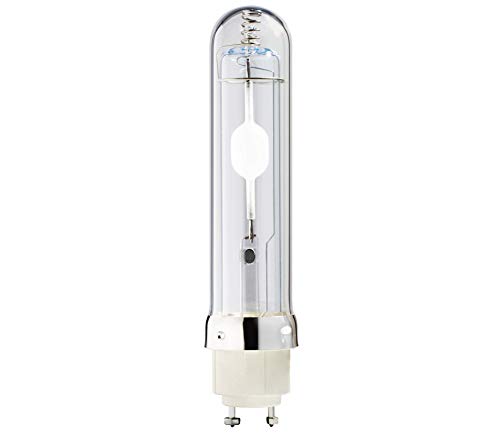
The FLILED CMH offering emphasizes horticulture-specific design and safety features. The bulbs are noted for NRC licensing and a 4000K spectrum intended to emulate natural midday sunlight for vegetative growth. The package highlights a long lifespan with slower lumen decay, contributing to consistent performance over time.
Who it’s best for: greenhouse or indoor growers prioritizing a sun-like spectrum and bulb safety. Why selected: focus on horticultural suitability and longer lumen maintenance. Caution: product data emphasizes bulb safety and spectral design; verify ballast compatibility with your lamp wattage and fixture before purchase.
Buying Guide: Key Purchase Considerations
- Wattage and lamp compatibility: Match ballast wattage with your CMH lamp (e.g., 39W, 75W, 315W) to ensure proper operation and lumen output.
- Voltage and wiring: Check voltage requirements (12×0 or universal inputs) and whether you need single-point or remote mounting. Consider whether you want side leads or traditional wiring.
- Control and protection features: Look for auto shutdown resets, square-wave technology, RF shielding, and protections that reduce downtime and extend ballast life.
- Physical layout: For tight spaces, prefer ballast designs with mounting feet or compact form factors. For larger rooms, remote mounting up to 30 feet can reduce heat near the grow area.
- Safety and compliance: Safety certifications and NRC/documented safety features are important for long-term reliability and risk management.
- Future-proofing: If you plan to scale, consider a ballast that supports multiple wattages or easy migration to different lamp types within the CMH family.
FAQ
- Q: Can I use a 315W CMH ballast with a 75W lamp? A: No. Ballasts are designed for specific wattages; using a mismatched wattage can reduce performance or damage the ballast.
- Q: What is “square-wave” ballast technology? A: It uses a low-frequency square-wave signal to provide stable current and reduced acoustic resonance, improving lamp life and performance.
- Q: Should I prefer universal voltage ballasts? A: Universal voltage (e.g., 100–305V) offers flexibility across regions or changing electrical setups, which can simplify installation.
- Q: Are there safety concerns with CMH bulbs? A: CMH bulbs include safeguards and require proper handling and fixtures; ensure ballast compatibility and follow manufacturer instructions.
- Q: How long do CMH ballasts last? A: Durability varies by model and usage; choose a ballast with protective features and treatment from reputable brands for longer life.
- Q: Do CMH ballasts affect plant growth differently from HPS or MH? A: CMH provides a broad spectrum and efficient light; many growers report strong vegetative growth and steady flowering when matched to the system.