Best Ceramic Coating Options for Solar Panels That Actually Work
Solar panels benefit from protective coatings that repel dirt, resist water spots, and reduce grime buildup without compromising light transmission. The following selections cover coatings designed for solar panels or compatible surfaces, helping panels stay cleaner longer and perform more efficiently. This guide compares nano- and ceramic-based products from trusted brands to help you choose a coating that fits your system and maintenance routine.
| Product | Brand | Focus |
|---|---|---|
| Viper Shield Professional Grade Graphene Ceramic SiO2 Spray | Viper Shield | Versatile coating for solar panels, glass, and more |
| Unelko Solar Shield Protective Coating | Unelko | Nano-scale polymer specifically for solar panels |
| CERAKOTE Platinum Rapid Ceramic Sealant Spray | CERAKOTE | High-gloss ceramic spray for protective layers |
| Griot’s Garage Ceramic Glass Coating Kit | Griot’s Garage | Glass coating optimized for clear surfaces |
| System X Renew Ceramic Spray Coating | System X | Ultra-hydrophobic SiO2 spray with long protection |
Selecting the right coating depends on surface type, desired maintenance interval, and whether you need a coating optimized for glass and transparent surfaces. Below are five products that stand out for solar panel protection and easy upkeep, with objective notes on their properties and suitability for shielding solar arrays from grime, dust, and mineral deposits.
Viper Shield Graphene Ceramic For Surfaces

The Viper Shield Professional Grade Graphene Ceramic SiO2 Spray uses advanced SiO2 ceramic technology with graphene-infused properties. It forms a hydrophobic layer that repels dirt and water while resisting smudges and hard water stains. The product is described as suitable for surfaces including solar panels, which makes it a practical choice for reducing grime attachment on glass-covered solar arrays. Its coating claims to leave a smooth, hydrophobic finish that helps keep surfaces cleaner longer between cleanings. The application is straightforward, designed for quick upkeep on large or multi-panel installations.
Key points: strong water repellency, high-gloss look, durable protection, and multi-surface versatility. For solar panels, the hydrophobic effect can aid in minimizing mineral buildup from rain and mist, while reducing the frequency of manual cleaning. As with any coating, surface prep and cure time influence final performance, and a small test area is advisable before full-panel application.
Unelko Solar Shield Protective Coating

Unelko Solar Shield Protective Coating is formulated specifically for solar panels. It uses nano-scale transparent polymer technology to form a protective layer that stops contaminants from sticking while staying optically clear. The coating is described as quick and easy to apply, creating a transparent shield that does not alter the appearance of panels. Coverage is generous: a 32-ounce bottle is rated to protect over 1,000 square feet, making it cost-effective for large solar installations or distributed residential arrays. The nano-scale formulation aims to preserve light transmission while enhancing cleaning intervals.
Considerations include ensuring compatibility with your panel glass and frame materials, as well as adherence to a careful application process in appropriate environmental conditions. The product’s emphasis on transparency is advantageous for solar panels, as any tint or color change can impact efficiency. Longevity claims suggest extended protection against pollution buildup, though real-world results depend on exposure and maintenance frequency.
CERAKOTE Platinum Rapid Ceramic Sealant
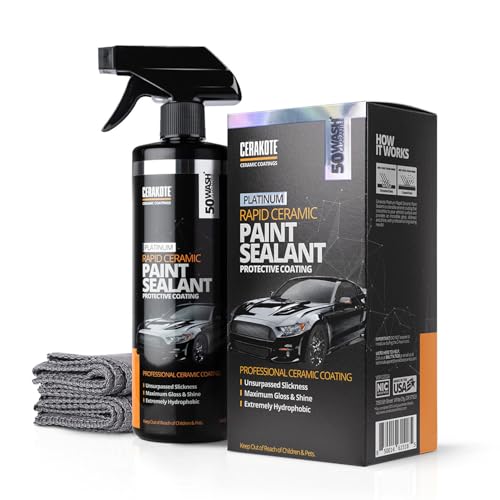
CERAKOTE Platinum Rapid Ceramic Sealant Spray is positioned as a high-gloss, hydrophobic coating with strong durability. While widely used on automotive surfaces, its spray format and ceramic base can be effective on glassy surfaces like solar panels, providing a slick finish that can help minimize dirt adhesion and facilitate easier cleaning. The product touts a 50-wash rating and strong gloss, which can contribute to continued light transmission while minimizing surface scattering caused by grime. Application is described as simple—wash, dry, spray a light coat, and buff to a shine.
For solar panels, consider how UV exposure and long-term weathering interact with siloxane-based sprays. The coating’s hydrophobic properties are beneficial for shedding water, dirt, and sap, which can reduce cleaning frequency. However, it’s important to verify compatibility with tempered glass and coatings already present on your panels before broad application across an array.
Griot’s Garage Ceramic Glass Coating Kit

The Griot’s Garage Ceramic Glass Coating Kit focuses on glass surfaces, offering a SiO2-based coating, an applicator pad, and towels. For solar panels, the glass-focused formula aims to repel water and reduce dirt accumulation while maintaining visibility and light transmission. The coating creates a hydrophobic barrier that can help raindrops roll off quickly, potentially decreasing wind-driven soil deposition. The kit’s included tools facilitate precise application on flat, large glass areas typical of solar panels. The product is designed for windshield-like performance, which aligns with the need for clean, clear panel surfaces for maximum energy yield.
Practical considerations include ensuring an even application across entire panel surfaces and avoiding streaks during curing. Surface preparation and curing times should be followed as per instructions to maximize hydrophobicity and durability. While primarily marketed for automotive glass, many users report favorable results on other clear surfaces, including solar panes, when applied correctly.
System X Renew Ceramic Spray Coating

System X Renew Ceramic Spray Coating emphasizes ultra-hydrophobic SiO2 protection with a long-lasting effect. Marketed as a DIY ceramic nano coat, it claims 9+ months of protection and superior resistance against UV rays, rain, dirt, tar, and other contaminants. The coating is designed to deliver high gloss, beading that beads water effectively, and provide a slick finish. For solar panels, a longer protection window reduces cleaning frequency and helps maintain peak efficiency by reducing surface soiling. The spray format makes it feasible to treat individual panels or entire arrays when done with care to achieve even coverage and thorough curing.
Real-world performance can vary with climate and panel orientation. For best results, apply in mild weather, away from direct sun, and consider multiple light coats if recommended by the manufacturer. As with any coating intended for solar surfaces, verify compatibility with the glass type and existing coatings on the panels to avoid optical distortion or adhesion issues.
Buying Guide: Solar Panel Coatings And What To Look For
- Surface compatibility: Choose coatings designed for glass or solar panel surfaces. Some products are automotive-focused but compatible with solar glass; others are explicitly formulated for solar panels.
- Hydrophobic performance: A strong water-repelling effect helps prevent dirt and mineral buildup. Hydrophobic coatings also aid in rain-assisted cleaning, potentially reducing manual washes.
- Optical clarity: For solar panels, maintaining light transmission is critical. Transparent polymer or silica-based coatings are preferred to avoid shading or glare changes.
- Coverage and economy: Large installations require products with substantial coverage per bottle. Check the stated square footage and practical tips for application on multiple panels.
- Durability and maintenance: Consider expected longevity (months to years) and resistance to UV exposure, salt spray, and environmental pollutants. Some products claim up to 9+ months of protection; real-world results depend on climate and cleaning cycles.
- Application method: Sprays offer quick application on flat solar panels; kits with applicators are helpful for even, streak-free coverage. Temperature and humidity ranges during application affect curing and performance.
- Certification and compatibility: If your solar system has warranty requirements or coatings installed by installers, verify that applying a coating won’t void warranties or affect panel performance. Always follow manufacturer instructions and test on a small area first.
- Maintenance plan: A coating can reduce cleaning frequency but does not replace regular inspection and cleaning. Combine coatings with a routine maintenance schedule to sustain energy yield.
In summary, for solar panels, Unelko Solar Shield and Viper Shield provide coatings specifically positioned for solar glass surfaces, while CERAKOTE, System X Renew, and Griot’s Garage Glass Coating Kit offer strong options for glass surfaces and large-area panel protection. The optimal choice depends on panel type, climate, maintenance preferences, and willingness to perform careful surface preparation. For best results, implement a measured application plan, verify surface compatibility, and monitor panel performance after coating to assess any changes in cleaning intervals or efficiency.