Best Generator Sub Panel Kit Options for Backup Power and Home Safety
When selecting a generator sub panel kit, the goal is clear: reliable transfer capability, straightforward installation, and safe operation during outages. This guide highlights five top options suitable for American homes, ranging from multi-circuit 50-amp kits to compact 30-amp systems. Each choice is described for specific buyers—homeowners with whole-house back-up needs, rental properties requiring predictable power for essentials, and DIY enthusiasts seeking practical, code-friendly solutions. A quick summary table follows to compare core features at a glance.
| Product | Best For | Key Benefit | Ideal Use |
|---|---|---|---|
| VEVOR Manual Transfer, 50-Amp 10-Circuit | Homes with high power needs | Built-in CS6375 inlet and watt meter | Large, multi-appliance back-up |
| Nature’s Generator Transfer Switch 6 Circuits | Smaller homes or apartments | Manual 6-circuit control | Essential loads with simple setup |
| Reliance 31406CWK 30A 6-Circuit Pro/Tran | Moderate power, budget-conscious | Compact, reliable 6-circuit design | Outdoor or indoor use, straightforward install |
| LiftCharger 30A Gen Kit for Square D Homeline | Square D Homeline load centers | Easy interlock-style hook-up | Customizable circuits for a single center |
| Reliance WKPBN30 Portable PWR Kit | Portable setups, quick deployment | Through-the-wall flexibility | Temporary or semi-permanent usage |
VEVOR Manual Transfer, 50-Amp 10-Circuit

This 50-amp transfer kit supports up to 10 circuits, ideal for homeowners who need to run critical loads during outages. It is compatible with generators up to 12,500 watts, making it suitable for households with multiple essential appliances such as well pumps, refrigerators, and HVAC systems. A double-throw switch provides a clear, mechanical handoff between utility power and backup power. The built-in CS6375 inlet with a watt meter simplifies load monitoring, reducing the risk of overloads and extending generator life. The rugged NEMA 3R enclosure adds outdoor durability, while still allowing indoor installation if desired.
Best for: Larger homes or properties where several circuits must stay powered during an outage. Better for users who want a single, prewired solution with a watt meter in one unit. Choose this if you need higher amperage capacity and integrated monitoring. Caution: Outdoor exposure is supported, but ensure proper weatherproof mounting and adherence to local electrical codes during installation.
Nature’s Generator Transfer Switch 6 Circuits 120V 30A

This 30-amp, 6-circuit transfer kit focuses on secure manual power switching to a home’s electrical system. It provides controllable load management for essential loads at 120V, and it is compatible with AFCI/GFCI breakers, offering safety and compliance benefits. Manual operation gives you precise control to prevent backfeeding and protect the electrical system. This option is well-suited for smaller homes or apartments where only essential devices need continuous back-up power.
Best for: Smaller homes or renters who prioritize straightforward, safe manual control over a limited set of circuits. Avoid this if you need higher total amperage or a fully automatic transfer function.
Reliance Controls 31406CWK 30 Amp 6-Circuit Pro/Tran
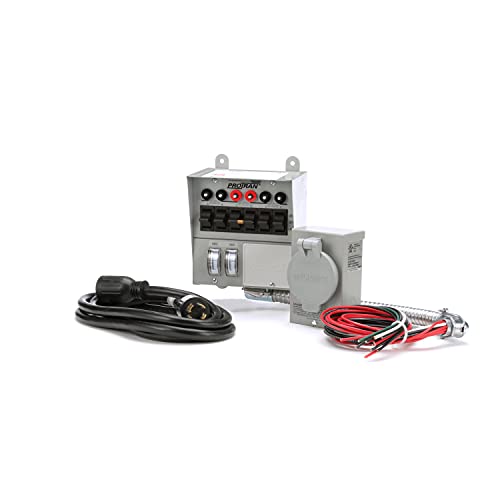
This 30-amp, 6-circuit transfer kit focuses on reliability and compact design suitable for outdoor or indoor installations. It’s designed to power a selection of critical circuits with a straightforward transfer process. The kit is compatible with corded generator connections and supports a range of 30-amp setups, making it a practical choice for many standard backup power needs. A practical limit is the 6-circuit capacity, which may require prioritizing which loads stay active during an outage.
Best for: Homeowners seeking a balanced, economical 6-circuit transfer option that’s easy to install beside an existing load center. Better for modest power needs; consider a higher-capacity kit if more circuits are required.
LiftCharger 30 Amp Generator to House Kit

This kit is designed for convenient house hook-ups and safe connection to a home’s load center. Rated for 30 amps and compatible with generators in the 4000-8500 watt range, it’s a practical choice for users who want to power individual circuits selectively. The interlock setup supports safe operation without a full transfer switch, which can reduce cost and complexity for homeowners who want a targeted, economical solution. Consider this option if your main objective is to power chosen circuits rather than the entire house.
Best for: Homeowners with a Square D Homeline load center seeking an easy interlock-based solution to power selected circuits. Better for those who want a simpler, lower-cost alternative to a full transfer switch. Avoid if you need automatic transfer or a larger circuit capacity.
Reliance WKPBN30 Portable PWR Transfer Kit

This portable through-the-wall transfer kit is designed for flexibility and quick deployment. It includes fittings, a PVC sleeve, and mounting accessories to facilitate installation in a temporary or semi-permanent setup. The kit is suitable for users who want to establish a reliable generator-to-wall connection without a full in-wall transfer panel. It is best for portable or temporary backup configurations rather than a permanent, fixed installation.
Best for: Renters or seasonal homes needing a fast, portable solution. Better for temporary deployments; avoid if you require a full, fixed transfer panel with multiple circuits.
Buying Guide: Key Considerations For Generator Sub Panel Kits
- Power capacity: Determine the total wattage you need during an outage. Larger homes with multiple essential appliances may require 50-amp, multi-circuit kits, while smaller homes can operate efficiently with 30-amp options.
- Circuit count: Match the number of circuits you want to power. More circuits offer greater flexibility but may require a larger transfer panel and more complex wiring.
- Transfer type: Manual transfer kits require you to switch power yourself, while automatic or interlock designs provide safer, more seamless operation. Choose based on how often outages occur and your comfort level with electrical work.
- Inlet and monitoring: Integrated inlets and watt meters help monitor load and prevent overloads. Built-in meters simplify maintenance and protect the generator and home circuits.
- Weatherproofing: Outdoor installations need weatherproof enclosures (like NEMA 3R) to withstand rain, snow, and dust. Indoor installations may offer simpler access but still require safe, code-compliant wiring.
- Compatibility: Ensure the kit matches your generator size, your home’s load center type, and local electrical codes. Some kits are tailored for specific panel brands or models.
- Installation complexity: Some options are “plug-and-play” with minimal wiring, while others require a more involved setup. Consider your DIY comfort level and whether professional installation is advisable.
Frequently Asked Questions
- What is a generator transfer kit and why do I need one? – It enables a safe, code-compliant connection between a portable generator and your home’s electrical system, preventing backfeeding and allowing powered circuits during a outage.
- Do I need a weatherproof enclosure for outdoor installation? – Yes, if the transfer kit or inlet will be placed outdoors. A NEMA 3R enclosure provides protection against rain and dust.
- What’s the difference between manual and automatic transfer switches? – Manual switches require your action to move power from utility to generator, while automatic switches detect outages and switch automatically, offering hands-off operation.
- How many circuits should I plan for? – Choose the number of circuits based on the essential loads you want to back up. More circuits increase coverage but also complexity and cost.
- Can these kits power high-demand appliances like HVAC or sump pumps? – Some 50-amp kits support high-demand loads, but verify the wattage and circuit compatibility for critical appliances you plan to run.
- Is professional installation required? – For many setups, especially outdoor or code-sensitive installations, consulting a licensed electrician is recommended to ensure compliance and safety.