Best Ceiling Carbon Monoxide Detectors for Home Safety
Choosing a reliable ceiling carbon monoxide detector is essential for early warning and family protection. The following selections emphasize 10-year batteries, easy installation, interconnect capabilities, and strong sensing technology. Below, you’ll find five top options with clear features to help you compare quickly and decide which unit fits your home layout and power needs.
| Product | Brand | Key Feature | Power |
|---|---|---|---|
| First Alert SMCO100 | First Alert | 2-in-1 smoke & CO; Precision Detection | Battery |
| X-Sense SC01 | X-Sense | 10-Year battery; straightforward display | Battery |
| First Alert SMICO100-AC | First Alert | Interconnect hardwire with battery backup | Hardwired w/ Battery Backup |
| Kidde 30CUD10 | Kidde | 10-Year battery; UL standards | Battery |
| X-Sense SC07 | X-Sense | 10-Year Battery; Large LCD | Battery |
First Alert SMCO100 Battery-Operated Alarm

First Alert’s SMCO100 integrates smoke and carbon monoxide detection with Precision Detection to reduce nuisance alarms and offer early warning in emergencies. It operates on a battery, simplifying installation and maintenance. The unit provides 2-in-1 protection, combining both smoke and CO alerts in a single device. This model emphasizes avoiding false alarms from cooking while keeping your home safe with reliable battery-powered operation.
X-Sense SC01 Smoke & CO Detector
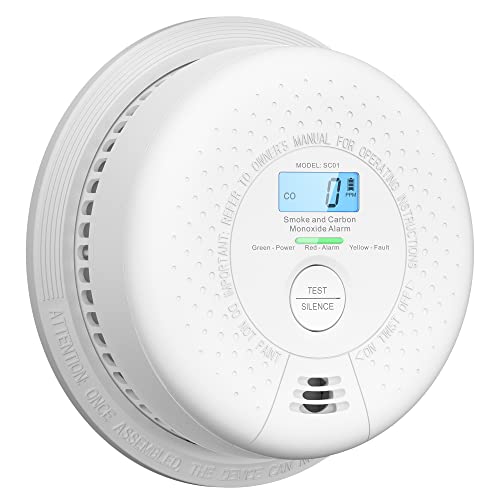
The X-Sense SC01 is a stand-alone, 10-year battery-powered detector with a clear display. Note that it does not support wireless interconnection or Wi-Fi, and it isn’t compatible with base stations for interconnection. It still provides robust 2-in-1 protection against both smoke and carbon monoxide, making it a low-maintenance choice for smaller layouts or retrofit installations where interconnectivity isn’t required.
First Alert SMICO100-AC Interconnected Alarm

The SMICO100-AC adds interconnect capability to First Alert’s 2-in-1 alarm line. This hardwired detector includes a battery backup and enables quick interconnect signaling when one alarm sounds, promoting coordinated response across multiple rooms. Quick Connect Plug features simplify installation without rewiring, making it suitable for existing wiring setups that demand robust, universal coverage.
Kidde 30CUD10 10-Year Battery Alarm

Kidde’s 30CUD10 combines CO and smoke detection in a single, battery-powered unit with a 10-year life. It features UL compliance, an easy installation, and a green power LED with an 85-decibel alarm. The design emphasizes long-term reliability without the need for frequent battery changes, suitable for rooms where wall wiring isn’t available or desired.
NICGOL 4-in-1 Gas & CO Detector

The NICGOL device combines natural gas and carbon monoxide detection with temperature and humidity sensing in a plug-in design. It provides dual sensors and dual alarms with a loud alert and flashing light when thresholds are reached. While not strictly a ceiling-mounted detector, its multi-sensor approach is useful in larger spaces like kitchens or RVs where gas leaks may occur, offering a broader safety net beyond CO alone.
Buying Guide
- Power source: Battery-powered detectors are easier to install but require battery maintenance. Hardwired units with battery backup offer continuous protection during power outages.
- Interconnection: If you want alarms to sound together across rooms, choose models with interconnect capability. Note that some units support interconnection only in hardwired configurations.
- Detection technology: Photoelectric sensors reduce nuisance alarms from cooking, while electrochemical CO sensors provide accurate carbon monoxide detection. Many units combine both for 2-in-1 protection.
- Lifespan and maintenance: Ten-year batteries mean fewer replacements, but verify the warranty and sensor life. Some models require periodic tests and silencing to prevent desensitization.
- Installation considerations: Ceiling mounting is typical for CO and smoke detectors, as CO tends to rise and accumulate near the ceiling. Ensure proper distance from vents, windows, and bathrooms to minimize false alarms.
- Display and alerts: A large LCD or digital readout helps monitor CO levels, while audible alarms and LED indicators provide immediate warnings. Consider models with test/silence features for easy maintenance.
- Environment: If you have gas appliances or a high-risk area (garage, kitchen), a detector with dual gas sensing or 4-in-1 capabilities may offer broader protection.