Best Inverters for Trailer: Top Pure Sine Wave Power Converters for RVs
When powering a trailer or RV, a reliable pure sine wave inverter is essential to safeguard devices and run sensitive electronics smoothly. The following selections are among the top-rated options for campers, RV lovers, and whoever needs off-grid or mobile power. Each model converts 12V DC from a vehicle or battery system into clean 110-120V AC power, suitable for TVs, laptops, CPAP machines, and more. The list emphasizes continuous wattage, surge capacity, safety protections, and user-friendly monitoring to help you choose the best fit for your trailer setup.
| Chosen Products | Key Strengths |
|---|---|
| BELTTT 2000W Pure Sine Wave Inverter | High continuous power, smart LCD, dual AC, USB, remote capable |
| BELTTT 3000W Pure Sine Wave Inverter | Higher continuous power, strong surge, LCD display |
| Renogy Inverter P2 3000W Pure Sine Wave | Robust protection suite, solid efficiency, multiple battery compatibilities |
| DEECHI 3000W Power Inverter | Three outlets, USB/C ports, long-range remote control |
| Champion Power Equipment 4000-Watt Inverter Generator | Portable power with quiet operation and CO shield, parallel-ready |
Note: The selection focuses on inverters commonly used in trailers and RVs, highlighting devices that deliver steady, grid-like AC and protection features that matter on the road. Each option supports multiple outlets and charging ports, helping you balance load with efficiency and reliability.
BELTTT 2000W Pure Sine Wave Inverter

The BELTTT 2000W inverter delivers 2000W of continuous DC 12V to AC 110-120V power with up to 4000W peak surge. It uses a true sine wave to support sensitive equipment and reduce wear on electronics. Efficiency is cited above 91% under typical operation, helping to maximize battery life in trailers. The unit includes an intelligent LCD display showing input/output voltages, battery status, and load conditions for timely troubleshooting. A dual AC outlet configuration and USB port provide flexible charging options, while the remote controller and hardwire port expand installation possibilities for RV setups. Its rugged build and protective features are geared toward mobile use, where environmental conditions and load changes are common.
Key considerations for this model:
- High peak surge accommodates startup loads from pumps or HVAC software.
- LCD display helps monitor real-time performance and battery health.
- True sine wave keeps TVs, game consoles, and other electronics safe.
BELTTT 3000W Pure Sine Wave Inverter

The 3000W BELTTT inverter matches demanding trailer energy needs with 3000W continuous power and up to 6000W peak surge. It shares the pure sine wave output to protect sensitive devices and reduce electrical noise. A high-brightness LCD displays input/output voltages, battery status, and load conditions, enabling proactive management of a trailer’s electrical system. Like the 2000W model, this unit emphasizes efficiency (>91%), and it also includes a remote controller option for more flexible operation in remote campsites. This inverter is well-suited for running larger appliances or multiple devices simultaneously in a trailer environment.
Ideal use notes:
- Excellent for trailers with multiple devices and longer trips.
- Strong protection features help prevent overloads and overheating.
- Remote operation enables convenient use from various spots in a trailer.
Renogy Inverter P2 3000W Pure Sine Wave

The Renogy P2 3000W inverter provides 3000W continuous DC to AC power with a 6000W peak surge. It features a 12V to 120V output in pure sine wave form, designed to minimize harmonic distortion and reduce wear on connected equipment. The unit includes LED indicators for under/over-voltage and over-temperature, along with cooling functions and ground-fault circuit interrupter (GFCI) protection. The inverter aims to protect electronics like TVs, laptops, and gaming consoles while delivering reliable performance for RV living. It emphasizes quiet operation and compatibility with multiple battery chemistries (Li, AGM, GEL, etc.), making it adaptable to varied trailer power systems.
Practical considerations:
- Solid protection features reduce risk in mobile setups.
- Compatible with a range of battery types for flexible installations.
- Pure sine wave helps maintain equipment longevity and performance.
DEECHI 3000W Power Inverter
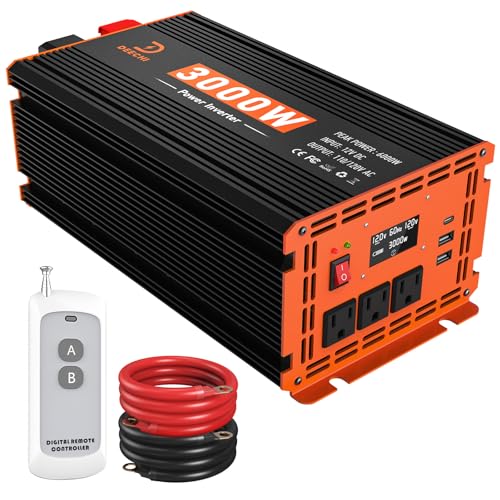
DEECHI’s 3000W inverter is a robust option for trailers, delivering 3000W continuous power and up to 6000W peak. It includes three AC outlets, dual USB ports, and a Type-C port, along with an LCD display for at-a-glance monitoring. The unit’s remote controller extends control up to 200 feet, which can be convenient for off-grid or roadside setups where the inverter might be mounted away from the living area. Safety protections cover under/over-voltage, overcurrent, overheating, short circuits, and more. Dual intelligent temperature-controlled fans contribute to longer component life in varied trailer climates. This model emphasizes versatility and reliability for camping, boating, or mobile office rigs inside the trailer.
Considerations for selection:
- Multiple outlets support feeding several devices at once.
- LCD readouts simplify troubleshooting during trips.
- Remote operation improves convenience when the inverter is installed in cabinets or compartments.
Champion Power Equipment 4000-Watt Inverter Generator

This Champion inverter is a portable generator that provides 4000 starting watts and 3000 running watts with quiet operation (64 dBA at 23 feet). It includes CO Shield to automatically shut off in dangerous conditions and can run for up to about 10 hours under typical loads. The unit’s inverter technology ensures clean power suitable for electronics, and its optional parallel kit allows pairing with another Champion inverter to double output. While not a plug-in vehicle inverter, this option is valuable in trailer setups where gasoline-powered backup power is acceptable or necessary, offering a different approach to on-site electrical reliability.
Use-case notes:
- Great for extended camping trips or when shore power is unavailable.
- CO Shield adds an extra layer of safety in enclosed trailer spaces.
- Parallel capability is helpful for higher power demands or emergencies.
Buying Guide: Key Purchase Considerations For Trailer Inverters
When choosing a power inverter for a trailer, consider these factors to ensure you pick a model that fits your needs and keeps your equipment safe.
- Continuous vs. peak power: Match the inverter’s continuous wattage to the running load you expect (fridges, microwaves, TVs, chargers). Peak power should exceed startup surges of any motor or compressor devices.
- Pure sine wave output: Essential for sensitive electronics. Helps reduce noise and prolong device life compared to modified sine waves.
- Outlets and ports: Ensure the inverter provides enough AC outlets and USB/Type-C ports for your devices. Consider USB-C PD for fast charging where needed.
- Electrical protections: Look for over/under voltage, over-temperature, overload, short-circuit, and ground fault protection. LEDs or LCDs that indicate status can aid troubleshooting.
- Monitoring: LCD or digital displays provide real-time data on input/output volts, battery health, and load. Remote control or app-based monitoring is a plus for off-center installations in a trailer.
- Battery compatibility: Check compatibility with your battery bank (lead-acid, AGM, LiFePO4, etc.). Some inverters support multiple chemistries, which adds flexibility for long trips.
- Cooling and ventilation: Adequate cooling prevents thermal shutdown during high-load periods. Consider whether the inverter’s fans will run loudly in a small cabin.
- Form factor and installation: Consider size, mounting options, and whether you’ll wire it hardwired or use a bypass/transfer switch with shore power connections.
- Safety certifications: Look for certifications or protections that align with your local electrical standards and RV policies.
- Portability vs. permanence: A lighter, portable unit is useful for occasional trips, while a permanently mounted inverter with remote control suits full-time RV living.
Selecting the right inverter for a trailer involves balancing power needs, device safety, and installation practicality. For campers who rely on multiple devices, a 2000W–3000W true sine wave model with multiple outlets and a clear monitoring interface typically provides robust performance. For heavier loads, consider higher-wattage options or combining a dedicated inverter with an auxiliary power source. Always follow manufacturer installation guidelines and local electrical codes to ensure a safe and reliable trailer electrical system.