Best Commercial-Grade Carbon Monoxide Detectors for Peace of Mind
When selecting a carbon monoxide detector for commercial or multi-room environments, the goal is reliable, easy-to-use protection that performs during power outages and in demanding settings. This guide highlights five strong options suitable for offices, workshops, or small business spaces, with a focus on clear alerts, battery backup, and durable construction. Each product is best for different buyer needs—from plug-in models with battery backups to portable detectors for travel or temporary installations.
Summary table of selected products:
KLEIN TOOLS ET110 CO MeterKidde Plug-In with AA Backup (3rd Edition)TOPTES CT-580 Portable CO DetectorSITERWELL 4-Pack Combo (Smoke & CO)
| Product | Best For | Key Benefit | Limitations |
|---|---|---|---|
| Kidde Plug-In with 9V Backup (3rd Edition) | Small offices, storefronts | Digital display, reliable 120V plug-in with battery backup | Requires outlet access |
| Maintenance, industrial workspaces | Portable with STEL alarm and dual CO alarms | Best as a detector/meter, not a fixed detector | |
| Locations needing battery support | AA backup in addition to 120V power, solid 85 dB alarm | AA backup may be less convenient in some setups | |
| Travel, temporary sites | Rechargeable, three alarm modes including vibration | Portable; not a fixed-location detector | |
| Tenant spaces, multi-room alarms | Dual-sensor protection, 10-year battery | Requires replacement if fault signal occurs |
Kidde Carbon Monoxide Detector, Plug-In with 9V Battery Backup

Best for small commercial spaces that need a straightforward plug-in model with a reliable battery backup. This 3rd Edition unit provides a digital LED display showing CO levels, which helps staff quickly assess risk levels and respond appropriately. The 9V battery backup keeps protection active during outages, making it a solid choice for offices, retail fronts, or clinics with standard 120V outlets.
- Best for: Small businesses and work areas with convenient wall outlets.
- Why selected: Combines ease of use with a clear CO readout and battery backup for power interruptions.
- Caution: Requires accessible outlet; placement away from vents and high humidity improves accuracy.
KLEIN TOOLS ET110 CO Meter

Best for professionals and environments where portable CO checking is necessary. The ET110 combines a precise CO gas measurement with a built-in short-term exposure limit alarm and a protective carry pouch. Its dual alarm system (low and high) helps responders gauge immediate action needs, making it suitable for maintenance crews, industrial sites, or job sites requiring quick CO assessment on the move.
- Best for: Fieldwork, maintenance teams, and temporary safety checks.
- Why selected: Portable, accurate, with dual alarms for clear thresholds.
- Caution: Primarily a meter; ensure calibration and proper handling for consistent readings.
Kidde Plug-In Carbon Monoxide Detector with AA Battery Backup
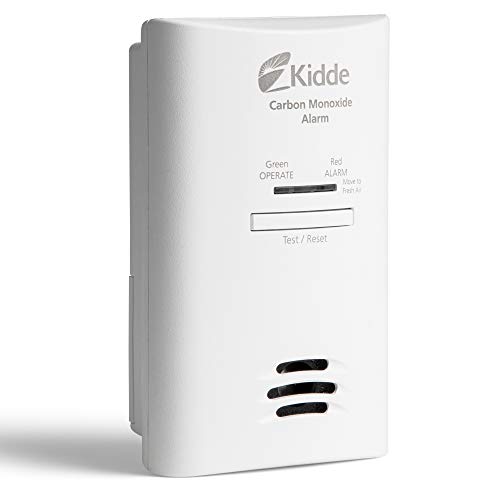
This model is well-suited for spaces that benefit from both wall power and a reliable AA backup. The 85 dB alarm ensures audible alerts, while the LED status light indicates CO presence at a glance. It’s a practical fit for offices or small commercial rooms where outlets are plentiful and a robust backup is desirable during outages.
- Best for: Environments needing consistent power and a durable backup option.
- Why selected: Clear indicators, strong audible alarm, and dependable backup power.
- Caution: Ensure location avoids high humidity and dust which can affect sensors over time.
TOPTES CT-580 Portable Carbon Monoxide Detector

Best for travelers, remote job sites, or temporary installations where a quick CO read is needed without fixed wiring. The CT-580 offers a rechargeable battery, vivid TFT color display, and three alarm modes—visual, audible, and vibration. It is a strong partner for environments like construction sites, field research, or temporary office setups, where portability is key and power access may vary.
- Best for: Portable safety checks and travel-ready monitoring.
- Why selected: Fast response, high-visibility readouts, and multi-mode alarms for diverse settings.
- Caution: As a portable device, it should be used as a supplementary detector alongside fixed installations in large spaces.
SITERWELL Smoke & Carbon Monoxide Alarm (4-Pack)

Best for multi-room coverage in larger commercial spaces or rental properties. This combo alarm integrates smoke and CO detection with a 10-year battery, reducing the maintenance burden. Dual-sensor protection and bilingual voice alerts help address varied environments and staff needs. A caution is the potential for fault signals that require timely replacement if indicated.
- Best for: Tenant spaces, small offices with multiple rooms, or multi-room safety coverage.
- Why selected: Comprehensive protection from two hazards in a single device with long battery life.
- Caution: If a fault signal appears, replace the unit promptly to maintain safety coverage.
First Alert Combination Smoke & Carbon Monoxide Alarm

Best for offices seeking a single, battery-operated 2-in-1 solution with a test and hush feature. This unit provides reliable early warning for fires and CO with precision detection designed to minimize nuisance alarms. The end-of-life warning helps facilities plan replacement cycles to avoid gaps in protection.
- Best for: Small workspaces needing reliable 2-in-1 coverage.
- Why selected: Combines smoke and CO protection with practical maintenance cues.
- Caution: Battery-operated models may require battery management and replacement planning.
Kidde Portable AA Battery CO Detector
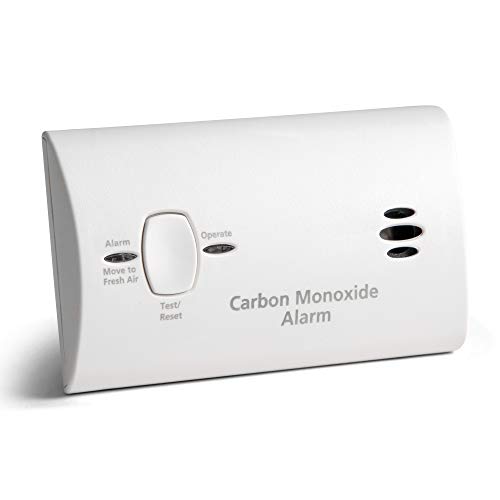
Best for travel or temporary accommodations where a compact CO detector is desirable. This portable unit runs on 2 AA batteries and provides an audible alarm with LED indicators. It’s suitable for travelers, hotel rooms, or vehicles used in occupational settings where CO awareness is essential.
- Best for: Travel, hotel stays, or temporary site setups away from home.
- Why selected: Portable, battery-powered, and easy to carry.
- Caution: Not a substitute for fixed-site detectors in large spaces or high-risk environments.
Buying Guide: Key Considerations for Commercial and Multi-Rpace CO Detectors
- Power options: Choose plug-in with battery backup for continuous protection during outages, or portable detectors for temporary sites or on-the-go checks.
- Sensory accuracy: Look for devices with clear readouts, dual-sensor technology (especially for mixed-use spaces), and alarms that meet applicable standards.
- Alarm redundancy: For business spaces, consider detectors with multiple alert modes (visual, audible, vibration) to accommodate noise levels and staff needs.
- Maintenance and life span: Favor models with long-life batteries or 10-year sensors to reduce upkeep, while planning for easy replacement when needed.
- Placement strategy: Avoid corners, near heating vents, or humid locations; position detectors according to room size and occupancy to ensure optimal coverage.
- Regulatory alignment: Ensure selected detectors comply with local codes and industry standards relevant to commercial settings and multi-unit properties.
FAQ
- What is the main difference between plug-in CO detectors and portable CO meters?
Plug-in detectors provide fixed coverage for spaces, while portable meters enable on-site CO checks in various locations. - Should I use a combo smoke and CO detector or separate units?
Combo detectors save space and provide dual protection, but standalone CO detectors may offer more specialized sensitivity in certain environments. - How long do 10-year battery detectors last in commercial use?
They are designed to operate for about a decade under normal conditions, but periodic checks are recommended. - What maintenance is required for CO detectors in a business setting?
Regular testing, battery checks if applicable, and replacement per end-of-life indicators or fault signals. - Are these detectors suitable for high-humidity areas?
Place detectors away from direct moisture sources; some devices are designed to tolerate moisture better than others. - Can CO detectors alert during a power outage?
Detectors with battery backups are specifically designed to maintain protection when power is out.