Best Car DC to AC Inverters for Road Trips and Camping
Looking for a dependable car DC to AC inverter to run laptops, CPAP machines, or small appliances on the go? This guide highlights five top options that balance power, portability, and safety. Each entry targets common buyer intents: travel convenience, camping durability, and office-ready versatility. The summary table below helps you compare capacities, ports, and best-use cases at a glance.
| Product | |||||
|---|---|---|---|---|---|
| Pro Chaser 400W (Vehicle Inverter) | 400 W | 800 W | 2 AC outlets, 2 USB | Road trips and family travel | 30-inch cord length |
| BESTEK 300W (DC 12V to 110V) | 300 W | 700 W | 2 AC outlets, 2 USB | Frequent travelers with laptops | Compact power for higher-load devices |
| PiSFAU 200W (DC 12V to 110V) | 200 W | — | 2 AC outlets, 4 USB ports | Compact trips with multiple USB devices | Lower continuous power |
| Pro Chaser 400W (USB-C PD 65W) | 400 W | 800 W | 1 USB-C PD, 1 USB-A QC | Tech-heavy road trips | Some models rely on USB-C PD for high-wattage devices |
| FOVAL 150W (Compact Inverter) | 150 W | — | 2 USB, 1 AC outlet | Minimal setups and spare charging | Limited power for laptops |
Pro Chaser 400W Power Inverter for Vehicles

This model delivers steady 400W continuous DC to AC power with up to 800W peak. It features dual 110V AC sockets and two USB ports for fast device charging. The design emphasizes road-trip readiness for devices like laptops, cameras, and small appliances. The included 30-inch cord adds flexibility for different seating configurations in the vehicle.
Best for: Families and road-trippers who need reliable power for laptops, tablets, and small home electronics during travel. The long cord helps reach passengers in the back seat without crowding the cockpit. Caution: avoid plugging high-wattage appliances near the upper power limit for extended periods.
BESTEK Power Inverter 300W (DC 12V to 110V)

BESTEK offers 300W continuous power with 700W peak, two AC outlets, and two USB ports. The brand markets upgraded compatibility with various vehicle systems and emphasizes compact, iPhone-sized form. This inverter is a solid pick for travelers who need laptop and tablet charging plus standard appliance support on the road.
Best for: Road travelers who value a proven brand with solid dual-USB charging and straightforward power delivery. Avoid this if you routinely run high-wattage devices like full-size coffee makers or CPAP machines for long stretches without a larger power source.
PiSFAU 200W Car Power Inverter with USB-C

This compact inverter provides 200W continuous power along with four USB ports (including USB-C return). It is engineered for quiet operation and heat dissipation, making it a good option for vehicles that require multiple USB devices while traveling. The small footprint supports easy storage in tight vehicle spaces.
Best for: Travelers who carry multiple USB devices and need extra USB ports without pushing into higher-wattage territory. Limitation: may not power larger laptops or high-demand appliances for long periods.
Pro Chaser 400W With USB-C PD 65W

This version provides 400W continuous power plus 800W peak, with dual 110V outlets, a USB-A fast charge port, and a USB-C PD port for high-wattage devices. It’s ideal for road trips where laptops, tablets, and PD-compatible devices require rapid charging. The 30-inch cord supports flexible placement in the vehicle.
Best for: Tech-heavy travelers who rely on USB-C PD devices and USB-A peripherals. Caution: ensure your higher-wattage devices do not exceed the inverter’s continuous rating during sustained use.
FOVAL 150W Car Power Inverter
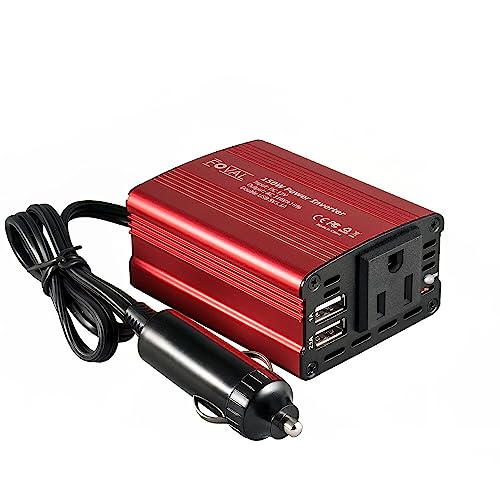
The FOVAL model provides 150W continuous power with two USB ports and one AC outlet. Its compact card-sized footprint and aluminum shell offer portability for light-duty charging needs, making it a convenient spare inverter for quick trips or emergency use.
Best for: Light travelers who need a compact, low-cost option for phones, tablets, and small accessories. Limitation: limited capacity for laptops or devices with higher wattage requirements.
Buying Guide: How To Choose The Right Car DC To AC Inverter
- Power needs: Estimate the total wattage of devices you plan to run simultaneously. Choose an inverter with a continuous power rating comfortably above that total to avoid thermostatic or voltage issues.
- Number and type of ports: Decide how many AC outlets and USB ports you require. USB-C PD ports are valuable for modern laptops and phones, while USB-A ports cover older devices.
- Vehicle compatibility: Check whether your vehicle’s 12V cigarette lighter/cigarette plug supports the inverter’s input range and whether longer extension cords are needed for passenger accessibility.
- Portability vs. capacity: Smaller, lighter models are easy to carry but offer less continuous power. Larger units provide more sustained power but add weight and bulk.
- Safety features: Look for over-voltage, under-voltage, short-circuit, and overheat protection. A built-in cooling fan can help during high-load periods but may introduce noise.
- Durability and heat management: Aluminum housings and efficient cooling reduce thermal buildup. Consider models with thermal protection for longer durations of use.
- Usage scenarios: For road trips, camping, or work trips, map out which devices matter most (laptops, CPAPs, cameras, baby gear) and align with an inverter that supports those loads.
FAQ
- What continuous wattage should I look for if I power a laptop and a small fan at the same time?
Look for at least 300–500W continuous power to cover typical laptop loads plus small accessories. - Is a higher peak wattage important?
Yes. A higher peak (occasional surge) helps in starting up devices with higher startup current, such as laptops or power-humping appliances. - Are USB-C PD ports necessary?
PD ports are advantageous for charging modern laptops and fast-charging devices quickly; they reduce charging time when available. - Can these inverters run all-night appliances like CPAP machines?
Some models with higher continuous power can, but always check the device’s wattage and the inverter’s rating to avoid overload. - What safety features are essential?
Overload, short-circuit protection, under/over-voltage protection, and an automatic cooling fan are key for safe operation. - Should I choose a larger inverter than my devices require?
A slightly larger inverter provides headroom for simultaneous devices, reduces heat buildup, and improves reliability during long trips.