Best Car Adaptor to Plug Socket: Top in-Car Power Inverters and DC Converters
Answering the need for reliable in-vehicle power, this guide highlights the best car adaptors that convert household or vehicle power for on-the-go use. These picks are ideal for travelers, commuters, or anyone who needs to run laptops, chargers, or small appliances from a car outlet. Each product is evaluated for safety, versatility, and ease of use. The top five choices below cover a range from high-output inverters with USB ports to compact DC-DC converters for standard 12V devices. A quick buying table follows to help you compare at a glance.
| Product | Best For | Why It Stands Out |
|---|---|---|
| PiSFAU 200W Car Power Inverter | Laptop users and multiple device charging | Two AC outlets and 4 USB ports in a compact form; efficient cooling |
| NALAKUVARA 110V to 12V Car Converter | Home-to-car versatility | Long cord, wide input range, safe overload/short-circuit protection |
| WYMECT USB A To 12V Socket Cable | Powering small 12V devices from USB | Simple USB-to-12V conversion; compact for emergencies |
| Suacopzar 12V 10A Car Power Adapter | Car devices under 120W | Long reach with 254 cm cord and multiple protections |
| ALITOVE 110V to 12V 10A 120W DC Converter | High-load car electronics | 8 ft cord; broad safety protections; wide compatibility |
The five selections below illustrate strong options for different needs: high-output inverters for laptops and multiple devices, and robust DC adapters for 12V equipment. Each product section includes suitability notes, limitations, and practical usage tips to help buyers choose confidently.
PiSFAU 200W Car Power Inverter

This car power inverter converts 12V DC to 110V AC with two U.S. outlets and multiple USB ports, making it suitable for laptops, tablets, and phones. It emphasizes quiet operation and heat dissipation for better efficiency. The compact size enhances portability for travelers and everyday commuters.
Best for: Users who need to charge or run a laptop and several USB devices from a vehicle. It’s a strong choice for short road trips or everyday use where a USB-C fast charge is beneficial. A potential limitation is that high-wattage devices may approach the 200W peak, so plan power usage accordingly.
NALAKUVARA AC to DC Converter
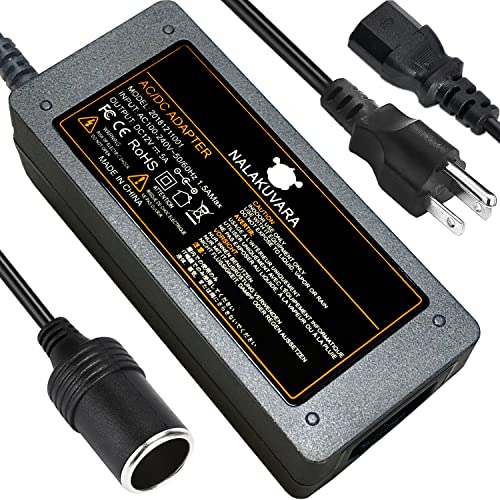
This converter turns 110V-240V AC from a wall outlet into 12V DC at up to 60W, with an 8.8-foot cord for extended reach. It offers overload and over-voltage protection for safety and is designed for devices that require under 5A/60W power.
Best for: In-home or garage use where a car-style 12V accessory is needed in a fixed location. Caution: Do not exceed the 60W limit or leave plugged in for extended periods without monitoring heat.
WYMECT USB A To 12V Socket Cable
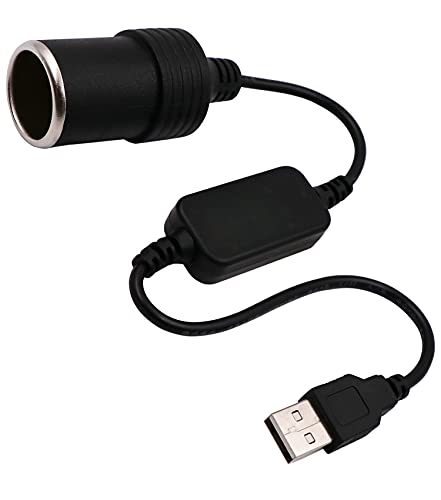
This USB A to 12V car cigarette lighter socket converter outputs up to 8W from USB, enabling low-power devices to run from a car USB port. It’s handy for charging small accessories or powering compact gadgets via a 12V socket.
Best for: Emergency or occasional use with small 12V devices. Limitation: Not suitable for high-power equipment like inflators or portable coolers.
Suacopzar 12V 10A Car Power Adapter

This 12V 10A power supply converts AC to DC with a long 8.3-foot cord, supporting devices up to 120W. It includes automatic overload cut-off and other protective features, improving reliability for sensitive 12V devices.
Best for: Powering car appliances or on-the-go devices that draw near 120W. Caution: While designed for reliability, prolonged continuous high-load use can affect longevity if not properly cooled.
ALITOVE 110V to 12V 10A Converter
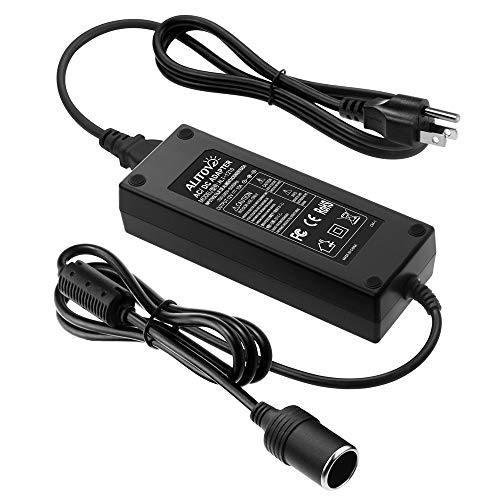
This 12V DC 10A (120W max) converter accepts 100-240V input with an 8 ft cord and multiple safety protections. It is compatible with many 12V car devices that require reliable power supply from household outlets or car outlets.
Best for: Higher-power car electronics such as refrigerators, vacuums, or multiple small devices. Choose this if you need robust protection against overload or temperature changes. Limitations: Do not run at or near the 120W limit for long durations to preserve device life.
Buying Guide
Key purchase considerations for car adaptors include wattage, outlet type, port variety, safety features, and cord length. Determine your primary uses—laptop charging, phone USB charging, or running a small appliance—and match the features accordingly.
- Power needs: Choose a higher wattage inverter if you plan to run laptops or multiple devices at once. For simple USB charging, smaller adapters are often sufficient.
- Safety protections: Look for overload, short-circuit, over-voltage, and thermal protections to guard both the device and vehicle electronics.
- Cord length: Longer cords improve placement flexibility, especially for home-use adapters or when the car outlet is hard to reach.
- Port availability: USB-C ports and multiple USB-A ports increase versatility for modern devices.
- Heat management: Efficient cooling helps sustain performance and reduces noise during operation.
FAQ
- What is the difference between an inverter and a DC converter? A: An inverter converts DC (car) power to AC for devices requiring AC input, while a DC converter provides 12V DC output for 12V devices.
- Can I power a laptop from a car inverter? A: Yes, choose an inverter with sufficient wattage to cover the laptop’s draw plus any connected peripherals.
- Is it safe to use car adaptors while driving? A: Yes, when devices are within the adapter’s rated limits and the unit has built-in safety protections.
- Why do some adapters have long cords? A: Longer cords reach easier to outlets located away from the user, useful for home use or bedsides in RVs.
- Should I avoid high-wattage devices with compact inverters? A: Yes, high-wattage devices can exceed the inverter’s capacity, causing shutdowns or overheating.
- Do these adapters require professional installation? A: Most consumer car adaptors are plug-and-play and do not require professional installation.