Best Automatic Power Factor Controller and Power Management Devices
As businesses and hobbyists seek smarter ways to manage electrical systems, automatic power control devices help optimize energy use, protect equipment, and simplify operation. This article highlights five reliable products that align with automatic power control, from battery disconnect and motor speed controls to transfer switches and smart outlets. Each section explains core features, ideal use cases, and what to consider before buying.
| Product | Brand | Key Use | Power Range |
|---|---|---|---|
| RVBOATPAT Remote Battery Disconnect Switch | RVBOATPAT | Automatic cut-off and remote control for safety | 12V / 24V, up to 240A |
| Hosyond AC Motor Variable Speed Controller | Hosyond | Precise voltage control for fans, motors, and duct systems | 110–120V, up to 15A |
| Acxico DC Speed Controller | Acxico | Brushless motor speed regulation for high-power setups | DC 12V, up to 30A |
| GAEYAELE Automatic Transfer Switch | GAEYAELE | Automatic switchover between main and backup power | Three-phase, 100A |
| AC Infinity Outlet AI+ Smart Power Strip | AC Infinity | Smart, climate-aware outlet management | Up to 1800W per outlet |
RVBOATPAT Remote Battery Disconnect Switch

The RVBOATPAT remote battery disconnect switch provides automatic power shutoff with a remote control option. It is designed for vehicles, boats, and other mobile platforms that require safe battery isolation. Key specs include a 240A current rating, 12V operation, and a low standby current of 1mA. A magnetic latching relay supports reliable circuit disconnection, while an automatic cut-off feature engages if voltage falls below 11.8V, ensuring battery preservation. When voltage rises above 13.2V, the remote control is disabled to prevent accidental shutdown while driving. The system can also be operated manually via the built-in switch.
Ideal uses include vehicle fleets, boats, and off-grid setups where automatic protection and remote control simplify daily operations. Consider compatibility with your battery configuration and the need for remote vs. manual control. Energy efficiency and protective features are strong points, but ensure installation adheres to electrical safety standards.
BN-LINK Mini Wireless Remote Control Outlet Kit

The BN-LINK kit offers ready-to-go wireless control for household appliances and lighting. While not a traditional industrial power factor controller, it demonstrates how remote switching and smart control can reduce standby energy use and improve overall system efficiency. The set includes a remote and three outlets, with a signal range of up to 100 feet in line of sight and cross-frequency compatibility for expanded configurations. This is suitable for home energy management, smart lighting, and auxiliary equipment that benefits from centralized control.
Key considerations include compatibility with existing fixtures, RF reliability through walls, and battery life for remote units. For larger energy systems, this approach can scale alongside other PF-control devices.
Hosyond AC Motor Variable Speed Controller
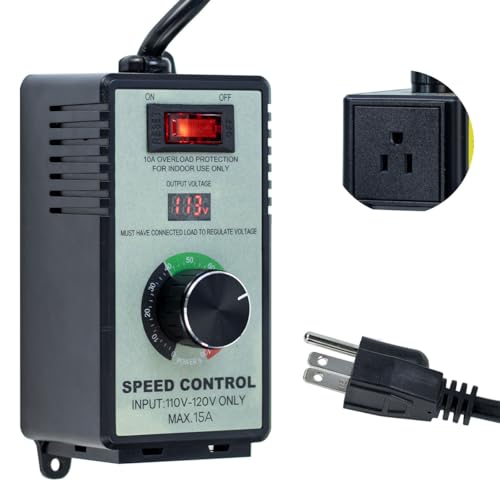
The Hosyond speed controller is aimed at 110–120V AC systems with a maximum of 15A. It provides precise voltage adjustment through a control knob and features an LED display for real-time monitoring. This makes it suitable for ceiling fans, blowers, hydroponic equipment, and inline duct exhaust. The device includes overload protection and a flame-retardant housing, improving safety under continuous or high-load operation. It is particularly useful in environments where fine-tuned motor performance and safety protections are essential.
Potential buyers should assess load types (resistive vs. inductive), required voltage regulation range, and the need for real-time monitoring. Proper heat dissipation and enclosure ratings are also important for long-term reliability.
Acxico DC Speed Controller

The Acxico controller is designed for high-power brushless DC motors, featuring a microcontroller-based system for easier programming and safer startup. A safety feature prevents immediate motor startup unless the throttle is at the lowest setting, reducing injury risk. An aluminum heatsink supports continuous operation up to 30A, and temperature protection automatically reduces output by up to 60% when the temperature reaches 110°C, returning to normal as it cools. This makes it suitable for demanding applications where motor protection and controlled acceleration are critical.
Key considerations include motor type (brushless), required current and voltage, and cooling needs. The device’s rapid response to overheating helps protect both motor and controller under sustained loads.
AC Infinity Outlet AI+ Environment Controller
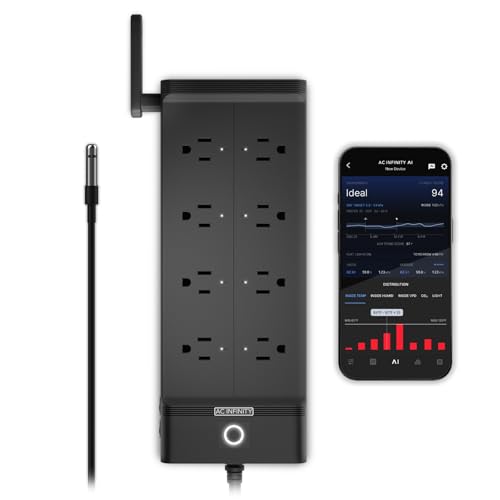
The AC Infinity AI+ is a smart power strip designed for climate-sensitive environments. It offers independent outlets with AI climate targeting, enabling individual control based on triggers, schedules, and climate data. The system can be managed via WiFi app with real-time alerts, data charts, and AI-powered insights. This makes it an excellent choice for grow spaces, aquariums, terrariums, and home HVAC setups where precise environmental management reduces energy waste and equipment runtime.
Considerations include network reliability, compatibility with other smart devices, and how AI-targeted controls align with your energy goals. The AI features can improve efficiency, but require a stable WiFi connection and proper configuration.
Buying Guide: Key Purchase Considerations
- Application fit: Match the device type to your needs—remote battery disconnect for safety, speed controllers for motors, transfer switches for power reliability, or smart outlets for energy-aware routing.
- Electrical specifications: Confirm voltage, current, and load ratings align with your equipment. Exceeding ratings risks overheating or failure.
- Control method: Decide between remote control, automatic sensing, manual override, or smart app integration. Each method affects safety and convenience.
- Protection features: Look for overload protection, short-circuit protection, temperature monitoring, and safe startup sequences to protect devices and occupants.
- Installation and safety: Ensure components are properly rated for enclosure and environment (dust, moisture, flame resistance). Professional installation may be required for high-voltage or three-phase systems.
- Energy efficiency: Prioritize devices with low standby power, efficient control logic, and features that reduce unnecessary power draw during idle periods.
- Interoperability: If you use multiple smart devices, consider compatibility with your existing ecosystem. Some products support cross-device control and simple integration.
- Maintenance and diagnostics: Prefer controllers with clear status indicators, logs, or app-based monitoring to troubleshoot and optimize performance over time.
These considerations help ensure you select devices that not only automate power control but also improve safety, reliability, and energy efficiency across your setup. Always consult manufacturer specifications and installation guides to ensure compliance with local electrical codes.