Best Amp Hours Deep Cycle Batteries for Off-Grid Power
People exploring off-grid living, RV setups, or boat power demand reliable deep cycle batteries with ample amp hours. This guide reviews top options featuring strong capacity, maintenance considerations, and safety profiles to help you choose the right 100Ah to 200Ah choices for long-lasting energy storage. Each pick is evaluated on performance, durability, and practical use cases, from solar backup to trolling motors and cabin power. Compare the products below to find the best fit for your power needs.
| Product | Type | Capacity | Best For |
|---|---|---|---|
| Renogy Deep Cycle AGM 12V 100Ah | AGM | 100Ah | RV, Marine, Off-Grid |
| WEIZE 12V 100Ah AGM | AGM | 100Ah | Solar, Trolling Motor, Camping |
| SUPER EMPOWER 12V 100Ah LiFePO4 | LiFePO4 | 100Ah | Long-Life, High Cycle Count |
| Renogy Deep Cycle AGM 12V 200Ah | AGM | 200Ah | High-Capacity Off-Grid |
| WindyNation 100Ah AGM | AGM | 100Ah | Off-Grid, UPS, Solar |
Note: The selections emphasize amp-hour capacity, maintenance needs, discharge capabilities, and safety features to help you balance cost, performance, and longevity. Each entry links to a detailed product page for more specifications and user reviews.
Renogy Deep Cycle AGM 100Ah — Solid, Safe AGM Option

Renogy’s Deep Cycle AGM 100Ah battery combines reliable safety with strong discharge performance. It supports series connections with no practical limitations and allows parallel connections up to four batteries, enabling scalable capacity for larger off-grid systems. The sealed AGM design minimizes maintenance and reduces the risk of acid leaks, offering a maintenance-free experience ideal for RVs, cabins, and boats. With a long service life and a broad operating window, this battery is designed for steady, dependable energy storage in harsh environments.
WEIZE 12V 100Ah AGM Battery — Maintenance Free
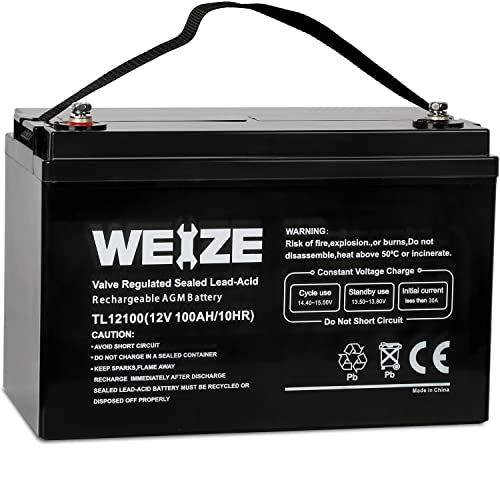
WEIZE’s 100Ah AGM battery is designed for low maintenance with a sealed lead-acid design that resists leaks. The battery features a robust max discharge current of 1150A and a low self-discharge rate, making it suitable for long-term storage and seasonal off-grid use. Its operating temperature range supports year-round charging and discharging, and its compact footprint fits many standard battery boxes, cabins, and RV compartments where space is at a premium.
SUPER EMPOWER 12V 100Ah LiFePO4 — Long-Life Chemistry

This 100Ah LiFePO4 battery from SUPER EMPOWER is a drop-in replacement for lead-acid with a longer cycle life and higher energy stability. It features a built-in BMS, high energy density, and minimal self-discharge. The chemical stability of LiFePO4 reduces maintenance needs and allows tens of thousands of cycles under favorable DoD, making it suitable for serious off-grid power, camping, and marine use when long-term reliability is paramount.
Renogy Deep Cycle AGM 200Ah — High-Capacity Advantage

Renogy’s 200Ah AGM battery delivers a substantial increase in storage for larger off-grid setups. The AGM design ensures sealed, maintenance-free operation with lower self-discharge. Its high discharge capability supports demanding appliances and power-hungry devices, while the sealed construction minimizes acid risk in mobile environments like RVs or boats. This option suits systems requiring extended autonomy between charges without sacrificing safety or reliability.
WindyNation 100Ah AGM — Flexible Off-Grid Choice
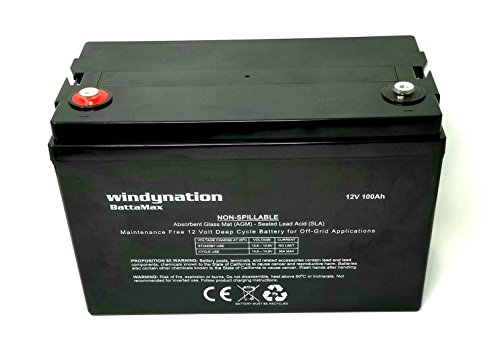
WindyNation’s 100Ah AGM battery is designed for deep-cycle use with heavy-duty plates and a long float life in typical off-grid environments. It is well-suited for solar-powered systems, RVs, and UPS applications. The low-discharge design helps maximize storage during long periods of inactivity, while its sealed construction reduces maintenance and installation concerns in mobile or remote locations.
Buying Guide: Key Purchase Considerations And Comparisons
When selecting a deep cycle battery by amp hours, consider these factors to tailor your choice to your needs:
- Battery Chemistry: AGM leads are maintenance-free and affordable; LiFePO4 offers longer life and higher cycle counts but at a higher upfront cost. Assess your tolerance for maintenance, safety, and weight.
- Capacity and DoD: Higher Ah increases usable energy. Percentage of depth of discharge (DoD) impacts cycle life. LiFePO4 typically supports higher DoD with longer cycles than AGM.
- Discharge Current: Peak and pulse discharge ratings determine how well a battery powers high-draw appliances. Match to your gear, such as inverters, motors, or power tools.
- Self-Discharge: Lower self-discharge rates improve storage life between uses, especially for seasonal setups or remote cabins.
- Temperature Range: Extreme temperatures affect charging efficiency and life. Look for batteries rated for cold or hot climates if you operate in harsh conditions.
- Size And Weight: Physical dimensions and weight influence installation space and mounting in vehicles or boats.
- Maintenance And Safety: Sealed designs reduce leaks and venting. Consider manufacturing reputation, warranty, and ease of sourcing replacement cells or modules.
- System Compatibility: Verify compatibility with series/parallel configurations, BMS integration, and existing solar controllers or inverters.
- Lifecycle And Longevity: LiFePO4 batteries often justify higher upfront costs with thousands of cycles. AGM models balance cost and durability for many mainstream setups.
In summary, choose based on total energy needs, expected usage patterns, and environmental conditions. For casual off-grid use, a 100Ah AGM pack typically delivers solid performance. For longer life and more cycles, LiFePO4 options provide substantial long-term value, especially in mobile or remote applications where reliability is critical.