Best Alternator to Battery Charger Solutions for Portable Power on the Go
When you need reliable power while driving, a high-performance alternator charger can replenish your portable power station quickly and safely. This guide focuses on five top options that connect to your vehicle’s alternator to charge a portable power bank or power station, making them ideal for overlanders, RV travelers, boaters, and road-trippers who want ready-to-use power without stopping. The products below are selected for different use cases—from compact daily commutes to extended trips—so you can choose the best match for your vehicle and energy needs. A quick comparison table is provided to help you evaluate compatibility and charging speeds at a glance.
| Product | Best For | Key Benefit |
|---|---|---|
| EF ECOFLOW 800W Alternator Charger | Overlanders and vanlifers | High power, 3-in-1 design, fast replenishment |
| ETAKER 1000W Alternator Charger | RV travelers and boats | Direct car and solar charging, up to 1kW |
| Jackery DC-DC Charger 600W | Road trips and RVs | Balance of speed and vehicle protection |
| AFERIY DC060 600W Charger | Compact setups needing quick top-ups | High-speed output with broad compatibility |
| Anker SOLIX 800W Charger | RVs with expansion plans | Fast charging and expandable capacity |
EF ECOFLOW 800W Alternator Charger

The EF ECOFLOW 800W Alternator Charger is a 3-in-1 DC-DC charger designed to replenish portable power stations quickly while on the move. It is 8x faster than a cigarette lighter charger, capable of delivering enough energy to recharge a 1kWh pack in about 75 minutes under ideal conditions. This unit is best for buyers who need rapid recharging during travel, such as overlanders or vanlifers who rely on power stations for essential devices like phones, coffee makers, and lights. It’s important to verify your alternator’s maximum output in your vehicle’s manual to avoid overdraw. This charger also supports vehicle battery maintenance and can act as a jump starter in emergency scenarios. Best used with a compatible EcoFlow system and, where applicable, DELTA Pro adapters for extended setups. Caution: alternator capacity varies by vehicle, so confirm compatibility before use.
ETAKER 1000W Alternator Charger
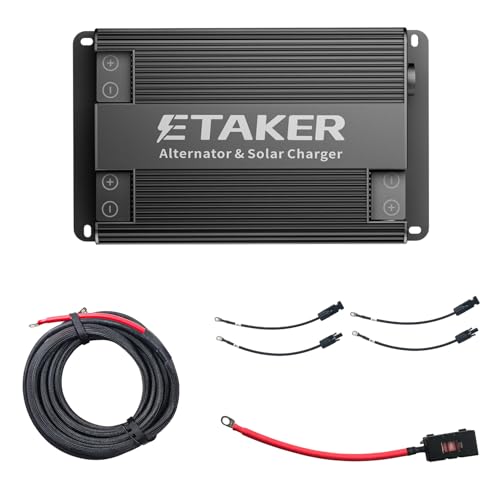
The ETAKER F1000 DC to DC Charger provides up to 1000W of charging power, combining car battery charging with rooftop solar input. It’s suitable for RVs, SUVs, and boats, enabling rapid replenishment of portable power stations while driving and via solar when stationary. This makes it a strong choice for travelers who want to maximize charging opportunities across mixed travel days. It supports a wide input range on both car and solar sources, with a practical focus on 12-30V car input and 12-48V solar input. Caution: ensure your vehicle’s electrical system can safely support continuous high-output charging in prolonged trips.
Jackery DC-DC Charger, 600W
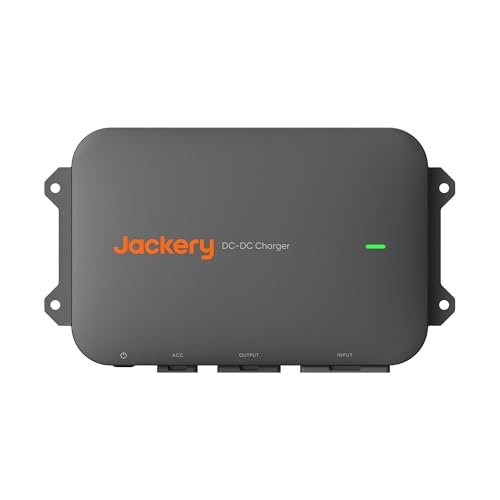
The Jackery DC-DC Charger delivers a steady 600W charging profile, designed to be fast yet careful with your vehicle’s electrical system. It offers built-in safety protections and smart auto features to protect both the car’s battery and the portable power station. This makes it a solid pick for road trips and RV use where you need reliable, safe charging without extra manual monitoring. Best for users who want a balance between speed and the protection of their vehicle’s circuitry. Limitation: performance can depend on the car’s alternator output and driving conditions.
AFERIY DC060 600W Charger
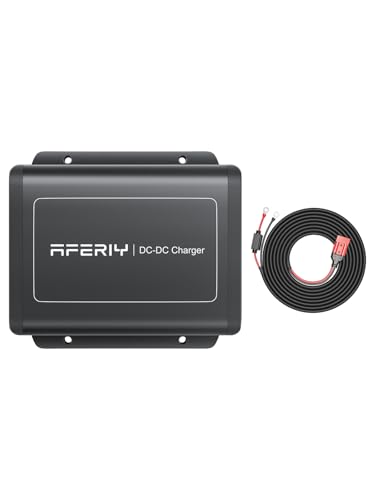
AFERIY’s DC060 delivers solid 6x faster charging with a 580W high-speed output, designed to work with most 48V DC-powered power stations. It also features auto-shutdown when the engine stops, helping prevent accidental battery drain. This option suits buyers who want a compact yet capable charger that covers a broad range of portable power stations. Caution: verify compatibility with your specific power station’s DC input requirements before purchase.
Anker SOLIX 800W Alternator Charger

The Anker SOLIX 800W Charger offers fast alternator charging and is described as 8x faster than using a car auxiliary port. It supports flexible charging modes and can be paired with expansion batteries for extended RV capacity, making it a practical choice for users planning longer trips or larger power setups. Best for: road-trippers who want scalable power and straightforward installation. Limitation: ensure your expansion plan remains compatible with your vehicle’s electrical system and the RV’s consumption needs.
Buying Guide: Choosing the Right Alternator Charger
- Check the DC input voltage, wattage, and connector type of your portable power station to ensure the charger supports it at the expected power level.
- charging speed vs. vehicle output: Higher wattage models require a vehicle with an appropriately capable alternator. Confirm vehicle manual specs for safe operation.
- solar integration: If you rely on solar, consider chargers that support solar input or have dual charging paths to maximize top-ups while driving and when parked.
- auto protection features: Look for systems with auto-shutdown, voltage monitoring, and surge protection to prevent draining the car battery or damaging devices.
- installation and space: Evaluate the physical size, mounting options, and wiring requirements. Some units are designed for tight spaces in overland rigs or boats.
- expansion capability: For future upgrades, consider chargers that support expansion batteries or compatibility with additional modules.
FAQ
- What is an alternator charger used for? It replenishes a portable power station using a vehicle’s alternator to enable on-the-go power for devices and appliances.
- Can I use an alternator charger with any vehicle? Most work with standard 12V systems, but capacity varies by vehicle. Always verify alternator output and consult your manual.
- Is it safe to run appliances while charging? Yes, provided the charger is within the vehicle’s electrical capacity and the power station’s draw is within rated limits.
- Do these chargers require installation? Many are plug-and-play but some models may require basic wiring or mounting. Follow manufacturer instructions for safety.
- Should I choose high wattage or moderate wattage? High wattage charges faster but requires a stronger alternator; choose based on your vehicle’s output and energy needs.
- Can I use solar charging with these devices? Some models support solar input to complement driving, improving overall recharge time when stationary.