Best 200 Amp Main Lug Load Centers for 120/240v Residential Service
Answering common buyer needs: for a straightforward upgrade or new installation, a 200 amp main lug load center (MLO) offers ample circuit capacity with simple wiring and reliable performance. These options are best for homeowners or contractors seeking high-density circuits, plug-on neutrals, and easy field conversion from main lug to main breaker as service needs evolve. The picks below prioritize clear wiring space, durable copper bus designs, and installation versatility for indoor applications.
| Product | Type | Why Selected |
|---|---|---|
| SIEMENS SN Series 200 Amp | Main Lug Load Center | Broad 40-space, plug-on neutral; ample wiring space; reliable Siemens components. |
| ABB TLM3220C64GK | Main Lug Load Center | High circuit density (32 spaces, up to 64 circuits) with copper bus and convertible main lug to main breaker. |
| GE Indoor Load Center Kit (TLM2020CCUGK) | Main Lug Load Center Kit | Robust kit with breakers and ground bar; compatible with common GE breakers for residential use. |
| Square D HOM816M200PFTRB | Main Breaker/Load Center | Homeline 200A, plug-on neutral, and feed through lugs; flexible for mobile or stationary installs. |
| SIEMENS PN Series 200 Amp | Main Lug Load Center | Flexible space planning with over 4 in. of wire bending space and dual ground bars in some models. |
SIEMENS SN Series 200 Amp 40-Space 40-Circuit Main Lug Load Center
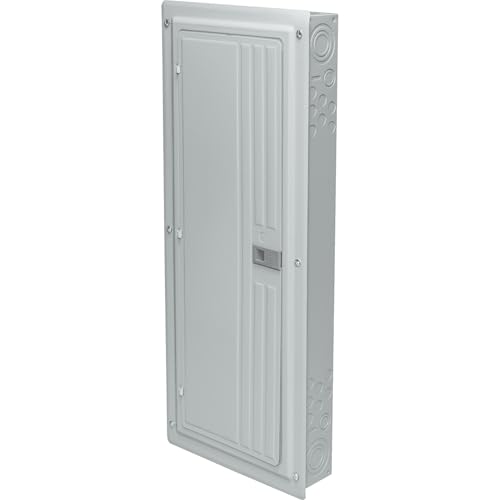
Best for: Homeowners needing a large, straightforward MLO with easy wiring and a plug-on neutral. Why selected: The SN Series offers 40 spaces and a spacious 4-inch-plus wire bend area for tidy, code-compliant installations. It ships with one factory-installed ground bar and supports 120/240V, 1-phase, 3-wire service. Cautions: As an indoor panel, ensure proper clearance and moisture management in humid environments.
ABB TLM3220C64GK 200A Main Lug Load Center
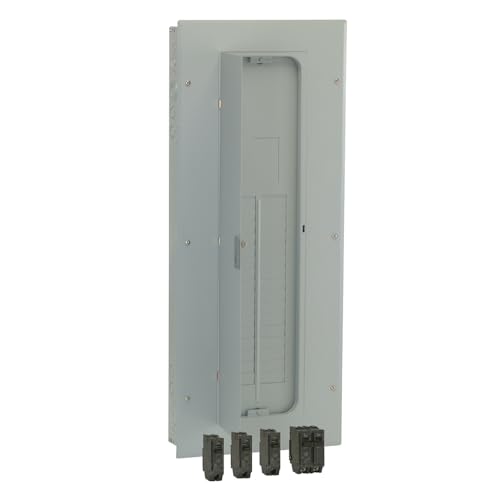
Best for: High circuit density residential or light commercial setups needing 64 circuits in a 32-space layout. Why selected: This ABB unit provides robust distribution with copper bus and 100% split neutral compatibility, allowing reliable performance with a wide range of conductors. It is convertible to a main breaker for future service configuration flexibility. Cautions: Readiness for conversion requires compatible main breaker and adherence to local electrical codes.
GE TLM2020CCUGK Indoor Load Center Kit

Best for: Renters or homeowners seeking a complete kit with breakers and ground bar included for straightforward installations. Why selected: The GE kit is engineered for dependable residential performance and compatibility with Q-Line breakers, THQL, and THQP series. Cautions: Verify compatibility with existing breakers and ensure you have the correct kit for 120/240V service and panel rating.
Square D by Schneider Electric HOM816M200PFTRB

Best for: Mobile homes or distribution setups requiring a main breaker plus plug-on neutral features. Why selected: This Homeline 200A panel integrates a main breaker with feed-through lugs, offering effective service management and future upgrade options. Cautions: Some installations may require product-specific breakers for full compatibility; confirm local code requirements for feed-through configurations.
SIEMENS PN Series 200 Amp 30-Space 48-Circuit Main Lug

Best for: Projects needing significant circuit capacity within a compact footprint. Why selected: The PN Series features plug-on neutral design, generous 4-inch-plus wire bending space, and two factory-installed ground bars, making installation reliable and scalable for 120/240V service. Cautions: Verify space availability and wire size compatibility with planned circuits before purchase.
Buying Guide
What to consider when choosing a 200 amp main lug load center:
- Service configuration and space: Determine how many circuits you need and whether you want room to expand. Look at the number of spaces and circuit count that each panel supports.
- Plug-on neutral versus main breaker: Plug-on neutral simplifies wiring and can improve grounding paths; main breaker features offer service disconnect at the panel and can be required by local codes in some areas.
- Copper bus and neutral design: Copper conductors typically offer good conductivity and reliability. Confirm split neutral compatibility when needed for balanced loads.
- Mounting and enclosure type: Indoor, NEMA 1 enclosures suit dry indoor spaces. If outdoor installation is needed, verify weather protection and enclosure ratings.
- Compatibility with breakers: Ensure panel accepts the intended breaker types (Q-Line, THQL, THQP, Homeline, etc.) and any required conversion kits.
- Expansion potential: If future electrical demands rise, consider panels with deeper wiring space or convertible main configurations to accommodate upgrades.
- Code compliance and installation: Confirm compliance with local codes and utility requirements, and consider professional installation for safety and reliability.
FAQ
- What is a main lug load center? A main lug load center houses branch circuit breakers and provides distribution for a service without a built-in main disconnect at the panel itself.
- Can I convert a main lug panel to a main breaker? Some models offer converter options or are designed to be converted; check the specific product documentation for compatibility.
- Is copper bus better than aluminum? Copper buses typically offer lower resistance and better durability, which can improve long-term reliability, though aluminum is common and may be cost-effective.
- How many circuits do I need for a 200A service? It depends on your loads and future plans; panels shown here support a range from 32 to 40 spaces, with circuit counts up to 64 in some models.
- What installation considerations matter most? Space for wiring, secure grounding, correct wire sizing, proper enclosure rating for the environment, and adherence to local electrical codes.
- What is plug-on neutral? A plug-on neutral panel uses a neutral bar that can be connected by simply wiring into the bar without separate neutral links, simplifying installation.