Best Outdoor Air Quality Meters for Clear, Healthy Fresh Air
If you’re shopping for an air quality meter suitable for outdoor use, you want devices that accurately measure ambient PM2.5, PM10, CO2, VOCs, temperature, and humidity while withstanding outdoor conditions. The top picks below are designed for outdoor or mixed environments and help you decide which model fits your needs—whether you’re monitoring a patio, balcony, yard, or garden workspace. Each product section explains who it’s best for, why it was chosen, and any practical limitations to consider.
Product snapshot
| Product | Main Focus | Best For |
|---|---|---|
| Temtop PM2.5 Monitor P600 | PM2.5/PM10 with data histogram | Families seeking long-term data visualization |
| Temtop Air Quality Monitor PM2.5/PM10 | All-in-one indoor/outdoor capable with data export | Home offices or outdoor decks needing exportable data |
| Temtop M2000 2nd | CO2, PM2.5/PM10, HCHO, temp & humidity with alerts | Higher monitoring complexity with alarms |
| ECOWITT WH0290 | PM2.5 with temp & humidity | Simple, reliable PM2.5 readouts outdoors |
| Amazon Smart Air Quality Monitor | 5 factors including PM2.5, VOCs, CO, humidity, temp | Alexa-enabled smart home integration |
Temtop PM2.5 Monitor P600: Visual PM Data For Outdoor Insights

The Temtop P600 uses a second-generation PM2.5 laser sensor to convert particle concentrations into visual data and color health indicators. Best for households prioritizing clear, at-a-glance status of outdoor air quality and trend tracking. The device includes a data histogram and stores up to 12 hours of history for quick review of air status over time.
Who it’s best for: families that want intuitive, ongoing PM2.5/PM10 monitoring with simple trend visualization outdoors. Why selected: robust sensor with long lifespan and a straightforward histogram view helps you plan outdoor activities with confidence.
Caution: data accuracy is best when positioned away from direct wind shear or heavy dust sources to avoid short-term spikes skewing interpretation.
Temtop Air Quality Monitor PM2.5/PM10 With Data Export

This all-in-one monitor measures PM2.5, PM10, formaldehyde, VOCs, humidity, temperature, and AQI. It is well-suited for outdoor-adjacent areas like patios or balconies where you want a broader view of air contaminants and the ability to export data for review. The device offers a 12-hour histogram and data export to Excel for keeping a record of indoor and outdoor air factors.
Who it’s best for: homeowners needing a versatile, exportable data tool for outdoor spaces and adjacent indoor areas. Why selected: high-accuracy sensors and long data logging enhance long-term outdoor air quality management.
Caution: calibration references are important for maintaining accuracy over extended use; ensure regular calibration according to the user guide.
Temtop CO2/PM2.5/PM10/ALERT Monitor M2000 2nd

The M2000 2nd combines CO2 sensing with PM2.5/PM10, formaldehyde, and temperature/humidity data. It features an audio alarm and color indicators, plus data export. This model suits outdoor spaces where alerting and immediate status are valued—especially when you need to respond quickly to elevated CO2 or PM levels. It supports long data logging and calibration options for CO2 and HCHO.
Who it’s best for: those wanting an all-rounder that signals when thresholds are exceeded. Why selected: audible and visual alarms help outdoor areas stay safe during gatherings or work sessions.
Caution: CO2 readings can be sensitive to placement; avoid enclosed corners and ensure proper airflow for representative measurements.
Ecowitt WH0290 Indoor/Outdoor PM2.5 Monitor
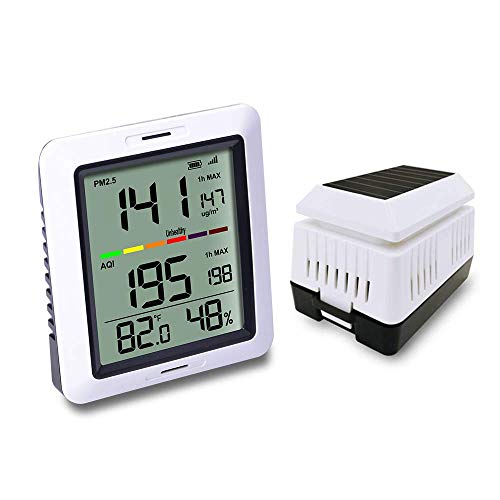
This monitor provides PM2.5 readings with temperature and humidity, designed for both indoor and outdoor use. It offers a 3-in-1 view showing current PM2.5, AQI values, and a 24-hour history. It does not claim outdoor-specific humidity measurement, so consider placement to avoid direct rain or sun exposure that might affect sensors. It’s a solid pick for straightforward PM2.5 monitoring in outdoor-adjacent settings.
Who it’s best for: users seeking a reliable PM2.5 readout with simple historical data in an outdoor context. Why selected: compact design and clear PM2.5 readouts suit balconies and backyards.
Caution: not all models include outdoor humidity readings; verify sensor exposure and protection when used outdoors.
Amazon Smart Air Quality Monitor

This Alexa-enabled monitor tracks PM2.5, VOCs, CO, humidity, and temperature. It offers color-coded LED indicators and a detailed air quality score in the Alexa app. It’s ideal for smart-home setups where you want voice or app-driven awareness in outdoor-adjacent spaces and indoor areas connected to outdoor air quality data.
Who it’s best for: smart-home users who want integration with Alexa and an easy-to-understand color/air-quality score. Why selected: seamless voice and app access simplify ongoing monitoring beyond standalone devices.
Caution: functionality is strongest when paired with an Alexa-enabled environment; standalone usage may feel limited for deep data analysis.
LifeBasis 11-in-1 Indoor/Outdoor Monitor

This device covers 11 indices including AQI, CO2, PMs, HCHO, TVOC, temperature, and humidity, with dual alert types (visual and audible). It’s designed for home or office outdoor-adjacent spaces where a broad range of pollutants matters. The life-cycle sensor setup emphasizes fast response and clear color-coded status indicators.
Who it’s best for: households needing extensive, multi-parameter monitoring with alert features. Why selected: broad index coverage helps you catch issues that single-parameter devices might miss.
Caution: the explanatory interface can be dense; rely on the color indicators for quick readings and use the app for deeper data when needed.
ZYKYCX Portable Oxygen Detector (Outdoor Readiness)

While primarily an oxygen detector, this device includes temperature and humidity readings and offers triple alarm protection (sound, light, vibration) for outdoor environments where oxygen levels pose risk. It’s suitable for outdoor work areas, labs, or field sites where oxygen safety is a concern. It’s best used alongside other particulate monitors to provide a broader air-quality picture.
Who it’s best for: outdoor workers or field sites needing rapid O2 alerts and environmental context. Why selected: strong safety features and portability suit temporary outdoor setups.
Caution: specialized use; not a standalone substitute for comprehensive PM2.5/PM10 monitoring in outdoor air quality assessments.
Buying Guide: Key Considerations For Outdoor Air Quality Meters
- Measurement range and parameters: Outdoor meters should reliably measure PM2.5, PM10, CO2, VOCs, temperature, and humidity. Decide which metrics matter most for your location and activity (e.g., gardening, patio gatherings, or workshop spaces).
- Sensor quality and longevity: Look for devices with laser PM sensors or NDIR CO2 sensors and long-life components. Higher endurance reduces maintenance and calibration frequency.
- Data logging and export: If you want trend analysis, choose meters offering 12-hour or longer histograms and data export (CSV/Excel). This helps you compare air quality across days or weeks.
- Alarms and alerts: Consider audible, visual, or app-based alerts for threshold breaches. Outdoor devices benefit from loud or bright warnings in noisy environments or bright sunlight.
- Durability and placement: Outdoor use requires weather-resistant enclosures and placement that avoids direct rain or wind shear. Some devices are optimized for indoor/outdoor versatility, but confirm IP ratings if exposed to the elements.
- Smart-home integration: If you use Alexa or other assistants, an integrated monitor can simplify daily routines and automations tied to air quality.
- Data interpretation: Prefer devices with clear color indicators, simple dashboards, and legend-based explanations to avoid confusion when monitoring outdoors where conditions change quickly.
Frequently Asked Questions
- What’s the most important metric for outdoor air quality? — PM2.5 and PM10 levels are often the primary indicators, as fine particles impact health and visibility. CO2 and VOCs provide context about air freshness and occupancy effects.
- Do outdoor air quality meters require frequent calibration? — Some models include calibration options and long sensor life; check manufacturer guidelines. Regular calibration improves accuracy, especially for CO2 and VOC sensors.
- Can I use indoor meters outdoors? — Many monitors are designed for both indoor and outdoor use, but verify weather resistance and sensor exposure to ensure accurate readings.
- Is data export necessary for outdoor monitoring? — If you want historical trends or share data with others, export capability is helpful. If you only need immediate readings, a simple display may suffice.
- Which device is best for smart homes? — An Alexa-compatible monitor integrates voice control and app dashboards, making it ideal for homes already using smart devices.
- How should I position an outdoor air quality meter? — Place at a representative outdoor location with airflow but shield from direct rain. Avoid vents, grills, or walls that create stagnant air pockets.