Best Portable Power Source Options for Off-Grid Power and on-the-Go Charging
Finding a reliable portable power source depends on your needs: camping or travel, home backup, or emergency power. The five highlighted options below offer a mix of compact, mid-size, and higher-capacity units to fit various scenarios. Best for hikers and weekend campers are compact models; better for RV trips or CPAP backup are mid-range packs; choose this if you need higher output for laptops or multiple devices. The guide below helps compare price-ready power banks with practical usage notes and limits.
Quick product snapshot: the table summarizes key strengths and who each unit suits best. This helps you decide at a glance which model aligns with your typical power needs, charging speed, and portability preferences.
| Product | Capacity | Best For | Limitations |
|---|---|---|---|
| MARBERO Portable Power Station 88Wh | 88Wh | Lightweight backpacking and short trips | Low total output for heavy loads |
| HOWEASY Portable Power Station 88Wh | 88Wh | Emergency kits and small devices | Limited high-wattage devices |
| EnginStar Portable Power Station 296Wh | 296Wh | CPAP, laptops, cameras, outdoor help | Heavier, more than ultra-portable |
| Jackery Explorer 300 | 292Wh | Versatile off-grid power for longer trips | Higher price, heavier than ultra-compact |
| MARBERO Portable Power Station 237Wh (M823) | 237Wh | Road trips and camping backups | Not as compact as sub-100Wh models |
MARBERO Portable Power Station 88Wh – Slim and Ready for Outdoors
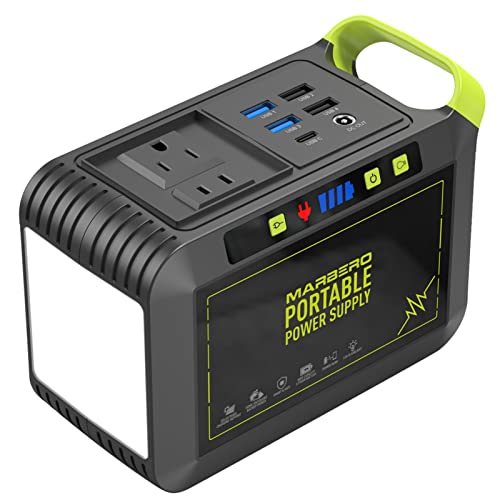
Best for light backpacking and short outdoor trips, this MARBERO model prioritizes compact size and multiple outputs. It weighs about 3.2 pounds with a slim footprint (6.5 x 4.6 x 3.1 inches) and a sturdy plastic case with an ergonomic carry handle. It supports up to 8 simultaneous outputs and includes USB, USB-C PD, car DC, and two AC outlets. The built-in BMS enhances safety and stability during use. It’s ideal for charging phones, tablets, and small devices while you’re on the go.
Who it’s best for: hikers, campers, and travelers who need a portable, quick-charging unit for essential devices without adding much weight or bulk. Why selected: its compact form and robust port mix deliver versatile charging in a palm-sized chassis.
Caution: The unit has a modest total output, so avoid running high-wattage appliances for extended periods. If you need a lighter solar-ready option, pairing with MARBERO’s 30W or 60W panels improves outdoor usability.
HOWEASY Portable Power Station 88Wh – Ready for Essentials

This 88Wh unit emphasizes practical outdoor and emergency use with eight output ports, including two AC sockets (110V at 120W, up to 240W peak), USB-C, USB-A, and DC options. An LED display shows status and remaining power, helping you plan device charging in real time. Its light 2.3-pound weight and compact 6.6 x 4 x 3 inches footprint make it a solid choice for camping trips and quick out-of-home power needs.
Who it’s best for: campers and travelers who require a compact, all-purpose power hub to keep lights, small fans, phones, tablets, and cameras powered. Why selected: the balance of ports and visibility of power status is especially helpful for on-the-go use.
Caution: While it supports multiple devices, it’s best for devices under 120W total. For heavier loads or CPAP duty, consider higher-capacity options.
EnginStar Portable Power Station 296Wh – High-Capacity Outdoor Power

Designed for more demanding needs, this EnginStar unit carries a 296Wh battery and 300W AC output (with 110V pure sine wave) and eight output ports. It supports multiple devices simultaneously, including laptops, cameras, CPAP machines, and small drones, while featuring battery management for protection against short circuits and overheating. It’s a practical pick for campers and emergency kits that require more sustained power than ultra-compact models.
Who it’s best for: users who need reliable multi-device charging for longer trips or backup home use, including CPAP power during outages. Why selected: higher capacity and sine-wave AC output ensure compatibility with sensitive electronics and longer runtime.
Caution: Heavier and larger than sub-100Wh models, which reduces portability for ultra-light backpackers. Plan for a sturdy pack or vehicle use.
Jackery Portable Power Station Explorer 300 – Durable Off-Grid Partner

With 292Wh capacity and LiFePO4 chemistry, this Jackery model emphasizes longevity and dependable performance across years of use. It delivers 300W sustained output (600W peak) and includes two AC outlets, USB-C PD, USB-A, and a 120W car port. The built-in handle and lighter weight (around 7.5 pounds) aid portability for hikes, camping, or travel. It’s a strong all-around choice for those who want solid durability plus a familiar ecosystem of accessories.
Who it’s best for: outdoor enthusiasts and travelers seeking a well-rounded generator that balances capacity, weight, and long-term durability. Why selected: LiFePO4 chemistry offers extended cycle life for long-term reliability.
Caution: Price and weight are higher than ultra-compact options; ensure you have a suitable carrying setup for longer adventures.
MARBERO Portable Power Station 237Wh – Higher Capacity Compact

As a higher-capacity MARBERO option, this 237Wh unit packs more energy into a compact frame. It offers multiple outputs including two AC sockets, USB-C, USB-A, and a DC port, plus LED status display. It’s designed for road trips and camping backups, providing enough power for laptops, cameras, CPAP devices, and essential electronics. The design emphasizes portability: a compact build that still delivers substantial runtime.
Who it’s best for: users who want more power without stepping up to bulky generators, especially for mid-length trips and home backup scenarios. Why selected: robust capacity in a still-portable package makes it versatile for a wide range of devices.
Caution: The 237Wh capacity still limits extended high-wattage use; for continuous high-demand devices, pair with solar charging or higher-output units when available.
Buying Guide: Portable Power Source Essentials
What should you consider when choosing a portable power source? Capacity, output, portability, charging options, and safety features top the list. Capacity determines how long you can run devices; higher wattage output enables powering laptops or CPAP machines. Portability matters for camping and travel; lighter units with a compact footprint are easier to carry. Look for multiple charging methods: AC wall charging, USB-C PD fast charging, car charging, and solar charging compatibility to keep energy flowing in diverse environments. A battery management system (BMS) is essential for safety and longevity, especially with frequent charging and discharging.
Common questions buyers ask
- What capacity do I need for basic camping? — Generally 60–120Wh is sufficient for phones, lights, and small fans; consider 88Wh to 100–150Wh for extra devices.
- Is LiFePO4 chemistry better than lithium-ion? — LiFePO4 offers longer cycle life and stability, often at a slight weight increase, making it a durable long-term choice.
- Can I run a CPAP on these units? — Some models with 200–300W sustained output and pure sine wave AC are suitable; verify your CPAP power draw and surge needs.
- Do these units work with solar panels? — Most models support solar charging; check panel voltage (often 15–24V) and included panel compatibility for best results.
- Will I need a case or bag for transport? — For frequent travel, a rugged case or sleeve helps protect ports and maintain organization during trips.
Quick tips for choosing
- Match capacity to your typical load: phones and lights require less capacity than laptops or CPAP devices.
- Prefer models with multiple output types to cover USB-C PD, USB-A, and AC devices.
- Consider future needs: higher-capacity units can reduce the need for frequent recharges on longer trips.
FAQ
- What is a portable power source best used for? — Backup power during outages, off-grid activities, and travel where traditional outlets are unavailable.
- Is 88Wh enough for daily essentials? — For basic devices like phones and lights, yes; for laptops or CPAP, consider higher capacity.
- Do these units support solar charging? — Yes, most models in this list offer solar charging as an option or supported mode.
- How long do these batteries last? — Lifespan depends on chemistry and usage; many units offer hundreds to thousands of charge cycles.
- Are safety features included? — Most units feature BMS protections against overcharging, short circuits, and overheating.