Best 6 Volt Battery RV Options for Reliable Off‑Grid Power
When choosing a 6-volt battery for RV use, look for true deep-cycle performance, sealed AGM or flooded options suited for mobile environments, and maintenance considerations. This guide highlights top 6‑volt choices for RVs, campers, and off‑grid setups. It identifies who each battery is best for and why, with practical cautions to help you decide.
| Product | Best For | Key Benefit |
|---|---|---|
| VMAX XTR6-235 6V AGM (2-pack) | Long weekend RVers and solar setups | High capacity 235Ah per battery, AGM for maintenance-free use |
| Go Power GP-AGM-224-6V | Solar and inverter users needing plug‑and‑play | Reliable 224Ah, sealed AGM, easy handling |
| US Battery US1800XC2 6V (4-pack) | Fleet RVs or solar arrays needing multiple banks | 208Ah per unit, GC2 group for compatibility |
| WEIZE GC2 6V 240Ah AGM | Green-focused campers and heavy-use RVs | 240Ah, AGM, robust deep-cycle design |
| Mighty Max ML200-6 6V 200Ah SLA | Budget-conscious buyers needing reliable, compact 6V | 200Ah, SLA/AGM, compact form |
VMAX XTR6-235 6V AGM Deep Cycle Battery (2-Pack)
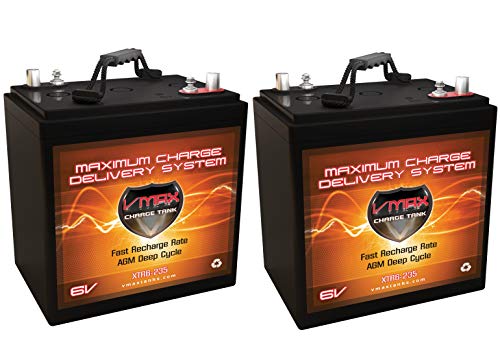
This pair offers 235Ah per 6V AGM unit, delivering substantial energy storage for RVs with solar charging or off-grid needs. Best for RVs that require reliable cycles and longer autonomy between charges. The sealed AGM design minimizes maintenance and reduces leakage risk in mobile environments. Use this option when you want a robust, drop-in replacement for standard GC2 setups.
Who it’s best for: RV owners who prioritize high capacity per battery and ease of maintenance. Why selected: strong Ah rating and proven AGM performance suit home, solar, and RV applications. Caution: ensure proper ventilation and secure mounting to handle vibration during travel.
Go Power GP-AGM-224-6V 6V AGM Deep Cycle Battery

This 6V AGM battery provides solid energy storage for solar, inverter, and off-grid setups, making it a strong RV battery or camper option. Its sealed construction eliminates water top-ups, improving maintenance simplicity in mobile environments. Integrated carrying handles aid maneuvering and installation in tight RV bays.
Who it’s best for: RVers who want a maintenance-free, plug‑and‑play solution for solar or inverter setups. Why selected: reliable energy storage with easy handling. Caution: check compatible terminals and mounting space to avoid clearance issues in tight compartments.
US Battery US1800XC2 6V 208Ah (4-Pack)

Four 6V units provide a scalable option for larger RV banks or solar arrays. With 208Ah per battery and GC2 compatibility, this set is suitable for expansion or replacing multiple older batteries. The group size and construction support steady deep-cycle performance in RV and marine environments.
Who it’s best for: RV owners planning expanded battery banks or replacements for multiple circuits. Why selected: predictable GC2 sizing and ample Ah per unit. Caution: ensure proper venting and safe transport when handling a full four-pack.
WEIZE GC2 6V 240Ah AGM Deep Cycle Battery

Weize offers a 6V, 240Ah deep-cycle AGM battery with strong cycle life and a robust design for off-grid and RV use. Its dimensions fit typical GC2 racks, and the AGM chemistry provides spill-free operation with maintenance-free advantages. Ideal for campers who need substantial energy storage from a compact unit.
Who it’s best for: campers and RVers seeking high capacity per battery with maintenance simplicity. Why selected: the 240Ah rating and AGM construction maximize usable energy in a single unit. Caution: verify terminal types and fit for your current battery box to avoid clearance issues.
Mighty Max ML200-6 6V 200Ah SLA Battery
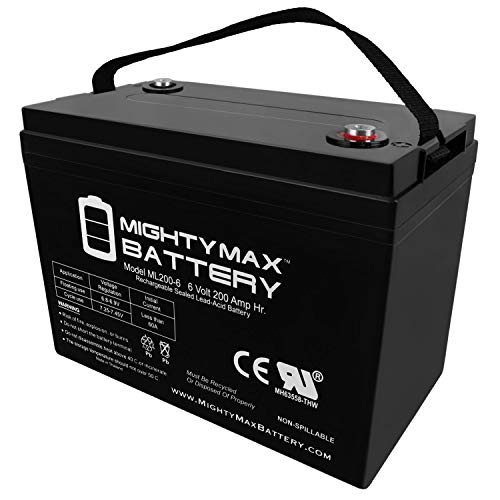
The ML200-6 is a sealed lead-acid, maintenance-free 6V battery with 200Ah capacity. It is UL certified and compact enough for many RV battery boxes while offering reliable deep-cycle performance. This option is suitable for budgets-conscious buyers who still require dependable 6V power.
Who it’s best for: RV owners seeking a cost-effective, maintenance-free 6V battery. Why selected: compact size and solid 200Ah rating. Caution: SLA/AGM types can have shorter cycle life under high-demand or extreme temperatures; plan for thermal management.
Buying Guide
Key considerations when shopping for a 6V RV battery include capacity (Ah), chemistry (AGM vs flooded vs SLA), maintenance requirements, physical size, and compatibility with existing racks or boxes. For solar-enabled RV systems, AGM options tend to offer better compliance with sealed environments and low water maintenance. If you travel with limited space, prefer higher Ah per battery to minimize the number of units.
What battery chemistry should I choose?
AGM batteries are maintenance-free and sealed, making them popular for RVs. Flooded lead-acid batteries can offer lower upfront costs but require regular watering and venting in mobile settings. SLA (sealed lead-acid) is similar to AGM in maintenance but may have different cycle life and cost. Your choice should balance maintenance ease, weight, and space constraints.
How many 6V batteries do I need?
It depends on your converter/charger capacity and the energy demands of your RV. If you already use 6V golf-cart style banks, you may replace one-to-one to maintain voltage and capacity. For larger off-grid setups, multiple 6V units can be wired in series/parallel to reach the desired voltage and amp-hour rating.
What are the best practices for installation?
Secure batteries in a well-ventilated, vibration-resistant area. Use proper terminal protection, compatible battery boxes, and corrosion-resistant hardware. Match the battery’s positive and negative terminals to the RV wiring or rack configuration to prevent miswiring and ensure safe operation during travel.
Maintenance and safety tips
Even with maintenance-free AGM and SLA options, periodic inspection is important. Check for corrosion on terminals, ensure cables remain tight, and keep the storage area clean and dry. Follow manufacturer guidelines for charge rates to optimize cycle life and performance in varying temperatures.
Choosing the right size for your space
Measure battery box dimensions and compare with your chosen unit’s size. Consider weight distribution in the RV to avoid handling issues during travel. If space is limited, a higher amp-hour battery with a compact footprint may provide the best balance of capacity and fit.
FAQ
- Q: Are 6V batteries suitable for most RV systems? A: Yes, many RVs use 6V deep-cycle batteries in golf-cart style banks for reliable energy storage and compatibility with standard charging equipment.
- Q: What is the advantage of AGM over flooded 6V batteries? A: AGM batteries are maintenance-free, sealed, and handle vibration better in mobile environments, making them a popular RV choice.
- Q: Can I mix different 6V battery brands in the same system? A: It is generally not recommended to mix brands or chemistries in the same bank, as uneven aging can reduce overall performance and lifespan.
- Q: How do I know if a 6V battery will fit my RV battery box? A: Check the box interior dimensions and compare with the battery’s length, width, and height; ensure clearance for terminals and handles.
- Q: Is it better to buy a larger amp-hour 6V battery? A: Higher Ah per battery can reduce the number of units required, but ensure your charging system can support the total load and that the physical space allows installation.