Best 500 Watt Charge Controller Options for Efficient Solar Power
Answering the common question: a 500 watt charge controller is ideal for mid‑size solar setups that want reliable battery charging without oversizing components. These five options balance input capacity, MPPT or PWM methods, and ease of use for home, RV, or small off‑grid systems. The top picks suit different buyers—from DIY hobbyists to small campers and grid‑tied enthusiasts—based on battery type, system voltage, and load management needs.
| Product | Type | Best For |
|---|---|---|
| PowMr 60a Charge Controller | PWM | Lead‑acid systems, customizable timers |
| SolarEnz 500W MPPT Boost Controller | MPPT | Multiple voltage batteries, golf carts, RVs |
| Rvluw MPPT Wind Turbine Charger | MPPT Wind | Wind + battery systems, IP67 |
| Depvko 100A MPPT Solar Controller | MPPT | Flexible auto‑recognition for 12V/24V |
| OOYCYOO MPPT Charge Controller 60A | MPPT | Lead‑acid and lithium, auto detection |
PowMr 60a Charge Controller
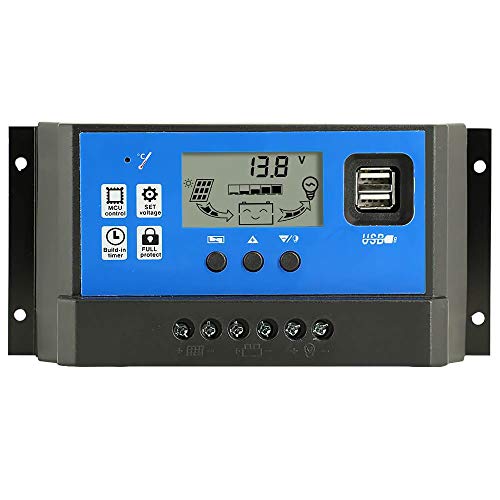
Type: PWM 4‑stage charging (Boost, ABS, Equalization, Float) for 12V/24V systems with a 1560W input at 24V. It includes a backlit LCD for PV, battery, and load parameters, plus adjustable floating voltage, LVD, LVR, and a load timer. It supports dual USB output for small devices and records charge/discharge energy. Best for: systems using lead‑acid batteries (OPEN, AGM, GEL) with a simple load schedule and a need for USB charging. Caution: the controller automatically shuts off if the battery drops below 8V to protect the battery life.
SolarEnz 500W MPPT Boost Controller

Type: MPPT with voltage boosting to charge 12V/36V/48V/60V/72V batteries. Best for: golf carts, electric vehicles, RVs, and other systems needing higher voltage charging from a single solar array. It protects against overcharging, over-discharging, short circuits, overload, reverse polarity, reverse current, and temperature changes. Caution: the listed input power per voltage tier caps at a level that may limit total 500W equivalence depending on battery type and setup.
Rvluw MPPT Wind Turbine Charger

Type: MPPT wind turbine charger with automatic 12V/24V battery matching and IP67 weather protection. Best for: wind power setups where turbine output varies; helps maximize energy capture and battery charging in fluctuating wind. It includes heat dissipation design to maintain operation during high current charging. Caution: wind conditions and turbine compatibility should be reviewed to ensure peak efficiency.
Depvko 100A MPPT Solar Controller

Type: MPPT with auto 12V/24V recognition and dual USB output. Best for: larger solar projects using 12V/24V systems with a need for robust protection and high tracking efficiency. Capable of fast charging and efficient energy use across different battery chemistries. Caution: ensure the system wiring is adequate for the higher current to prevent heat buildup.
OOYCYOO MPPT Charge Controller 60A

Type: MPPT with auto 12V/24V detection and up to 100V input. It supports lead‑acid (sealed, gel, flooded) and lithium batteries with three stages (constant current, constant voltage, floating). Best for: users needing a flexible MPPT controller with robust LCD data and a wide input range. Caution: the system may require manual reset to factory settings after certain configurations.
Buying Guide: Key Considerations For A 500 Watt Charge Controller
- System Voltage Compatibility: Ensure the controller supports your battery bank (12V or 24V as common options). MPPT units can often adapt to higher voltages for heavier loads.
- Charging Method: PWM is simple and budget-friendly; MPPT maximizes power harvest, especially when panels are not perfectly matched to the battery voltage.
- Battery Type Support: Check compatibility with lead‑acid, AGM, GEL, flooded, and LiFePO4 chemistries to avoid premature degradation.
- Input Power vs. Battery Size: A 500W target usually pairs with up to 60–100A MPPT controllers for efficient charging, depending on panel configuration and daylight conditions.
- Protection Features: Overcharge, over-discharge, short-circuit, reverse polarity, and temperature compensation are essential for long battery life.
- Load Control And Timers: If you plan to run DC loads, consider controllers with load timers or programmable power management.
- Display And Interfaces: LCD/easy‑to‑read data helps with setup and ongoing maintenance, especially in off‑grid environments.
Frequently Asked Questions
- What is a 500W charge controller best suited for? – It suits mid‑sized solar setups that require efficient charging for 12V/24V battery banks while maximizing panel output and protecting battery health.
- MPPT vs PWM: which should I choose? – MPPT controllers extract more energy under varying sun conditions, making them better for larger or higher‑voltage panels; PWM is simpler and cheaper for small, straightforward systems.
- Can I use a 60A MPPT controller for a 500W system? – Yes, a 60A MPPT controller is capable of handling 500W panels across 12V/24V systems with ample headroom for efficiency.
- Are lithium batteries supported by these controllers? – Several models list lithium support; verify exact compatibility for your battery chemistry before wiring.
- Do these controllers protect batteries from damage? – Most include protections like overcharge, over-discharge, short circuit, and temperature compensation to extend battery life.
- Do all controllers require professional installation? – Not necessarily, but follow manufacturer instructions carefully and ensure correct wiring, especially for higher currents.