Best 50 Amp RV Solar System Kits for Reliable Off-Grid Power
Choosing a 50 amp RV solar system involves balancing power needs, set-up simplicity, and environmental conditions. The following five kits are designed to deliver robust off-grid performance for RVs, campers, cabins, and remote adventures. Each option includes a sizeable inverter or controller, solar panels, and compatible batteries or charging components. Read on to compare features, installation practicality, and long-term reliability to help you select the right setup for your travels.
Summary of selected products
| Product | Brand | Key Component | Approx. Power Output | Typical Use |
|---|---|---|---|---|
| ZXDZTZ Complete Solar Inverter Kit | ZXDZTZ | Inverter + 100W Panel + 50A Charge Controller | 4000W/6000W surge | RV, cabin, off-grid backup |
| ECO-WORTHY 200W Panel Kit | ECO-WORTHY | 200W Panel + 30A PWM Controller | Up to ~200W under ideal sun | RV, camper, off-grid mini-systems |
| ECO-WORTHY 200W Complete Starter Kit | ECO-WORTHY | 200W Panels + Battery + 600W Inverter | 800Wh daily (4 sun hrs) | RV, trailer, boats, cabins |
| Renogy 200W RV Panel Kit | Renogy | Adventurer 30A LCD PWM Controller | ~800Wh daily (4 sun hrs) | RV, boats, off-grid |
| Voltset 50W Solar Panel Kit | Voltset | 50W Panel + 10A MPPT Controller | 20-30% more power than standard | Car, RV, boat, roof-mounted charging |
ZXDZTZ Complete Solar Inverter Kit: Big Power For RVs

The ZXDZTZ kit combines a high-capacity inverter with essential solar hardware for off-grid performance. It offers 4000W/6000W surge capacity and 300W/500W continuous output, enabling operation of typical RV appliances and charging needs. The package includes a 100W solar panel, a 50A PWM charge controller, and an inverter that converts 12V DC to 110V/220V AC. The design emphasizes portability for outdoor use and emergency power, with compatibility for lead-acid and lithium batteries.
ECO-WORTHY 200W Panel Kit With PWM Controller

This 200W ECO-WORTHY system emphasizes efficiency and durability for RV and camper use. It delivers up to 800Wh per day under good sun, making it a practical starter for modest power needs. The monocrystalline panels offer higher efficiency, while the corrosion-resistant frame and IP65-rated junction box enhance longevity in outdoor conditions. The kit is well-suited for daily camping routines and backup power in cabins or trailers.
ECO-WORTHY 200W Complete Starter Kit
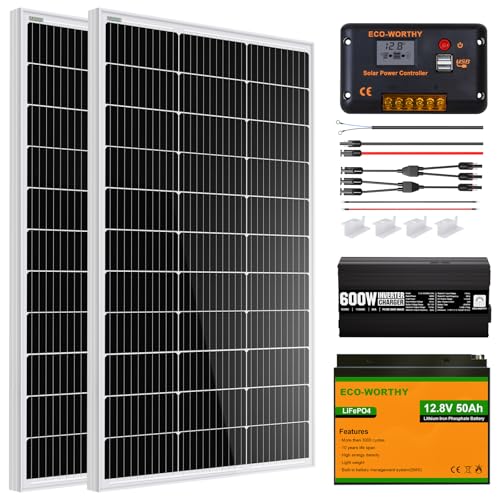
This all-in-one kit provides 200W solar panels plus a LiFePO4 battery and a 600W inverter. It’s designed to be beginner-friendly, with an 800Wh daily output potential under favorable sun. The 35.24 x 23-inch panel dimensions, IP65 rating, and rugged construction support long outdoor service. The LiFePO4 battery offers extended life compared to traditional lead-acid, making it a solid choice for RVs and small off-grid cabins that require reliable energy storage.
Renogy 200W RV Solar Kit With Adventurer Controller
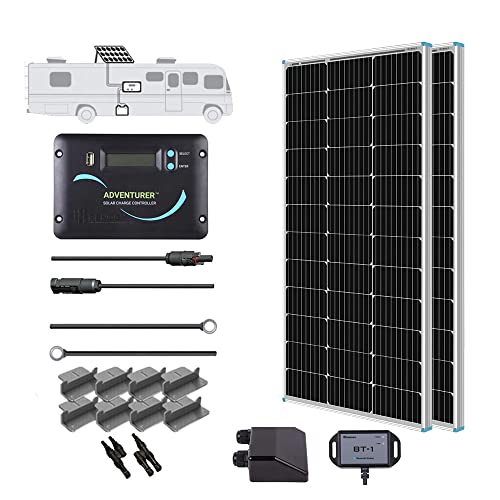
Renogy’s kit targets RV users seeking a balance of performance and simplicity. The 200W monocrystalline panel delivers strong daily output, supported by the Adventurer 30A PWM charge controller. The corrosion-resistant aluminum frame withstands outdoor conditions, and the system is designed for easy mounting on RVs, boats, or trailers. It emphasizes protection features including overcharging and short-circuit prevention, making it a dependable choice for smaller off-grid setups.
Voltset 50W Kit With MPPT Controller

The Voltset kit focuses on high efficiency with a 10A MPPT controller claimed to generate 20-30% more power than standard controllers. It includes a 50W panel and an adjustable mounting bracket to optimize sun exposure. The 25-year panel durability and IP67 waterproof rating support long-term outdoor use in RVs or boats, where rooftop or ground mounting is common. This kit suits light-duty charging and maintenance roles on compact setups.
Buying Guide: Key Considerations For A 50 Amp RV Solar System
Power needs: Assess typical devices and daily energy consumption. RVs with air conditioning or kitchen appliances will require larger inverters and more solar input than basics like lighting and charging. Consider both peak and continuous loads to avoid overloads.
System compatibility: Check compatibility between panels, charge controllers, and batteries. PWM controllers are simple and affordable but may be outpaced by MPPT controllers in efficiency, especially under variable sun. Ensure battery chemistry (lead-acid, LiFePO4, or lithium) matches the inverter and controller.
Inverter sizing: An inverter’s continuous rating should meet your daily load, with a margin for startup surges of motors and compressors. The ZXDZTZ option shows substantial surge capacity, which is beneficial for short-term, high-draw devices.
Durability and weatherproofing: For outdoor RV setups, corrosion resistance, IP ratings, and wind/snow tolerance matter. Aluminum frames and sealed enclosures extend life in harsh climates. Consider all-weather mounting options for roof or ground installations.
Expandability: Some packages are modular, allowing you to add panels or batteries later. If your power needs are likely to grow, choose a system that accommodates upgrades without a full replacement.
Maintenance and monitoring: Look for readable controllers and simple diagnostics. LCD displays and mobile app integrations help track performance and alerts, supporting proactive maintenance.
Warranty and support: A robust warranty and responsive customer support can reduce downtime and long-term costs. Review what is covered, including panels, controllers, inverters, and batteries, and for how long.