Best 50 Amp Portable Generator Solutions for Home Backup
When a power outage or outdoor job demands reliable, high-capacity portable power, a 50 amp generator can be a crucial asset. The following selections highlight multi-fuel options, strong running watts, robust transfer-switch readiness, and safety features like CO sensors and automatic low-oil shutdown. The list focuses on units with 50A outlets or transfer-switch ready configurations to support home or RV backup needs, while delivering flexibility for gasoline, propane, or natural gas fuels.
| Product | Fuel Type | Key 50A/Transfer Features | Approx. Runtime Note |
|---|---|---|---|
| Westinghouse 12500 Watt Dual Fuel | Gas / Propane | 14-50R 50A RV outlet; Transfer Switch Ready | Up to 12 hours on 6.6 gal tank (gas) |
| WEN 14,500-Watt TF1450X | Gas / Propane / Natural Gas | Transfer-switch ready; CO watchdog | Fuel-flexible operation for extended outages |
| Westinghouse 14500 Peak Watt EFI Dual Fuel | Gas / Propane | 14-50R 50A outlet; Transfer Switch Ready | Long run times with larger fuel tank |
| DuroStar DS13000MX | Gas / Propane | Transfer Switch Ready; RV & Emergency Ready | High wattage for whole-home backup |
| Westinghouse 8200 Peak Watt Tri-Fuel | Gas / Propane / Natural Gas | 50A outlet; Transfer switch capable | Inverter-like efficiency with high flexibility |
Westinghouse 12500 Watt Dual Fuel Home Backup

Powered by a 457cc Westinghouse 4-stroke OHV engine, this unit delivers 9500 running watts and 12500 peak watts on gasoline, or 8500 running and 11200 peak on propane. It includes remote start with a key fob, and is transfer switch ready to support home backup with a dedicated 50A RV/shore connection. The 6.6 gallon tank provides up to 12 hours of run time, with a fuel gauge for planning. Outlets include two GFCI 120V 5–20R duplex receptacles, a 30A L14-30R, and a 50A 14–50R, all with rubber safety covers. A digital hour meter and CO shutdown enhance monitoring and safety during operation.
WEN 14,500-Watt TF1450X Tri-Fuel Generator

This tri-fuel model lets you switch between gasoline, propane, and natural gas with a simple dial. It operates at 120V and 240V, making it compatible with residential transfer switches and larger backup loads. It includes an integrated CO watchdog to automatically shut down if dangerous CO levels are detected. Its accessibility for both home and job-site use makes it a versatile choice for extended outages or off-grid work sites.
Westinghouse 14500 Peak Watt Tri-Fuel Home Backup

Designed for larger homes or robust portable power needs, this model offers 14,500 peak watts and 11,500 running watts on gasoline, with propane and natural gas options that provide slightly lower power but extended run times. A heavy-duty 550cc engine drives the system, and a large 9.5 gallon fuel tank with a built-in gauge supports long outages. The unit supports long runtimes, including up to about seven hours on a full propane tank, making it suitable for continuous operation during extended emergencies.
DuroStar DS13000MX 13,000-Watt Dual Fuel

Offering about 13,000 watts of power, this dual-fuel unit switches between gasoline and propane for fuel flexibility during outages. It comes with remote electric start and is designed for whole-home power backup with transfer-switch readiness. A CO alert feature enhances safety by automatically shutting down the generator if dangerous carbon monoxide is detected, helping to protect occupants in enclosed or semi-enclosed spaces.
Westinghouse 12500 Peak Watt Dual Fuel with CO Sensor

This model provides 9500 running and 12500 peak watts on gasoline, or 8500 running with 11200 peak on propane, featuring a remote start and a built-in CO sensor for enhanced safety. It includes a 6.6 gallon tank with a fuel gauge, and multiple outlets suitable for home or RV backup, including a 50A RV/shore connection and a 30A transfer switch-ready outlet. Rubber outlet covers add extra protection during outdoor use. A digital hour meter supports maintenance planning.
Westinghouse 12500 Peak Watt EFI Dual Fuel
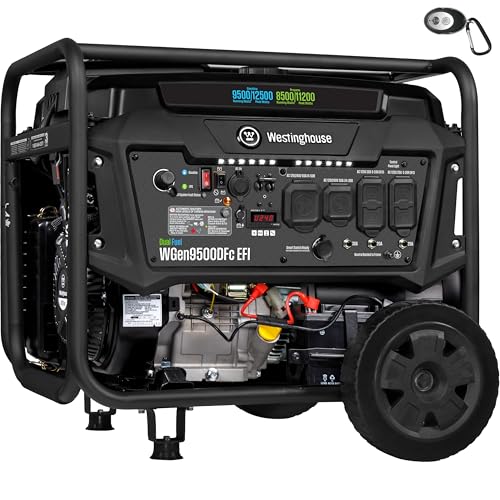
Fuel-flexible and transformer-ready, this EFI model delivers 9,500 running watts on gasoline or 8,500 running watts on propane, with a peak of 12,500 (gas) or 11,200 (propane). It runs up to about 15 hours on a 6.6-gallon tank and provides a 50A outlet configuration to support home backup or RV use. A CO sensor, automatic shutdown, and a digital hour meter help monitor safety and maintenance needs over long periods of operation.
Westinghouse 8200 Peak Watt Tri-Fuel Inverter

This inverter-style generator combines tri-fuel capability with improved fuel efficiency and lower noise—roughly 60 dBA at 25% load. It provides gasoline, propane, and natural gas options with peak and running wattages that suit essential electronics and critical loads. A dedicated 50A outlet supports home backup circuits via transfer switch, with additional GFCI and RV outlets included. The CO sensor adds an extra safety layer for indoor or semi-outdoor operation.
Buying Guide: Key Considerations for 50 Amp Portable Generators
- Fuel flexibility: Dual/tri-fuel models offer resilience when gasoline is scarce, enabling propane or natural gas as alternatives. Consider fuel availability in your area and expected run times for each fuel type.
- Power output and load management: For whole-home backup, target models with at least 11,000–13,000 running watts and 50A outlets. Check peak wattage for startup surges of appliances like air conditioners or refrigerators.
- Transfer switch readiness: Units labeled as transfer switch ready simplify connection to a home electrical panel, enabling seamless operation during outages without backfeeding.
- Safety features: CO detectors/CO shutoff, automatic low-oil shutdown, and rubber outlet covers protect households and equipment. A digital hour meter aids maintenance planning.
- Portability and maintenance: Look for wheel kits, recoil/electric start options, and engine durability (cast iron sleeves and OHV designs can enable longer lifespans under load).
- Noise and emissions: Inverter-based or managed-speed units typically produce less noise and cleaner power, valuable for residential neighborhoods and electronics compatibility.
- Runtime expectations: Larger fuel tanks extend operation between refuels, but real-world runtime depends on load. Plan around essential circuits first, then expand as needed.
- Safety and compliance: CO sensors, CARB compliance, and adherence to local regulations help ensure responsible operation in different regions.