Best 4 12-Volt Golf Cart Batteries for Reliable Power
Looking for a reliable 4-pack of 12-volt golf cart batteries? This guide compares top options that upgrade or replace a typical 48-volt golf cart system by combining four 12V modules. The focus is on longevity, safety, and compatibility with popular golf cart configurations. This selection is ideal for buyers seeking LiFePO4 performance or solid lead-acid substitutes, with clear notes on best-use scenarios and potential limitations.
Overview at a glance:
| Product | Type | Best For | Notes |
|---|---|---|---|
| WOXABHSL 4 PCS 12V 100Ah | LiFePO4 | Deep-cycle, RVs, boats, off-grid | Long cycle life, built-in BMS |
| DJLBERMPW 48V 100Ah (4x 12V in Series) | LiFePO4 | 4x12V in series to 48V | 100A BMS, wide operating temp |
| Enjoybot 48V 100Ah (4x 12V) | LiFePO4 | Drop-in replacement for 48V carts | Self-heating option, Bluetooth |
| Crown CR-GC150 | Lead-Acid (Flooded) | Budget builds, older carts | Longstanding GC12 form factor |
| Trojan T-1275 | Lead-Acid (Flooded) | Traditional setups, off-the-shelf availability | Common GC12 size, durable |
WOXABHSL 4 PCS 12V 100Ah LiFePO4 Battery Set
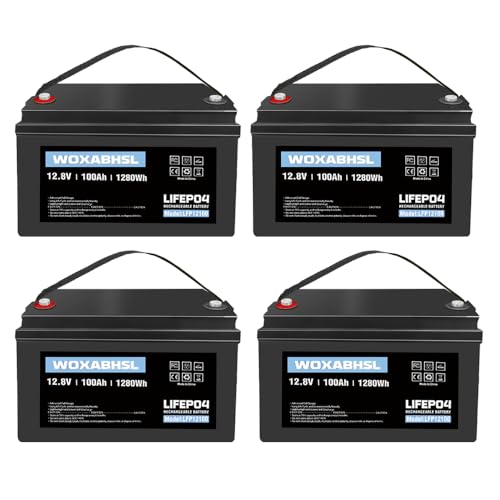
Best for solar-equipped cabins, RVs, boats, and trolling motors. These four 12V, 100Ah LiFePO4 modules offer a high energy density with a built-in 100A BMS for protection. The long cycle life (up to 15,000 cycles at 60% DoD) makes them suit demanding remote power setups. They are designed for automotive-grade LiFePO4 cells with strong safety profiles validated by UL testing. A potential limitation is the need for compatible charging profiles and BMS management when mixing with non-LiFePO4 systems.
Who it’s best for: buyers targeting high-cycle longevity, mobile power, and off-grid readiness. Why selected: best balance of depth of discharge, cycle life, and integrated safety without added series wiring for 48V conversion.
Caution: ensure your charger negotiates appropriate charging voltages for LiFePO4 chemistry to avoid improper conditioning.
DJLBERMPW 48V 100Ah LiFePO4 Set (4 x 12V in Series)

Best for upgrading to a 48V system with a dedicated BMS and strong safety features. This kit uses four 12V modules in series to form a 48V pack, with a 100A BMS and UL1973-based cell safety. It supports deep cycling with up to 15,000 cycles at 60% DoD. This option is well-suited for RVs, solar off-grid homes, and marine trolling setups that require reliable, higher-voltage performance. Limitation: charging and wiring must maintain proper 48V series integrity; do not bypass the BMS protections.
Who it’s best for: buyers needing a seamless 48V upgrade with robust protection; Why selected: strong cycle life and clear BMS oversight ensure safer operation for longer cycles.
Caution: follow recommended charging current and temperature ranges to maximize life and avoid thermal issues.
Enjoybot 48V 100Ah LiFePO4 Set (4 x 12V)

Best for cold-weather-ready upgrades. These four 12V, 100Ah LiFePO4 batteries convert into a 48V pack with a built-in 100A BMS and a low-temperature cut-off function. The kit emphasizes lighter weight and longer life, with a claimed 6,000+ cycles at 80% DoD. It is particularly advantageous for outdoor carts, street-legal models, and trailers that experience colder charging environments. Limitation: requires compatible charger settings to optimize full capacity and avoid incomplete charges in cold weather.
Who it’s best for: buyers in variable climates seeking self-heating and remote monitoring; Why selected: Bluetooth-enabled BMS and self-heating support safer cold-weather charging.
Caution: ensure Bluetooth app compatibility and proper gauge wiring to leverage the full 48V configuration.
Crown CR-GC150 12V 150Ah Deep-Cycle (Set of 4)
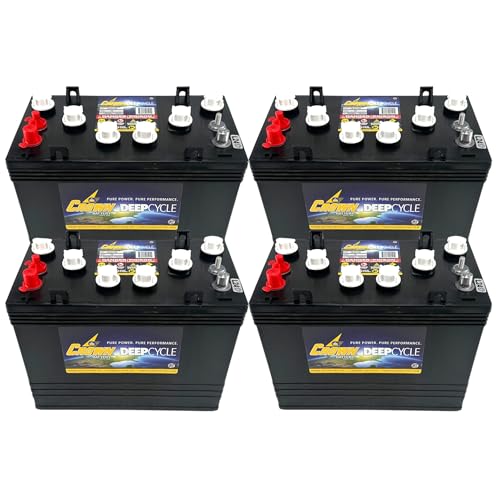
Best for traditional 4x12V configurations that rely on proven lead-acid technology. These GC12-compatible 12V 150Ah units provide reliable deep-cycle performance suitable for golf carts, solar backup systems, and RVs. They are known for sturdy construction and long-standing reliability in heavy-use environments. A consideration: heavier weight than comparable LiFePO4 packs and shorter cycle life under the same DoD, which may affect long-term cost of ownership.
Who it’s best for: buyers on a fixed budget or preferring lead-acid performance; Why selected: widely available 12V GC12 form factor with solid, traditional performance.
Caution: monitor water levels and maintenance for flooded lead-acid cells and ensure proper ventilation in enclosed spaces.
Trojan T-1275 12V Flooded Lead-Acid (Pack of 4)

Best for buyers preferring a traditional lead-acid solution with a long-standing reputation. The T-1275 set provides a 12V, 150Ah configuration per unit in a GC12 form factor, suitable for established golf cart fleets and older charging systems. Limitations include heavier weight and shorter cycle life compared to LiFePO4, especially at higher DoD. This option is common for players seeking straightforward compatibility with existing AGM/SLA infrastructure.
Who it’s best for: buyers with traditional lead-acid systems or replacement parts; Why selected: wide compatibility and reliable availability in the GC12 size.
Caution: periodic maintenance, venting, and watering are essential for flooded lead-acid batteries; ensure proper ventilation in storage areas.
Buying Guide: 4x12V Battery Configuration Essentials
- Battery chemistry: LiFePO4 vs Flooded Lead-Acid. LiFePO4 offers longer life, lighter weight, and safer chemistry; lead-acid is often cheaper upfront but heavier with shorter cycle life.
- Voltage arrangement: four 12V modules can form 48V in series. Ensure BMS compatibility and correct wiring for series connections.
- Cycle life and DoD: higher cycles and deeper DoD translate to longer life in demanding use. Consider your typical discharge depth and how often you cycle.
- BMS and safety features: built-in BMS can protect against overcharge, over-discharge, overheating, and short circuits. Low-temperature cut-off improves performance in cold climates.
- Temperature operating range: cold-weather use may require self-heating or low-temperature protection. Correct charging parameters are essential.
- Weight and installation: LiFePO4 packs are lighter, making them easier to handle and install in compact spaces.
- Charging profile: LiFePO4 requires specific charging voltages and currents; ensure your charger is compatible to avoid reduced capacity or damage.
- Warranty and support: check manufacturer warranties and return policies for peace of mind in case of issues.
Frequently Asked Questions
- Are LiFePO4 batteries better than lead-acid for golf carts? Yes, typically they are lighter, last longer (more cycles), and offer better depth of discharge, though upfront costs are higher.
- Can I mix 12V lithium packs with a stock 48V system? It is generally not recommended to mix different chemistries without a proper battery management plan and controller compatibility.
- What is a BMS and why is it important? A BMS (Battery Management System) protects cells from overcharge, over-discharge, overheating, and short circuits, extending overall life and safety.
- Do I need a temperature management system for cold climates? Low-temperature cut-offs or self-heating features help maintain charging and cycling performance in cold environments.
- What maintenance is required for flooded lead-acid packs? Regular watering, venting, and equalization charging are important to maintain capacity and safety.
- Which 4x12V option provides the best overall value? The best value depends on your priorities: longevity and weight favor LiFePO4 kits; upfront cost and existing infrastructure may favor lead-acid sets.