Best 30 Amp RV Converter Chargers for Campers and Travel Trailers in 2026
Answering the common question, these 30 amp RV converter chargers are designed to reliably convert AC power to 12V DC for RV batteries and onboard systems. They suit campers, travel trailers, caravans, and motorhomes that use 30A shore power. The top picks below emphasize automatic battery detection, multi-stage charging, and protective features to extend battery life while keeping RV electronics powered. The best choice depends on battery type, vehicle size, and how you use electrical systems on the road.
Summary table of selected products
| Product | Brand | Best For | Key Benefit |
|---|---|---|---|
| WF-8735-AD RV Converter Charger 30 Amp Power Center | MAOYUMAO | General RVs and campers needing auto-detect charging | Fast 35A output with three-stage charging |
| IOTA Engineering DLS30 30 Amp Power Converter | IOTA Engineering | Compact RV systems with varied layouts | Solid, compact package with simple specs |
| WF-8735-AD RV Converter Charger 30 Amp Power Center (KA variant) | KMHGD | RVs and travel trailers requiring smart charging | Three-stage charging with auto-detect |
| RecPro RV Converter 35 Amp | RecPro | 4-stage charging for mixed battery types | Whisper-quiet operation and versatile wiring |
| WF-8735-AD RV Converter Charger 30 Amp Power Center | HUHIJIN | RVs requiring stable power under variable voltages | Three-stage charging and strong output |
WF-8735-AD RV Converter Charger 30 Amp Power Center (MAOYUMAO)

The MAOYUMAO WF-8735-AD offers a 35-amp DC output from a 105-130 VAC input, delivering up to 595W. It uses a three-stage auto-detect charging system to switch among 13.2V, 13.6V, and 14.4V modes, aiming to maximize battery life. The integration of a smart chip provides overcharge, short-circuit, and temperature protections for safer operation. Best for: RV owners who want rapid charging with reliable protection for a variety of battery chemistries. Limitation: compatibility notes are general; verify battery type before use with LiFePO4 systems.
IOTA Engineering DLS30 30 Amp Power Converter
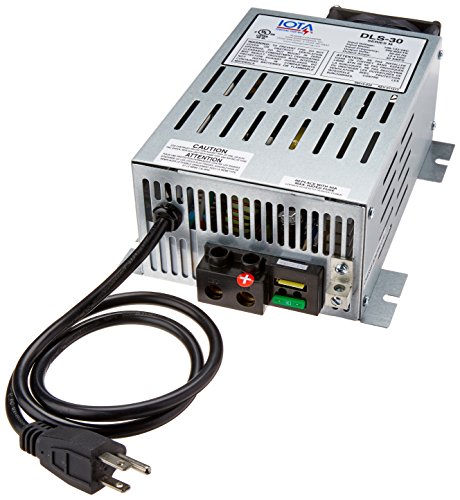
The IOTA Engineering DLS30 provides a compact 30A power conversion solution with straightforward functionality. It emphasizes dependable DC output suitable for RV electrical systems and battery replenishment. Best for: RV setups that prioritize simplicity and compact size without heavy feature lists. Limitation: product listing lacks advanced charging modes or battery-type auto-detect features beyond basic output specs.
WF-8735-AD WF-8735-P (KMHGD) 30 Amp Power Center
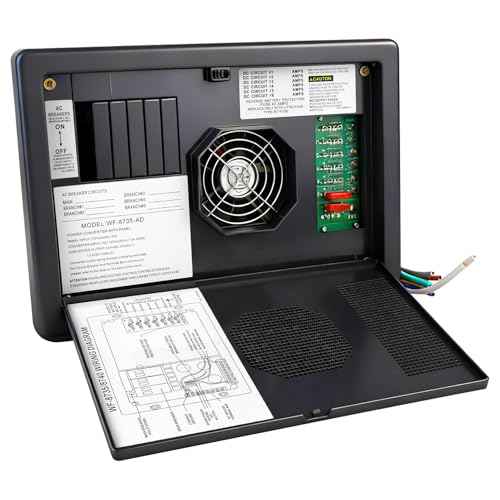
KMHGD’s WF-8735-AD variant offers a 30-35A DC output with a 595W rating. It identifies battery type and adjusts charging across three levels to extend battery life. It’s designed for RVs and campers needing a reliable, multi-mode charger with broad compatibility. Best for: travelers who want robust automatic charging and broad battery support. Limitation: data emphasizes compatibility and modes but may not detail LiFePO4 optimization beyond standard three-stage charging.
RecPro RV Converter 35 Amp

RecPro’s 35-amp RV converter provides 12V DC output with a four-stage charging profile. It emphasizes quiet operation with a temperature-controlled fan and supports multiple battery types, including lead-acid and lithium. Best for: RVs needing precise charging control and quiet performance. Limitation: claims robust support for lithium charging may require verification for specific battery brands and configurations.
WF-8735-AD Power Center (HUHIJIN)

HUHIJIN’s variant emphasizes stable 35A DC output with a 595W rating and three-stage charging. It also notes compatibility with RV electrical systems under fluctuating AC input, helping maintain performance on less stable shore power. Best for: RVs that frequently park in campsites with variable AC voltage. Limitation: product description focuses on charging stages and protection, with fewer battery-type specifics beyond conventional lead-acid usage.
Buying Guide
What should you check when choosing a 30 amp RV converter charger? Consider compatibility with battery types (lead-acid vs LiFePO4), number of DC outputs, and the presence of three-stage or four-stage charging. A smart auto-detect feature helps extend battery life by selecting appropriate charging modes. Look for built-in protections such as overcharge, short-circuit, and thermal control. If your RV uses multiple 12V circuits, a charger with more DC circuits and a broad AC circuit count can simplify installation. Noise level, fan operation, and ease of installation also matter for comfort during camping.
- Battery compatibility: Verify whether the unit supports LiFePO4 as well as lead-acid batteries if you mix chemistries.
- Charging stages: Three-stage or four-stage systems generally offer faster, safer charging and longer battery life.
- Voltage stability: A charger that performs well with fluctuating AC input helps maintain consistent performance at campsites.
- Protection features: Overcharge, short-circuit, overload, and temperature protections are essential for vehicle and battery safety.
- Installation footprint: Check the size, mounting options, and required wire gauge to fit your RV’s power center.
Frequently Asked Questions
- What does 30A power center mean for my RV?
- Can I use a 30A converter with LiFePO4 batteries?
- Do these chargers protect against overcharging?
- Is auto-detect charging important?
- What installation considerations matter?
- Are there noise considerations with these units?
A 30A power center converts 120V AC to 12V DC to supply your RV’s 12V systems and battery charger. It is sized for RVs and trailers that rely on a 30-amp shore power connection.
Some models support LiFePO4 charging in their three-stage or adaptive modes, but verify each model’s battery compatibility in the product specs before use.
Yes, most models include built-in protections such as overcharge and temperature control to safeguard your battery and RV electronics.
Auto-detect charging helps tailor the voltage to the battery type, potentially extending battery life and ensuring efficient charging across chemistries.
Consider mounting space, wiring requirements, circuit count, and whether the unit replaces an existing converter or integrates into a new power center.
Some models include a temperature-controlled fan for cooling. Quiet operation is common but verify noise level if you camp near living areas.