Best 3-Gang Floor Box Solutions for Finishing Basements, Kitchens, and Workspaces
The best 3-gang floor box solutions provide clean, flush installations for power, data, and AV needs in commercial and residential spaces. This guide highlights five top 3-gang options, detailing who they’re best for, and how each design fits typical construction or remodeling projects. Ideal buyers include contractors seeking flush-floor installations, homeowners planning upgrades, and remodelers handling masonry or stud walls. Below, a quick summary table helps compare key attributes at a glance.
Product Quick Reference
| Product | Best For | Key Benefit |
|---|---|---|
| Leviton Concrete Floor Box Tile Frame, 3-Gang. FBRM3-B, Brass | Floor-till-ready installations in concrete floors | Flush tile frame; bury and finish flush |
| 3-Gang Masonry Electrical Box, 2.5″ Depth, 15 EKO Knockouts | Masonry walls in blocks or brick | Large capacity; sturdy welded steel design |
| SmarToggle Three Gang Retrofit Wall Box – Old Work | Remodels; stud or no-stud walls | Flexible retrofit; secure, flush mount |
| XGGYA 3 Gang Old Work Box, Plastic Junction | Easy add-ons to existing walls | Rotatable buckle; simple installation |
| Qlvily Three Gang Multi Device Box | Multi-device wiring in boxed spaces | Extensive knockout options; durable construction |
Leviton Concrete Floor Box Tile Frame, 3-Gang. FBRM3-B, Brass
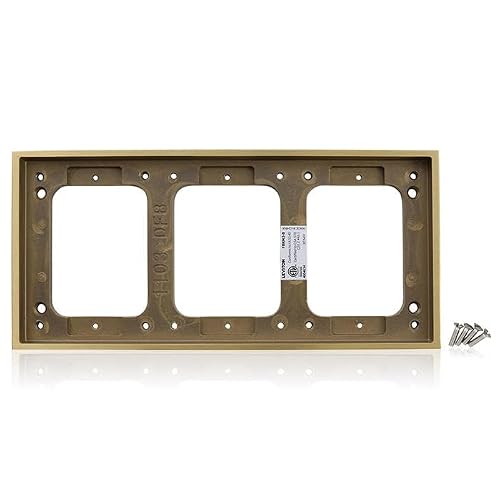
Best for new concrete floor installations where the floor will be tiled. The unit is designed to sit flush to the finished floor once buried and cured, allowing tile rings and plates to align with the surface. Suitable for contractors and homeowners planning a seamless floor finish. The 3-gang configuration accommodates multiple devices in one location.
Who it’s best for: builders and remodelers aiming for a clean, integrated tile surface with a single floor-access point. Why selected: its flush-to-floor capability reduces finished-floor unevenness and simplifies tile integration. Limitation: installation relies on proper curing and tile ring alignment to maintain flushness.
3-Gang Masonry Electrical Box, Metal Electrical Box

Best for masonry walls in block or brick construction. With a large 47.8 cubic inch capacity and a welded steel design, this 3-gang box provides ample space for wiring connections and devices. It fits square cuts in block walls and offers rugged durability for job sites.
Who it’s best for: electricians and contractors dealing with masonry walls who need extra internal room. Why selected: the generous capacity and welded construction minimize the chance of tight fits or wire crowding. Limitation: designed for 2-1/2″ depth, may be less suitable for deeper wall assemblies.
SmarToggle Three Gang Retrofit Wall Box – Old Work

Best for remodels where stud or no-stud installation is required. The SmarToggle system offers a retrofit mounting that adapts to both stud and non-stud walls, with snap-in 1-1/2″ toggles for secure, flush mounting and nine wiring ports plus two knockouts for flexible multi-device wiring.
Who it’s best for: contractors performing retrofits or upgrades in existing walls. Why selected: unmatched flexibility in mounting options and reliable flush installation. Limitation: as an older-work solution, it may require careful measuring to ensure a consistent finish in irregular walls.
XGGYA 3 Gang Old Work Box, Plastic Junction

Best for quick expansions in existing walls with minimal disruption. This plastic 3-gang box supports easy old-work installation with built-in fixing ears and rotatable buckle to prevent loosening and dropping.
Who it’s best for: DIYers and professionals adding new outlets without heavy demolition. Why selected: straightforward, adjustable mounting; good for time-sensitive projects. Limitation: plastic construction may be less robust in heavy-duty commercial settings compared to metal boxes.
Qlvily 1 Pack Three Gang Multi Device Switch Box

Best for multi-device wiring with extensive knockout options. This metal box provides 6 side knockouts and a mix of bottom knockouts, designed to accommodate a range of devices for complex power and data configurations.
Who it’s best for: builders and electricians needing versatile side and bottom knockout access. Why selected: broad KO options support diverse device layouts. Caution: ensure KO placement matches device requirements to avoid congestion or misalignment.
Chapou 1 Pcs Recessed Floor Outlet 4.72″ x 4.72″ x 3.94″ 2-Gang

Best for recessed floor outlets with USB charging and power options. Includes a 20A Tamper-Resistant outlet and adjustable steel box, plus a sleek cover plate. ETL-listed for safety and ease of installation during construction.
Who it’s best for: spaces requiring a recessed floor outlet with USB charging capabilities. Why selected: combination of USB charging, adjustable box, and tamper-resistant receptacle. Limitation: 2-gang footprint may be tighter for larger wiring needs.
RACO 6239BP Floor Kit with Recessed Duplex 15A TR Device

Best for professional installation with adjustable steel box and recessed duplex 15A tamper-resistant device. Includes back and side knockouts for flexible wiring access, suitable for powering or data integration in a flush-floor setup.
Who it’s best for: electricians wiring flush-floor outlets in new or retrofit projects. Why selected: smart design for wiring access and kid-safe receptacles. Caution: installation should follow local electrical codes and professional guidelines.
EliteCoreAudio FB4+AC Recessed Floor Box

Best for audio-visual and power integration in floors. This recessed floor box provides 4 XLR connections plus 1 Duplex AC, with a hinged door and cable grooves to manage cords and keep the surface clean.
Who it’s best for: media-heavy rooms or stages where audio and power need to coexist in a single floor box. Why selected: dedicated XLR connections plus AC power in one unit. Limitation: primarily suited for AV-focused setups rather than simple power outlets.
Buying Guide
- Floor type compatibility: Concrete, masonry, and old-work boxes require different mounting methods and tolerances. Choose a model designed for your wall or floor material.
- Depth and capacity: Consider the depth of the wall or floor cavity and the number of devices you plan to install. Deeper boxes offer more room for wiring but may require larger openings.
- Knockouts and ports: Verify the number and arrangement of knockouts to fit your devices, cables, and future needs. More ports reduce crowding, but ensure you have the right sizes for your hardware.
- Material and finish: Metal boxes offer durability; plastic can be easier to install and lighter. Finishes should match or complement surrounding fixtures or tile work.
- Safety and compliance: Look for ETL or other safety listings where applicable; ensure devices are tamper-resistant when required, especially in family spaces or kids’ areas.
- Installation complexity: Old-work/remodel options provide retrofit flexibility, while set-in floor boxes may require more planning and professional installation for a flush finish.
- Long-term maintenance: Consider ease of access for future upgrades, such as adding USB charging or extra data ports.
Frequently Asked Questions
- What is a 3-gang floor box best used for?
It provides space for up to three devices (outlets, data, or AV) in a single location, ideal for kitchens, offices, or living rooms that require multiple connections from a single floor point.
- Can all 3-gang boxes be used in concrete floors?
No—only models designed for concrete or masonry floors should be used in that application to ensure flush installation and structural integrity.
- What should I consider when choosing between metal and plastic boxes?
Metal boxes are typically more durable and fire-resistant, while plastic boxes are lighter and easier to install in many retrofit scenarios. Consider environment and load requirements.
- Are these boxes suitable for USB charging outlets?
Some models include USB charging integration or ST-ready receptacles; verify the specific product features to confirm USB compatibility.
- Is professional installation recommended for floor boxes?
Yes, for ensuring code compliance, proper electrical connections, and a safe flush finish, especially with floor or wall penetrations in concrete or masonry.
- How do I ensure a flush finish after installation?
Follow manufacturer instructions for tile rings, cover plates, or escutcheons; ensure the box is buried to the finished surface and properly sealed where required.