Best 285 Watt Solar Panel Options for Off-Grid Power and RV Living
An efficient solar setup starts with sturdy panels that maximize output in compact packages. This article reviews five top-rated 285 watt class options, emphasizing high-efficiency N-Type cells, shading resistance, and durable construction for RVs, cabins, boats, and off-grid homes. Each product is presented with key features to help you compare performance, reliability, and value for your sustainable energy goals.
Summary table of chosen products:
| Product | Brand | Approx. Power | Key Feature |
|---|---|---|---|
| Callsun 400W Panel Pack | Callsun | 400 W (2 x 200 W) | N-Type 16BB, anti-shade dual-module design |
| Renogy ShadowFlux 400W | Renogy | 400 W (2 x 200 W) | ShadowFlux anti-shading, 16BB N-Type |
| STAR 870 W (2 x 435 W) | STAR | 870 W | Full-screen design, maintenance-free |
| SOKIOVOLA 200W Portable | SOKIOVOLA | 200 W | Foldable, IP68 waterproof |
| Renogy 200W Portable | Renogy | 200 W | 16BB N-Type, compact folding |
Callsun 400W Panel Pack With Anti-Shade Design

The Callsun 400W package combines two 200W panels in a single system, engineered with N-Type 16BB cells to boost efficiency up to 25%. The dual-module, parallel anti-shade design helps maintain energy output when one side is partially shaded, a practical feature for RV roofs or canal-side campsites. The backsheet is designed to optimize heat dissipation, reducing performance losses during prolonged sun exposure. This setup supports 12V, 24V, or higher configurations when integrated with compatible controllers and batteries.
Key points: N-Type cells boost reliability and lifetime, 16BB busbars reduce hotspots, and the anti-shade design offers improved performance in mixed light. Weight and mounting hardware are typically RV-friendly, and the modular approach makes expansions straightforward as needs grow.
Renogy ShadowFlux 400W Anti-Shading Panels

Renogy’s 400W set uses ShadowFlux technology to minimize shading losses, a common challenge for rooftop installations. Like many premium panels, it employs N-Type cells with 16BB busbars, delivering up to 25% efficiency. The design emphasizes reduced hot spots and a robust build suitable for RVs and marine rooftops. The panels are engineered to be compact for space-constrained applications while delivering strong daily energy output in varied weather conditions.
Highlights include enhanced resilience against shading, improved heat tolerance, and a lighter, more compact footprint than older 300W-plus models. This makes the Renogy system a solid choice for travelers who need dependable solar performance without compromising space.
STAR Full-Screen 435W Panels For 24V/48V Systems
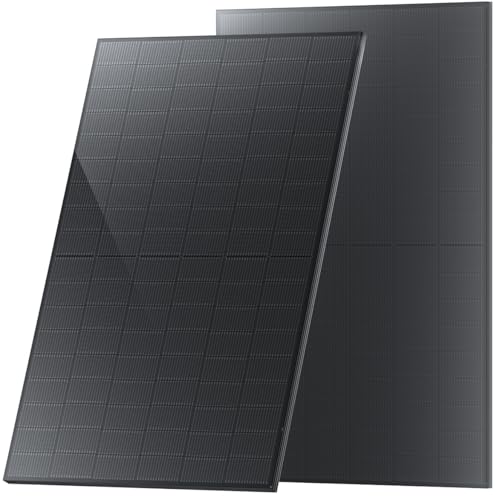
The STAR panels adopt a frameless full-screen design that minimizes dust and water buildup, helping maintenance-free operation in harsh environments. With 435W per module and 25% cell efficiency, these panels are well-suited for larger off-grid rigs, including RVs and boats that demand steady, high output. The lack of a traditional frame can also simplify mounting on curved surfaces. The panels are certified for safety and reliability, aligning with common off-grid and marine standards.
Performance emphasizes resilience—weather resistance, self-cleaning potential in rain, and consistent power generation under challenging conditions. If your setup requires substantial wattage to support multiple devices or power-hungry appliances, these panels can be a strong backbone for a reliable system.
SOKIOVOLA 200W Foldable Portable Panel
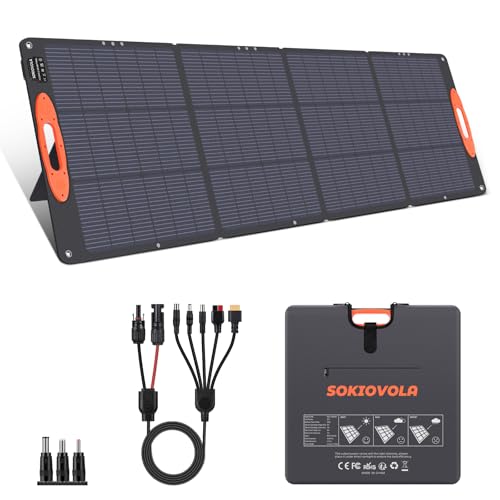
This foldable 200W panel focuses on portability and ease of use for outdoor enthusiasts. It uses high-efficiency monocrystalline cells with up to 25% conversion efficiency and a compact foldable design for simple storage in tight RV compartments or backpacks. IP68 waterproofing adds durability for outdoor use, while the dual-terminal configuration supports a variety of power stations and battery systems. This panel is particularly suitable for campers seeking a balance between weight, portability, and output on shorter trips.
Key strengths include optional 12V compatibility, sturdy fold-out legs, and a rugged frame that resists dust and moisture. When paired with a suitable charge controller, it can provide dependable backup power for camping or emergency off-grid scenarios.
Renogy 200W Portable Panel With 16BB N-Type

Renogy’s 200W foldable panel emphasizes portability and efficiency. With 16BB N-Type cells, it achieves up to 25% efficiency, delivering more energy per sun-hour than many conventional panels. The lightweight design and magnetic closure simplify setup and storage, making it a practical option for RVs, boats, and emergency backups. The panel includes MC4 output compatibility to easily connect with power stations or 12V battery systems and may support USB-C PD charging in some configurations, expanding its versatility for charging devices on the go.
Considerations include the balance between weight, portability, and the need for a compatible charge controller to maximize performance. For travelers prioritizing compact systems, this Renogy option offers a solid combination of efficiency and convenience.
Buying Guide: Key Purchase Considerations For 285 Watt Class Panels
- Cell Technology and Efficiency: Look for N-Type cells with 16BB busbars for higher efficiency and durability. Panels rated around 200–400W per module benefit from higher efficiency under partial shading and heat.
- Shading Tolerance: Dual-module or bifacial designs can mitigate shading losses. Consider anti-shading technology if trees, buildings, or wiring routes create partial shadows.
- Durability and Weather Resistance: IP ratings, ETFE coatings, and robust frames protect against moisture, dust, and impact. Marine and RV environments demand corrosion resistance and UV stability.
- Portability vs. Fixed Installations: Foldable or portable panels are ideal for campers, while fixed rooftop panels maximize space efficiency for homes and RVs. Choose based on your travel frequency and storage capacity.
- System Compatibility: Ensure compatibility with charge controllers, inverters, and power stations. Look for MC4 connectors and ample wiring harness options for flexible configurations.
- Maintenance and Cleaning: Frameless or full-screen designs reduce crevices where dirt collects. Self-cleaning features and ease of cleaning contribute to long-term performance.
- Weight and Handling: Portable panels can be heavy; verify weight ratings and carrying handles. For rooftop installs, consider mounting hardware compatibility with your roof material.
- Warranty and Certifications: Check for ETL, CE, and ISO certifications and the length of product and workmanship warranties for long-term reliability.
- Cost vs. Output: Compare wattage, efficiency, and real-world performance under typical sun conditions. Higher efficiency panels can justify cost in space-constrained setups.
In choosing a 285 watt-class solution, consider whether you need a compact, high-efficiency unit for a vehicle, or a larger, fixed setup for a home or RV roof. The options reviewed balance efficiency, shading resilience, and portability to address diverse off-grid scenarios while keeping installation straightforward for American consumers.